& meet dozens of singles today!
User blogs

Twenty years ago Drupal and Acquia founder Dries Buytaert was a college student at the University of Antwerp. He wanted to put his burgeoning programming skills to work by building a communications tool for his dorm. That simple idea evolved over time into the open-source Drupal web content management system, and eventually a commercial company called Acquia built on top of it.
Buytaert would later raise over $180 million and exit in 2019 when the company was acquired by Vista Equity Partners for $1 billion, but it took 18 years of hard work to reach that point.
When Drupal came along in the early 2000s, it wasn’t the only open-source option, but it was part of a major movement toward giving companies options by democratizing web content management.
Many startups are built on open source today, but back in the early 2000s, there were only a few trail blazers and none that had taken the path that Acquia took. Buytaert and his co-founders decided to reduce the complexity of configuring a Drupal installation by building a hosted cloud service.
That seems like a no-brainer now, but consider at the time in 2009, AWS was still a fledgling side project at Amazon, not the $45 billion behemoth it is today. In 2021, building a startup on top of an open-source project with a SaaS version is a proven and common strategy. Back then nobody else had done it. As it turned out, taking the path less traveled worked out well for Acquia.
Moving from dorm room to billion-dollar exit is the dream of every startup founder. Buytaert got there by being bold, working hard and thinking big. His story is compelling, but it also offers lessons for startup founders who also want to build something big.
Born in the proverbial dorm room
In the days before everyone had internet access and a phone in their pockets, Buytaert simply wanted to build a way for him and his friends to communicate in a centralized way. “I wanted to build kind of an internal message board really to communicate with the other people in the dorm, and it was literally talking about things like ‘Hey, let’s grab a drink at 8:00,'” Buytaert told me.
He also wanted to hone his programming skills. “At the same time I wanted to learn about PHP and MySQL, which at the time were emerging technologies, and so I figured I would spend a few evenings putting together a basic message board using PHP and MySQL, so that I could learn about these technologies, and then actually have something that we could use.”
The resulting product served its purpose well, but when graduation beckoned, Buytaert realized if he unplugged his PC and moved on, the community he had built would die. At that point, he decided to move the site to the public internet and named it drop.org, which was actually an accident. Originally, he meant to register dorp.org because “dorp” is Dutch for “village or small community,” but he mistakenly inverted the letters during registration.
Buytaert continued adding features to drop.org like diaries (a precursor to blogging) and RSS feeds. Eventually, he came up with the idea of open-sourcing the software that ran the site, calling it Drupal.
The birth of web content management
About the same time Buytaert was developing the basis of what would become Drupal, web content management (WCM) was a fresh market. Early websites had been fairly simple and straightforward, but they were growing more complex in the late 90s and a bunch of startups were trying to solve the problem of managing them. Buytaert likely didn’t know it, but there was an industry waiting for an open-source tool like Drupal.
Source: https://techcrunch.com/2021/01/22/drupals-journey-from-dorm-room-project-to-billion-dollar-exit/
The Boston Globe is starting a new program by which people who feel an article at the newspaper is harmful to their reputation can ask that it be updated or anonymized. It’s reminiscent of the E.U.’s “right to be forgotten,” though potentially less controversial, since it concerns only one editorial outlet and not a content-agnostic search engine.
The “Fresh Start” initiative isn’t for removing bad restaurant reviews or coverage of serious crimes, but rather for more commonplace crime desk reporting: a hundred words saying so-and-so was arrested for disorderly conduct and resisting arrest, perhaps with a mugshot.
Such stories do serve a purpose, of course, in informing readers of crime in their area. But as the Globe’s editor, Brian McGrory points out:
It was never our intent to have a short and relatively inconsequential Globe story affect the futures of the ordinary people who might be the subjects. Our sense, given the criminal justice system, is that this has had a disproportionate impact on people of color. The idea behind the program is to start addressing it.
Evidence of bias in policing, which is turned into inherited bias in reporting, is a serious problem and one the country has been grappling with for decades. But it is exacerbated by the nature of the digital record.
An employer looking at an application has only to search for the name or a few other details to find any standout information, such as a crime sheet entry with a mugshot. And while outlets often cover low-level arrests, they rarely cover low-level acquittals or dropped charges. No one clicks on those, after all. So for many the result is incomplete and therefore potentially damaging information.
The attempt in Europe to fix this at the search engine level has been met with opposition and difficulty, since search engines are not in charge of the information they index and felt they should not be put in the position of deciding what should or shouldn’t be removed. Furthermore the task may be complex, as a single article may be replicated or referenced dozens or thousands of times, or backed up on a site like the Internet Archive. What then?
At the same time, it’s certainly less of a threat to free speech to ask a search engine to limit discoverability than to ask a publication to remove or change its content. The debate is ongoing.
The Globe’s approach is nowhere near as comprehensive as making Google “forget” a person’s record, but it is considerably simpler and less open to opposition. The paper exerts editorial control over itself, of course, and the question is not one of putting a piece of information down the memory hole, but revisiting whether it was newsworthy to begin with.
“It’s changing how we look at our coverage,” said managing editor for digital Jason Tuohey in the Globe announcement of its new endeavor. “If we change a story like this with the Fresh Start committee, why would we assign one like it next week?”
The newspaper has established a 10-person committee to examine petitions from people asking to have articles updated — never removed, it’s important to add. While an earlier effort like this at the Cleveland Plain Dealer required people to show a court record expungement order, there is no legal bar to meet here.
The team admits off the bat that this will be complicated. Automated or fraudulent requests will surely pour in, public figures will take a shot, there will be conflicting opinions on what evidence, if any, is required to confirm an event or identity, and so on. And at the end, all that will be accomplished is one article, perhaps even just one line, will be altered — long after it has been replicated across the web and archival infrastructure. But it’s a start.
One paper doing this may not have a large effect, but if the program is successful other outlets may take notice. And as Tuohey noted, the wisdom of publishing the information in the first place starts to look shaky when one learns how ramshackle the justice system really is. Perhaps it’s only fair that people have a shot at applying that newfound skepticism to events of years past.
Anyone who thinks they could benefit from Fresh Start can apply here.
EVgo, the wholly owned subsidiary of LS Power that owns and operates public fast chargers for electric vehicles, has reached a deal to become a publicly traded company through a merger with special-purpose acquisition company Climate Change Crisis Real Impact I Acquisition Corporation.
The combined company, which will be listed under the new ticker symbol “EVGO” will have a market valuation of $2.6 billion. LS Power and EVgo management, which today own 100% of the company will be rolling all of its equity into the transaction. Once the transaction closes in the second quarter, LS Power will hold a 74% stake in the company.
EVgo has raised about $575 million in proceeds through the business combination, including a $400 million in private investment in public equity, or PIPE. Investors include Pacific Investment Management Company LLC (PIMCO), funds and accounts managed by BlackRock, Wellington Management, Neuberger Berman Funds and Van Eck Associates Corporation, according to the announcement.
EVgo’s leadership will remain intact, with Cathy Zoi continuing as CEO of the combined company.
The deal is the latest in a long string of electric vehicle-related companies to merge with so-called blank check companies, eschewing the traditional path to an IPO. Arrival, Canoo, ChargePoint, Fisker, Lordstown Motors, Proterra and The Lion Electric Company are some of the companies that have merged with SPACs — or announced plans to — in the past eight months.
EVgo is not a new entrant to the electric vehicle industry. The company was founded in 2010 and has spent better part of the decade scaling up its infrastructure. Today, EVgo has chargers in more than 800 locations in 67 major metropolitan markets across 34 states. The company has landed a number of partnerships, including with Albertsons, Kroger and Wawa to locate its chargers at these properties.
EVgo has also struck deals with automakers such as GM and Nissan as well as ride-hailing companies Lyft and Uber. In July, GM and EVgo announced plans to add more than 2,700 new fast chargers over the next five years.
While electric vehicles still make up just a fraction of total cars, trucks and SUVs on today’s roads, the industry has forecast that the EV market will increase more than 100-fold between 2019 and 2040, EVgo said. The funds raised through the public market will be used to accelerate its expansion, according to the company.
“Just a few years ago, electric vehicles were considered niche,” EVgo CEO Cathy Zoi said in a statement. “Today, improved technology, lower costs, greater selection and a better appreciation for the performance of EVs is increasingly making them the vehicle technology of choice. With that, the need for fast charging is on the rise.”
Zoi noted that public charging will essential to meet the needs of the estimated 30% of Americans who do not have access to at-home charging as well as the growing number of fleets that are switching to electric vehicles.
Source: https://techcrunch.com/2021/01/22/evgo-to-go-public-via-spac-in-bid-to-power-ev-charging-expansion/
Pinterest is expanding its virtual makeup try-on capabilities with today’s launch of a new augmented reality feature that allows online shoppers to virtually try on new eyeshadow. Initially, Pinterest is allowing try-on with 4,000 shades from brands like Lancome, YSL, Urban Decay, and NYX Cosmetics.
The feature leverages Pinterest’s existing Lens visual search technology, its skin tone ranges feature, and computer-vision powered recommendations, the company says. We also understand Pinterest is incorporating elements from data partner ModiFace, including digitization parameters that ensure the products recognized are mapped to ModiFace’s database for higher-quality rendering.
This not Pinterest’s first virtual makeup feature. The company had previously launched an AR try-on experience for lipstick a year ago, which has now grown to include 10,000 shades, discoverable from 48 million beauty pins from brands like Estée Lauder, bareMinerals, Neutrogena, NARS, Cle de Peau, Thrive Causemetics, NYX Professional Makeup, YSL Beauté, Lancôme, and Urban Decay. Retailers, including Kohl’s, have also used AR try-on to reach consumers.
With the newly launched eyeshadow try-on, users can filter the product search results by factors like color, price range, and brand. if they find something they like, they can then purchase it immediately, save it to a board, or browse a “more like this” section to find more Pins offering similar shades.
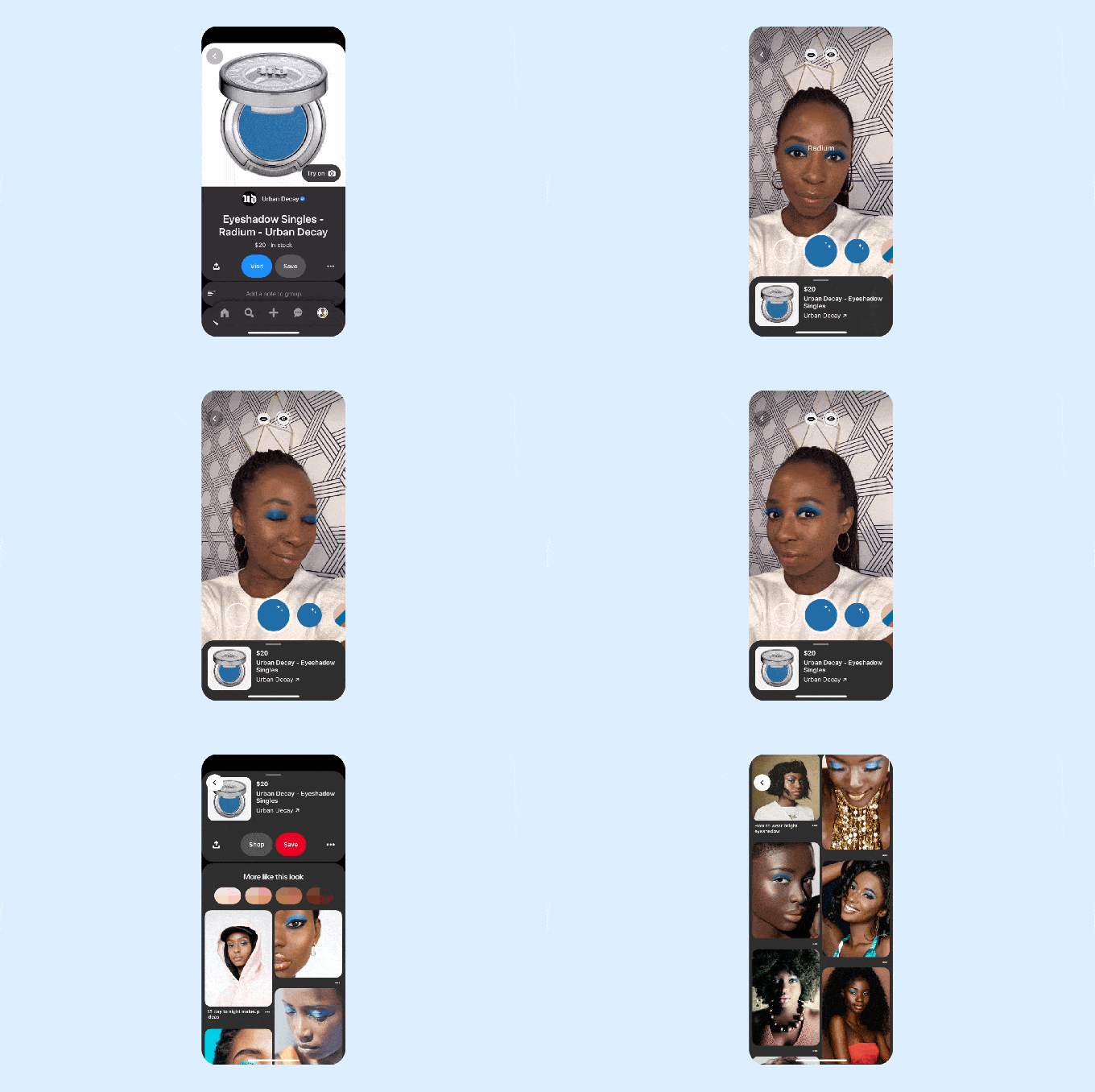
Image Credits: Pinterest
The expansion to eyeshadow means users can now experiment with more of a full makeup look, rather than just try on individual shades. There’s a toggle that lets users switch between lipstick and eyeshadow to try on multiple products at once, Pinterest says.
AR-powered virtual makeup experiences have been growing in popularity over the years, thanks in part to AR beauty apps like ModiFace’ YouCam Makeup, Sephora’s Virtual Artist, Ulta’s GLAMLab and others. L’Oréal has also offered Live Try-On on its website, and partnered with Facebook to bring virtual makeup to the site. Target’s online Beauty Studio also offers virtual makeup.
More recently, Google entered the AR virtual makeup space, initially with the launch of a more limited feature on YouTube that allowed some beauty influencers to incorporate an AR try-on experience for products in their videos. In December 2020, however, Google more fully embraced AR try-on with the launch of virtual makeup try-on within Google Search, also in partnership with ModiFace.
But Pinterest’s expansion to eyeshadow means it’s once again ahead of Google when it comes to visual search technology and virtual makeup. Not only does it offer more lipstick shades than Google, it now also offers eyeshadow try-on.
Pinterest says the AR try-on feature is being made available for free to brands who want to create visual shopping experiences and reach customers earlier in their decision-making process. The company says it continues to generate revenue through ads, including shopping ads, and not by monetizing its AR features or doing any revenue share on the try-ons that turn into sales.
“As we make Pinterest more shoppable through products like AR Try on, the platform becomes more engaging and actionable to Pinners, which can result in increases in usage and click-through of ads,” a spokesperson explains. “Organic features like Try on and ingestion of catalogs to create Product Pins can oftentimes complement a paid strategy where brands drive traffic across the site,” they noted.
The support for eyeshadow try-on is timely. Some beauty brand sales have been depressed by the pandemic, and particularly lipsticks, since it makes no sense to use lip color when your face is under a mask. Instead, current beauty trends have shifted to highlighting the eyes, with bright and bold colors for eyeshadow shades, the wild floating eyeliner look, large false lashes, and more — trends that are also designed to look good when filmed for social media posts, of course.
Pinterest says it has indications that its AR features are converting undecided shoppers to customers. In 2020, Pinterest found that users would try-on an average of 6 lipstick shades once they began the AR try-on experience, and then were 5 times more likely to show purchase intent on try-on compared with standard Pins.
The new eyeshadow try-on is live starting today using the Lens camera in the Pinterest app for iOS and Android.
Source: https://techcrunch.com/2021/01/22/pinterest-launches-an-ar-powered-try-on-experience-for-eyeshadow/
Google today announced a subtle but welcome refresh of its mobile search experience. The idea here is to provide easier to read search results and a more modern look with a simpler, edge-to-edge design.
From what we’ve seen so far, this is not a radically different look, but the rounded and slightly shaded boxes around individual search results have been replaced with straight lines, for example, while in other places, Google has specifically added more roundness. You’ll find changes to the circles around the search bar and some tweaks to the Google logo. “We believe it feels more approachable, friendly, and human,” a Google spokesperson told me. There’s a bit more whitespace in places, too, as well as new splashes of color that are meant to help separate and emphasize certain parts of the page.

Image Credits: Google
“Rethinking the visual design for something like Search is really complex,” Google designer Aileen Cheng said in today’s announcement. “That’s especially true given how much Google Search has evolved. We’re not just organizing the web’s information, but all the world’s information. We started with organizing web pages, but now there’s so much diversity in the types of content and information we have to help make sense of.”

Image Credits: Google
Google is also extending its use of the Google Sans font, which you are probably already quite familiar with thanks to its use in Gmail and Android. “Bringing consistency to when and how we use fonts in Search was important, too, which also helps people parse information more efficiently,” Aileen writes.
In many ways, today’s refresh is a continuation of the work Google did with its mobile search refresh in 2019. At that time, the emphasis, too, was on making it easier for users to scan down the page by adding site icons and other new visual elements to the page. The work of making search results pages more readable is clearly never done.
For the most part, though, comparing the new and old design, the changes are small. This isn’t some major redesign but we’re talking about minor tweaks that the designers surely obsessed over but that the users may not even really notice. Now if Google had made it significantly easier to distinguish ads from the content you are actually looking for, that would’ve been something.
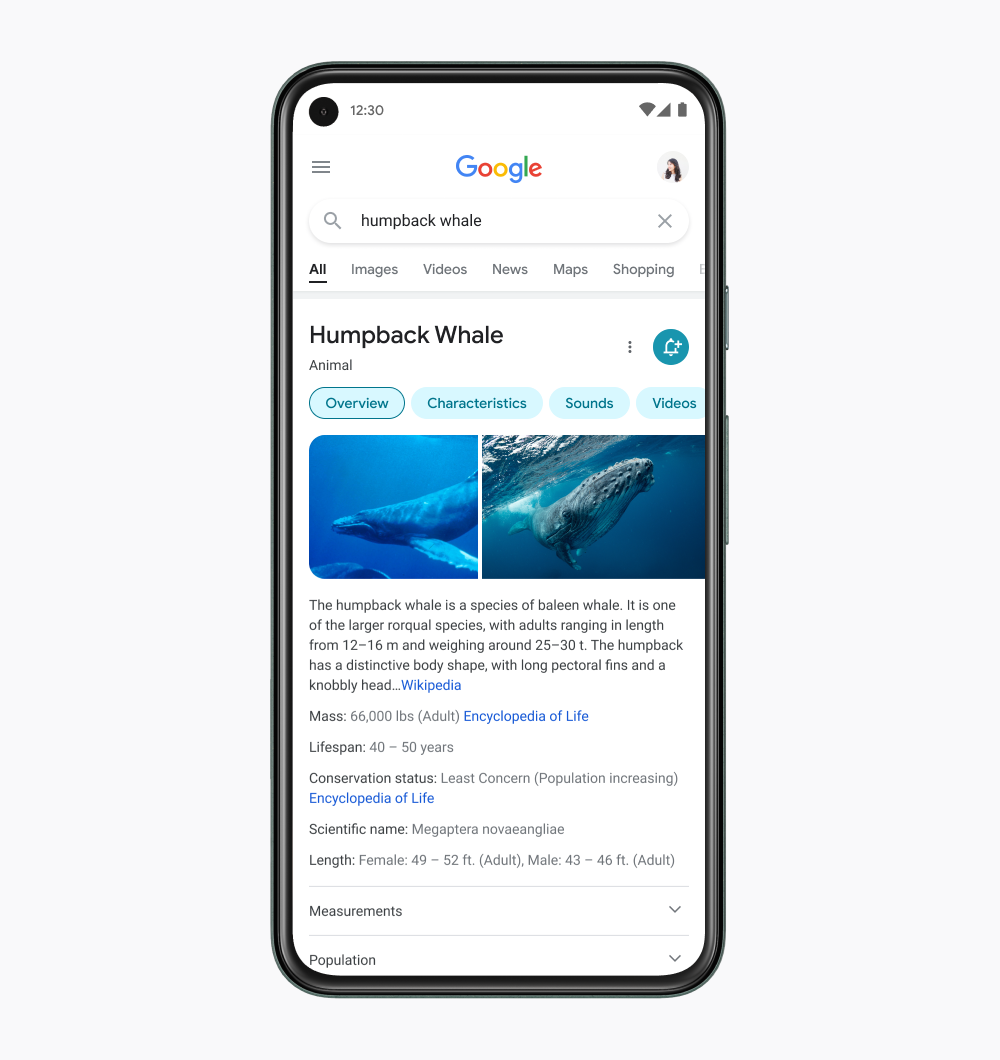
Image Credits: Google
Source: https://techcrunch.com/2021/01/22/google-refreshes-its-mobile-search-experience/


