& meet dozens of singles today!
User blogs

You’ve just landed on the web version of my weekly newsletter, Human Capital. It’s where we look at the recent events of the week pertaining to diversity, equity, inclusion and labor in tech.
You can sign up here to get Human Capital delivered straight to your inbox every Friday at 1 p.m. PT.
Let’s jump in.
Alpha Global forms to unite Alphabet workers around the world
Alpha Global announced its formation earlier this week to unite Alphabet workers around the world, including those from the Alphabet Workers Union in the United States, The Verge reported. Alpha Global, which is affiliated with the UNI Global Union, aims to create a common worker strategy, support fellow workers and more.
“A just Alphabet has wide-ranging implications for our democracies and societies,” Alpha Global said in a statement. “That is why we are joining together to demand fundamental human rights for all workers in Alphabet operations, including the right to form or join a union and the right to bargain collectively.”
I should mention that you’ll be able to hear more about Alphabet Workers Union at Alpha Global at TC Sessions: Justice directly from Parul Koul, the executive chair of Alphabet Workers Union. You can snag your tickets here for just $5.
Apple Watch launches a Black unity collection
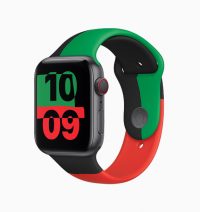
Image Credits: Apple
In celebration of Black History Month, Apple introduced the Black Unity Collection for Apple Watch.
Something feels off about the watch band, but I can’t quite put my finger on it. Perhaps it’s the commoditization of Black culture.
Chan Zuckerberg Initiative launches the Justice Accelerator Fund
The Chan Zuckerberg Initiative has created a new criminal justice reform group, Recode reported this week.
With $350 million put toward the new Justice Accelerator Fund over the next five years, the organization will focus on criminal justice advocacy. JAF will be led by Ana Zamora, CZI’s current director of criminal justice.
NLRB gets a new acting general counsel
Biden named Peter Sung Ohr the new acting general counsel for the National Labor Relations Board. As Vice’s Lauren Kaori Gurley noted, Ohr’s appointment has the potential to be very good for gig workers and workers rights, in general.
Peter Sung Ohr, the new Acting General Counsel of the @NLRB, gave Instacart workers the "ok" on a union election in 2020 and wrote a decision that allowed @uchicagogsu grad students to unionize in 2017, a good sign for gig workers & grad student organizing going forward
— Lauren Kaori Gurley (@LaurenKGurley) January 26, 2021
ServiceNow launches racial equity fund
With $100 million set aside for the fund, the enterprise software company’s racial equity fund aims to “drive more sustainable wealth creation by funding homeownership, entrepreneurship, and neighborhood revitalization within Black communities in 10 regions across the United States,” according to a press release.
Here’s a nugget on how it’ll work:
The ServiceNow Racial Equity Fund will buy smaller community loans to increase the lending capacity for local banks. By increasing access to capital, the investment will facilitate homeownership and entrepreneurship in Black communities, leading to job creation and wider economic growth. The investment, which is the first of its kind for ServiceNow, will initially focus investments in Boston, Chicago, Dallas, Houston, New York, Orlando, San Diego, the San Francisco Bay Area, Seattle, and Washington, D.C. – locations where ServiceNow has significant operations and community presence.
Hello friends, this is Week in Review.
Last week, I dove into the AR maneuverings of Apple and Facebook and what that means for the future of the web. This week, I’m aiming to touch the meme stock phenomenon that dominated American news cycles this week and see if there’s anything worth learning from it, with an eye towards the future web.
If you’re reading this on the TechCrunch site, you can get this in your inbox every Saturday morning from the newsletter page, and follow my tweets @lucasmtny.
(Photo by Mike Egerton/PA Images via Getty Images)
The big thing
This week was whatever you wanted it to be. A rising up of the proletariat. A case of weaponized disinformation. A rally for regulation… or perhaps deregulation of financial markets. Choose your own adventure with the starting point being one flavor of chaos leading into a slightly more populist blend of chaos.
At the end of it, a lot of long-time financiers are confused, a lot of internet users are using rent money to buy stock in Tootsie Roll, a lot of billionaires are finding how intoxicating adopting a “for-the-little-guy!” persona on Twitter can be, and here I am staring at the ceiling wondering if there’s any institution in the world trustworthy enough that the internet can’t turn it into a lie.
This week, my little diddy is about meme stocks, but more about the idea that once you peel away the need to question why you actually trust something, it can become easier to just blindly place that faith in more untrustworthy places. All the better if those places are adjacent to areas where others place trust.
The Dow Jones had its worst week since October because retail investors, organized in part on Reddit, turned America’s financial markets into the real front page of the internet. Boring, serious stocks like Facebook and Apple reported their earnings and the markets adjusted accordingly, but in addition to the serious bits of news, the Wall Street page was splashed with break neck gains from “meme stocks.” While junk stocks surging is nothing new, the idea that a stock can make outrageous gains based on nothing and then possibly hold that value based on a newly formed shared trust is newer and much more alarming.
The most infamous of these stocks was GameStop. (If you’re curious about GameStop’s week, there are at least 5 million stories across the web to grab your attention, here’s one. Side note: collectively we seem to have longer attention spans post-Trump.)
So, Americans already don’t have too much institutional faith. Looking through some long-standing Gallup research, compared to the turn of the century, faith in organized religion, the media, most wings of government, big business and banks has decreased quite a bit. The outliers in what Americans do seem to trust more than they did 20 or so years ago are small businesses and the military.
This is all to say that it’s probably not stellar that people don’t trust anything, and me thinking that the internet could probably disrupt every trusted institution except the military probably only shows my lack of creative thinking when it comes to how the web could democratize the Defense Department. As you might guess from that statement, I think democratizing access to certain institutions can be bad. I say that with about a thousand asterisks leading to footnotes that you’ll never find. I also don’t think the web is done disrupting institutional trust by a long shot, for better or worse.
Democratizing financial systems sounds a lot better from a populist lift, until you realize that the guys users are competing against are playing a different game with other people’s money. This saga will change plenty of lives but it won’t end particularly well for a most people exposed to “infinite upside” day trading.
Until this week, in my mind Robinhood was only reckless because it was exposing (or “democratizing access to” — their words) consumers to risk in a way that most of them probably weren’t equipped to handle. Now, I think that they’re reckless because they didn’t anticipate that OR how democratized access could lead to so many potential doomsday scenarios and bankrupt Robinhood. They quietly raised a $1 billion liquidity lifeline this week after they had to temporarily shut down meme stock trading, a move that essentially torched their brand and left them the web’s most hated institution. (Facebook had a quiet week)
This kind of all feeds back into this idea I’ve been feeding that scale can be very dangerous. Platforms seem to need a certain amount of head count to handle global audiences, and almost all of them are insufficiently staffed. Facebook announced this week in its earnings call that it has nearly 60,000 employees. This is a company that now has its own Supreme Court; that’s too big. If your institution is going to be massive and centralized, chances are you need a ton of people to moderate it. That’s something at odds with most existing internet platforms. Realistically, the internet would probably be happier with fewer of these sweeping institutions and more intimate bubbles that are loosely connected. That’s something that the network effects of the past couple decades have made harder but regulation around data portability could assist with.
Writing this newsletter, something I’m often reminded is that while it feels like everything is always changing, few things are wholly new. This great NYT profile from 2001 written by Michael Lewis is a great reminder of that, chronicling a 15-year-old who scammed the markets by using a web of dummy accounts and got hounded by the SEC but still walked away with $500k. Great read.
In the end, things will likely quiet down at Robinhood. There’s also the distinct chance that they don’t and that those meme traders just ignited a revolution that’s going to bankrupt the company and torch the globals markets, but you know things will probably go back to normal.
Until next week,
Lucas Matney
(Photo by MANDEL NGAN/POOL/AFP via Getty Images)
Other things
SEC is pissed
I’ll try to keep these updates GameStop free, but one quick note from the peanut gallery. The SEC isn’t all that happy about the goings ons in the market this week and they’re mad, probably mostly at Robinhood. They got pretty terse with their statement. More
Facebook Oversight Board wants YOU
Zuckerberg’s Supreme Court wants public comment as it decides whether Facebook should give Trump his Instagram and Facebook accounts back. I’m sure any of Facebook’s executives would’ve stopped building the platform dead in its tracks in the years after its founding if they knew just how freaking complicated moderation was going to end up being for them, but you could probably have changed their mind back by showing them the market cap. More
Apple adtech-killing update drops in spring
After delaying its launch, Apple committed this week to the spring rollout of its “App Tracking Transparency” feature that has so much of the adtech world pissed. The update will force apps to essentially ask users whether they’d like to be tracked across apps. More
Robert Downey Jr. bets on startups
Celebrity investing has been popular forever, but it’s gotten way more common in the venture world in recent years. Reputation transfer teamed with the fact that money is so easy to come by for top founders, means that if you are choosing from some second-tier fund or The Chainsmokers, you might pick The Chainsmokers. On that note, actor Robert Downey Jr. raised a rolling fund to back climate tech startups, we’ve got all the deets. More
WeWork SPAC
Ah poor Adam Neumann, poor SoftBank. If only they’d kept their little “tech company” under wraps for another couple years and left that S-1 for a kinder market with less distaste for creative framing. It seems that WeWork is the next target to get SPAC’d and be brought onto public markets via acquisition. I’m sure everything will go fine. More
Tim Cook and Zuckerberg spar
Big tech is a gentlemen’s game, generally big tech CEOs play nice with each other in public and save their insults for the political party that just fell out of power. This week, Tim Cook and Mark Zuckerberg were a little less friendly. Zuckerberg called out Apple by name in their earnings investor call and floated some potential unfair advantages that Apple might have. Them’s fighting words. Cook was more circumspect as usual and delivered a speech that was at times hilariously direct in the most indirect way possible about how much he hates Facebook. More

Extra things
Tidbits from our paywalled Extra Crunch content:
The 5 biggest mistakes I made as a first-time startup founder
“I and the rest of the leadership team would work 12-hour days, seven days a week. And that trickled down into many other employees doing the same. I didn’t think twice about sending emails, texts or slacks at night and on weekends. As with many startups, monster hours were simply part of the deal.”
Fintechs could see $100 billion of liquidity in 2021
“For the fourth straight year, the publicly traded fintechs massively outperformed the incumbent financial services providers as well as every mainstream stock index. While the underlying performance of these companies was strong, the pandemic further bolstered results as consumers avoided appearing in-person for both shopping and banking. Instead, they sought — and found — digital alternatives.”
Rising African venture investment powers fintech, clean tech bets in 2020
“What is driving generally positive venture capital results for Africa in recent quarters? Giuliani told TechCrunch in a follow-up email that ‘investment in Africa is being driven on the one hand by a broadening base for early-stage ecosystem support organizations, including accelerators, seed funds, syndicates and angel investing,” and “consolidation,” which is aiding both “growth-stage deals and a burgeoning M&A market.'”
Source: https://techcrunch.com/2021/01/31/institutional-trust-is-the-real-meme/
The new Netflix film “The White Tiger” tells the story of Balram, who is born to a poor family in the Indian village of Laxmangarh and escapes by using his intelligence and determination, ultimately becoming a successful entrepreneur in Bangalore.
The viewers knows this from the start, as Balram (played by Adarsh Gourav) narrates his life story in an email, apparently written to explain his success to China’s visiting head of state. That narration is one of the best things about the movie, providing plenty of black comedy while also allowing Balram to justify his choices in what — by his own admission — is an increasingly disturbing story.
As we explain in the latest episode of the Original Content podcast, “The White Tiger” makes a convincing case for the ruthlessness needed to escape from poverty, while also painting a damning portrait of Balram’s employers, the American-educated Ashok (Rajkummar Rao) and Pinky (Priyanka Chopra Jonas), whose ostensible warmth and compassion only go so far.
If “The White Tiger” falls short at all, it’s in comparison to “Parasite,” a film that deals with similar themes in even more ambitious and virtuosic ways. But a movie can fail to reach the heights of “Parasite” while still being quite good.
In addition to our review, we also discuss The Mother Box, a $130 meal kit tied to the March release of Zack Snyder’s cut of “Justice League” on HBO Max.
You can listen to our review in the player below, subscribe using Apple Podcasts or find us in your podcast player of choice. If you like the show, please let us know by leaving a review on Apple. You can also follow us on Twitter or send us feedback directly. (Or suggest shows and movies for us to review!)
If you’d like to skip ahead, here’s how the episode breaks down:
0:00 Intro
0:27 Snyder Cut discussion
9:16 “The White Tiger” review
29:20 “The White Tiger” spoiler discussion
Welcome back to The TechCrunch Exchange, a weekly startups-and-markets newsletter. It’s broadly based on the daily column that appears on Extra Crunch, but free, and made for your weekend reading. Want it in your inbox every Saturday morning? Sign up here.
What a week. What a month. Are you doing all right? It’s okay if you are tired. We all are. That’s why we have weekends.
Let’s reflect on what happened this week: Individual traders outraged more professional investors by doing something hilarious, namely taking a trade that made some sense — betting that an atrophying physical retailer was going to continue obsolesce — and inverting it.
By going long on GameStop, investors flipped the script on the smart money. Then all heck snapped free, some stocks got blocked on trading services, Congress got mad, billionaires started to front on Twitter like they were the Common Man, some cryptos surged, including Dogecoin of all things, and as we headed into the weekend nothing was truly resolved. It was weird.
Let’s talk over the lessons we’ve learned. First, don’t short a stock so heavily that you are at risk of having the trade exposed and inverted to your detriment. Second, the fintech startups that TechCrunch has covered for years were more brittle than anticipated, either thanks to reserve requirements or simple platform risk. And third, things can always get dumber.
Evidence of that final lesson came during the week’s news cycle in which it became known that WeWork might pursue a public listing via a SPAC. So much for this year being more serious and normal than 2020.
But let’s stop recapping and get into our main topic today, namely a chat that I had with the person I actually work for, Guru Gowrappan, the CEO of Verizon Media Group (VMG). For those who don’t know, Verizon owns VMG, which in turn owns TechCrunch. VMG is a collection of assets, ranging from Yahoo to media brands to technology products. It does billions in yearly revenue, which should help frame how far above my seat — an excellent perch inside of TechCrunch, but not one that comes with org-chart stature — Guru sits.
Very far away.
But we follow each other on Twitter and after Verizon reported earnings this week, inclusive of some honestly pretty good numbers from VMG that I tweeted about, I got about half an hour of Guru’s time. This meant that I had my boss’s boss’s [etc] boss on the record with zero agenda. How could I say no?
For context, VMG generated $2.3 billion in Q4 revenue, up 11% from the year-ago quarter. Verizon described that as “the first quarter of year-over-year growth since the Yahoo! acquisition.” What drove the result? Per the Verizon earnings call, “strong advertising trends with demand-side platform revenue growing 41% compared to the prior year.”
If you are Guru or, frankly, your humble servant, the growth was welcome after VMG’s revenue had dipped to $1.4 billion in Q2 2020, off 24.5% from its year-ago result.
I had a few questions: Would the recent advertising momentum persist in 2021, something that could impact a host of businesses far beyond the VMG org; how important was it to Verizon that VMG had managed to post year-over-year growth; how he expects to balance commerce revenue and journalism; and what Guru thinks about new media products like the recent rebirth of newsletter tech, something that Substack and Twitter and even Facebook are tinkering with.
Here’s what I learned:
- Regarding strong advertising performance in the final months of the year during COVID, Guru said that “the core fundamentals [of] the market dynamics have changed so that they’re more permanent,” adding that consumer behavior is now “more digital, more online” than before.
- The VMG CEO declined to share Q1 2021 expectations in detail, but did note that VMG is aiming to “continue [its] momentum.”
- Part of that momentum comes from subscription products, which Guru cited as a win: “If you look at one of the trends that happened due to COVID, consumers [are] moving to more trusted content and want to spend more time and money on consuming subscription-based products […] TechCrunch/Extra Crunch grew almost 196% year-on-year.”
- My read of his answer to where we are today is that it’s not a bad time to be in the online media game, which isn’t something that has been true much in the past few years, looking around the remains of the journalism industry.
- Regarding VMG’s home inside of Verizon — something that I’ve thought about after the Buzzfeed-HuffPost deal — I asked Guru if VMG’s recent financial performance made our company more attractive to Verizon, and if we have proven the bet that we were trying to make. This, by the way, is the sort of question that is pretty easy to write down, but slightly harder to ask when you are talking to someone who could terminate you at will. Anyway, Guru said “completely” in response. The VMG CEO summarized the Verizon CEO as saying that the media business is “core” to Verizon, and that our parent company “will continue to invest in the media business while we continue to deliver on our promise.” So sign up for Extra Crunch.
- Guru said VMG won’t exchange revenue for credibility when it comes to promoting e-commerce across its platform: “At no point will we trade dollar value in a transaction for trust; there’s no way. […] The editorial team keeps me honest,” he said, adding that he stays out of changes that might upset journalistic balance. That was good to hear.
- And finally, are there new media products that VMG may want to emulate, or buy? Guru was generally bullish on personalization, but declined to dish that VMG is about to buy Substack or anything like that.
Oh and I asked if VMG is going to sell, or otherwise divest, any other media properties in the wake of the HuffPost-BuzzFeed decision. Guru said that the Verizon CEO said that the broader company is “fully committed” to the media business, and that that won’t be “built upon divestment.” Instead, he said, it will be built “upon investing and growing,” adding that there are “no plans to sell any additional properties.” As I like my health insurance, that was nice to hear.
I understand that the above is not a standard sort of Exchange entry, but one thing that I will always try to do is take the conversations that come my way thanks to my job, and bring them to you.
Now, back to venture capital.
Market Notes
GameStop was your entire Twitter feed this week but there is other stuff you need to know. Alfred, a US-based fintech raised $100 million on Tuesday, to pick an example. The company fuses digital intelligence and humans to help users manage their financial lives. Neat.
And adding to our recent data-focused coverage of 2020 venture data — including a dive into the African VC market — investing group Work-Bench put together a look at how NYC’s enterprise tech scene performed in the second half of last year. This is the exact sort of data I would parse for you during a more regular week. But since we had this week, you have to do it yourself.
Sticking to data, Hallo, a startup that helps companies recruit more diverse candidates, dropped a sheaf of data in its “Black Founder Funding Q4 2020” report. Read it. If you don’t have time, I’ll give you the headline stat that both caught my eye and depressed my heart: “Hallo’s research found that out of the 1,537 companies analyzed [in Q4 2020], 40 were led by Black founders.”
And this week I got to yammer with Microsoft after it reported earnings. Saving most of that for a later date, two things were clear: The cloud world still has oodles of growth ahead of it, which is good news for a large chunk of the startup software market. And if you wanted more data on Teams’ growth to better understand why Salesforce bought Slack, wait another quarter.
Various and Sundry
Closing out, in August of 2014 I came up with the idea for a burrito cannon food delivery service. You would push a button in an app, and it would deliver a burrito to your office sans the need for you to make choices. Then Postmates actually built a burrito cannon into its app, which was both hilarious and fun.
Fast forward to 2021, and Postmates is now part of Uber. And it is back with the return of the burrito cannon:
I did not anticipate that my lazy, stupid idea would help get an NFL star, over a half decade later, to sprint down a field as an industrial-scale potato cannon shot a Mexican delight in his direction. But it’s 2021 and this is where we are.
Evidence, I think, that all my startup ideas are brilliant,
Source: https://techcrunch.com/2021/01/30/stonks-flying-burritos-and-my-bosss-bosss-bosss-boss/
Still figuring out what this newsletter is, I’m torn between aggregation and writing. The inputs vary from blog posts, Twitter threads, and the occasional video. Podcasting seems oddly muzzled by the acceleration of streaming. Blog posts are a misnomer; professional blogs represent the bulk of news and media citations, not usually the single voices of RSS yore.
Linear media is bifurcated between quick takes like The Recount and user tweets of streaming cable news. Podcasting meets longer form streaming with live casting on Facebook Live, Twitter (formerly Periscope), YouTube, and nascent LinkedIn live. As I discovered during a Restreamed recording session of the Gang, the Facebook Live version includes realtime captioning.
On this version of the show, recorded four days before the Inauguration of the Biden presidency, a familiar mood radiates from the Zoomcast. Anxiety, tinged with doubt that we will escape the grip of the pandemic any time soon, or the blight of Trump-o-nomics at all. Now, as I post this, there’s a reasonable chance of a renewal of rationality and respect. Then, it was a jump ball at best.
When we record the show, I leave either CNN or MSNBC on the monitor behind me. Given that we configure Zoom in Gallery Mode for the most part, that ups the chance that one of us will notice if some breaking news (haha) appears. It’s mostly for the sense of being plugged in without being overwhelmed by the repetitive analysis that oh, yes we are in deep trouble. Controlled anxiety beats plain old anxiety most of the time. Nonetheless, I still get complaints from viewers to turn it off.
I like the delay of the realtime version to accommodate post production sweetening with music and lower third titles. The interval gives me a chance to come up with a theme for this post to accompany the mixed show, and it allows for some of the buzzy issues to recede in favor of more sticky foreshadowing of the next show. Around this time, we usually come up with a title for the show. You may not find this all that interesting, but it helps me endure my pathetic contributions to the show.
On this session, Frank Radice is heard quoting lines from Firesign Theatre records. In the early days, we used to sit around college dorms and what we thought passed for hippie crash pads, reciting these Firesign catch phrases. In slightly earlier times, we did this with Bill Cosby records, in later years Monty Python routines. Michael Markman had posted to the Gang Telegram feed a Wisconsin Public Radio conversation with the two surviving TFTers Phil Proctor and David Ossman.
Back then, the comedy group had released I Think We’re All Bozos on This Bus, featuring a futuristic ride on a Firesign update of the Disneyland animatronic Presidents attraction. Now, Michael wondered whether Disney would add Trump to the ride when it reopens. It’s a good question. What, whether Disneyland will reopen?
So, newsletters. It seems possible the form is subsuming many of the pieces of blogging, podcasting, streaming, and social networking into a new construct. Where blogs once represented a ticket to parity with the mainstream of journalism, now journalists are acquiring parity with individual voices. Cable news not only feels like podcasting with its oversupply of talking head roundtables, but each anchor has a separate podcast to boot. Just as the record business ate the movies business with Saturday Night Fever, so too are the cable networks eating the broadcast networks as they are in turn eaten by the streamers.
And just as the former president was deplatformed by the social networks, live streamers are replatformed in this newslettered channel-in-your-pocket. Commentary, notification-based two-way feedback, realtime analytics, first party data relationships with creators and subscribers. More creation, less curation.
from the Gillmor Gang Newsletter
__________________
The Gillmor Gang — Frank Radice, Michael Markman, Keith Teare, Denis Pombriant, Brent Leary and Steve Gillmor. Recorded live Friday, January 16, 2021.
Produced and directed by Tina Chase Gillmor @tinagillmor
@fradice, @mickeleh, @denispombriant, @kteare, @brentleary, @stevegillmor, @gillmorgang
Subscribe to the Gillmor Gang Newsletter and join the backchannel here on Telegram.
The Gillmor Gang on Facebook … and here’s our sister show G3 on Facebook.
Source: https://techcrunch.com/2021/01/30/gillmor-gang-back-then-now/


