& meet dozens of singles today!
User blogs

Grocery delivery startup Good Eggs is announcing that it has raised $100 million in new funding, and that it’s planning to launch in Southern California in either the summer or fall of this year.
Parts of this story might sound familiar to readers familiar with Good Eggs — when the startup raised its most recent, $50 million funding round in 2018, CEO Bentley Hall also mentioned plans for geographic expansion.
It seems, however, that the company has found plenty of opportunity for growth while remaining focused on the San Francisco Bay Area. Good Eggs says that in the past year, revenue has grown to the nine figures (more than $100 million), hired more than 400 employees and nearly doubled its customer base.
Hall also noted that the company opened a new, larger warehouse in Oakland just a few days before shelter-in-place orders took effect last March. So the team was busy enough trying to operate a new warehouse, meet increased demand for grocery delivery and keep workers safe in the process.

Image Credits: Good Eggs
And while the grocery delivery market has become increasingly competitive, Hall argued that Good Eggs stands out thanks to the quality and breadth of its products — 70% of its products are locally sourced, and it often delivers them within 48 hours of harvesting.
“There’s lots of people offering groceries, meal kits, prepared meals, alcohol — we do all of that, with a certain sourcing criteria,” Hall said. As a result, Good Eggs has become the “primary source” for many of its consumers, representing 65% to 85% of their home food purchases.
It’s also worth noting that this represents a bit of a turnaround for the company, after the it shut down operations in Los Angeles, New York City and New Orleans in 2015, with Hall coming on as CEO shortly afterwards. And it sounds like he isn’t in a rush to launch in a bunch of new markets.
“I think of [Southern California] not as one big region, but as several small sub-regions,” Hall said. “There’s the LA region, northern San Diego, Orange County — those areas collectively are the size of two or three Bay Areas. That’s a meaningful increase in our addressable market.”
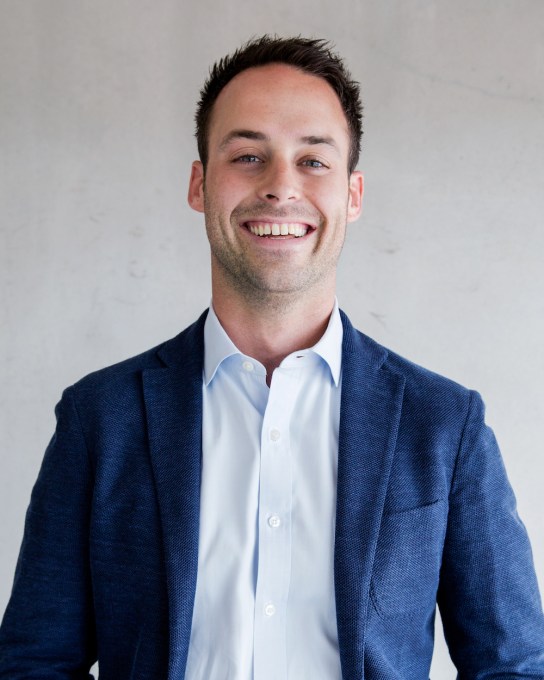
Good Eggs CEO Bentley Hall
The new funding was led by Glade Brook Capital Partners, with participation from GV, Tao Invest, Finistere Ventures and Rich’s, as well as previous investors Benchmark Partners, Index Ventures, S2G, DNS Capital and Obvious Ventures. Glade Brook’s J.P. Van Arsdale is joining the company’s board of directors.
“The grocery market is undergoing fundamental change and the shift to e-commerce and higher quality products and services is accelerating,” Van Arsdale said in a statement. “Good Eggs is experiencing rapid growth with strong unit economics and is well-positioned to become a category-defining leader. We are excited to partner with their team to help drive future growth and expansion.”
In addition to geographic expansion, Hall said the money will allow Good Eggs to continue adding new products and to find ways to improve the e-commerce experience.
In addition to the funding, Good Eggs is also announcing that it has hired Vineet Mehra as its chief growth and customer experience officer. Mehra was previously chief marketing officer and chief customer officer at Walgreens Boots Alliance, and before that as executive vice president and global chief marketing and revenue officer at Ancestry.
Source: https://techcrunch.com/2021/02/03/good-eggs-funding-2/
Finding, and retaining, frontline workers has likely never been as critical as it is in these pandemic days.
Enter WorkStep, a four-year-old startup that was founded with the mission of helping large supply chain employers do just that. The fully distributed company announced this morning that it has closed on a $10.5 million Series A round, building on top of a previously unannounced $6.7 million seed funding that included equity and a convertible note.
FirstMark Capital led the Series A financing, which included participation from returning backer and strategic partner Prologist Ventures.
Dan Johnston, co-founder and CEO of WorkStep, said the Employee Lifecycle Management (ELM) software platform was designed to not only help large supply chain employers source new frontline employers, but to also onboard, train, and keep them happier with the goal of them staying on board longer. Johnston experienced some of the challenges firsthand when he managed a warehouse in Portland, Oregon, more than a decade ago.
The COVID-19 pandemic has only highlighted the importance of the work frontline employees do – from serving food to delivering packages. But with the increasing dependence on supply chain labor came record turnover, points out Johnston – leaving many companies understaffed and remaining workers stretched thin.
WorkStep claims to provide human resources, recruiting and operations leaders “full transparency” across the employee lifecycle to help companies minimize that churn. The company had previously built out its cloud-based Hire offering and then last fall, launched its Retain product.
“The pandemic has forced companies of all sizes to prioritize the health, safety and satisfaction of frontline teams,” he said.
Its customers include hundreds of industrial, logistics, transportation and warehousing employers across North America –– including regional 3PLs (third-party logistics companies) and distribution centers, as well as 16 of the Fortune 500. Customers include grocery chain Kroger, Alpine Food Distributing and TransPak, among others.
WorkStep says it has “reached” 500,000 supply chain workers over the years.
WorkStep claims that its Retain offering reduced turnover by up to 29 percent for a Fortune 100 food & beverage company with whom it conducted a case study. This saves companies money in replacement and retraining expenses, which can add up.
As a result of launching Retain last fall, according to Johnston, WorkStep saw its business more than double in the second half of 2020. This led the company to end the year as “bottom line profitable,” meaning that its revenue exceeded expenses in the last two months of the year.
And while WorkStep did not necessarily need to take on new capital, the company saw an opportunity to double down so it could continue to scale, Johnston said.
“This was an opportunistic round,” he told TechCrunch. “The turnover in this segment has become a core focus.”
WorkStep plans to use its new funding to more than double the size of its existing team of 14 employees across engineering, product, sales and customer success departments this year and triple it by the end of fiscal year 2022.
FirstMark Capital’s Adam Nelson was in the room with the company during its first whiteboard sessions and believes WorkStep is addressing a “massive” opportunity.
“We think the real differentiator between WorkStep and the existing solutions in the space is that WorkStep doesn’t see temporary staffing/gig liquidity as a solution,” Nelson told TechCrunch. “They see it as a symptom of a multi-hundred billion dollar deadweight loss that’s created when employers aren’t able to find, train and retain the right people.”
WorkStep, he added, is addressing the full employee lifecycle and leveraging the data “to give a voice to frontline workers while also making employers smarter and more proactive.”
India has issued a notice to Twitter, warning the American social firm to comply with New Delhi’s order to block accounts and content related to a protest by farmers and not “assume the role of a court and justify non-compliance.” Failure to comply with the order may prompt penal action against Twitter, the notice warns.
The warning comes days after Twitter blocked dozens of high-profile accounts in India in compliance with New Delhi’s request, but later lifted the restriction.
Twitter “cannot assume the role of a court and justify non-compliance. Twitter being an intermediary is obliged to obey the directions as per satisfaction of authorities as to which inflammatory content will arouse passion and impact public order. Twitter cannot sit as an appellate authority over the satisfaction of the authorities about its potential impact on derailing public order,” said the notice, a copy of its summary was reviewed by TechCrunch.
India’s IT ministry expressed concerns over what it deemed derogatory and factually incorrect tweets and hashtags that have been circulating in India this week that it said were designed to spread hate. “It is thus clear that, the offending tweets/ hashtag remained in public domain and must have been tweeted and re-tweeted several times at the risk and cost of public order and at the risk of incitement to the commission of offences,” the letter said.
Twitter did not immediately respond to request for comment.
For more than three months, tens of thousands of farmers (if not more) in India and elsewhere have been protesting against three laws passed by Prime Minister Narendra Modi’s government that they say allow greater private sector competition.
Twitter, which reaches more than 75 million users through its apps in India, has emerged as the single-most important online forum for people seeking to voice their opinion on this matter. Singer Rihanna, who has more followers on Twitter than any Indian actor or politician, tweeted a CNN news story on Tuesday about the protests in India and asked “why are’t we talking about this!?
why aren’t we talking about this?! #FarmersProtest https://t.co/obmIlXhK9S
— Rihanna (@rihanna) February 2, 2021
We stand in solidarity with the #FarmersProtest in India.
https://t.co/tqvR0oHgo0— Greta Thunberg (@GretaThunberg) February 2, 2021
High-profile Indian actors including Akshay Kumar, Ajay Devgn, Karan Johar, and Ekta Kapoor cautioned Indians on Wednesday to not fall for “propaganda.”
Farmers constitute an extremely important part of our country. And the efforts being undertaken to resolve their issues are evident. Let’s support an amicable resolution, rather than paying attention to anyone creating differences.
#IndiaTogether #IndiaAgainstPropaganda https://t.co/LgAn6tIwWp
— Akshay Kumar (@akshaykumar) February 3, 2021
Raman Chima, a senior international counsel and Asia Pacific Policy director at Access Now, a non-profit internet advocacy organization, said in a series of tweets that instead of threatening social media platforms, India’s IT ministry “needs to explain why blocking entire handles & seeking the banning of hashtags does not violate the Indian Constitution.” He said the ministry has neither been transparent nor respected the rights.
“You can choose to disagree, correct, ridicule, or engage with such fears, outcry. Seeking to ban & precensor such discussions is a travesty of India’s Constitution + international human rights law. This is not what 21st Century India should permit, nor what our founders envisaged. The Ministry of Electronics and IT should release its actual orders and all documentation behind the Govt’s decisions to – (1) issue these orders and (2) press the matter with Twitter and other social media platforms. Don’t hide; explain & justify how this is not unconstitutional.”
Embedded finance — the idea of offering financial products where customers are already congregating via white label solutions and APIs – isn’t an entirely new concept. In fact, in one form or another, such as point of sale credit, the concept has existed for years and long before Silicon Valley venture capital firm and media company (ha!) Andreessen Horowitz made it a thing. However, fuelled by cloud technology and a plethora of new fintech and Banking-as-a-Service startups, there is no doubt the embedded finance trend is accelerating.
The latest company to declare its hand is Berlin-based Banxware, which offers embedded finance in the form of loans for SMEs, in partnership with marketplaces, payments providers, and others. It launched in December and today is disclosing that it has raised €4 million in seed funding.
Leading the round is Force over Mass, and VR Ventures. They are joined by HTGF, and private investors in banking, payment and e-commerce.
Banxware says it will use the investment to develop and grow its embedded white label financial services offering, and expand its team. In addition to lending, the startup will also soon offer card-based products and other financial services.
Banxware’s tech and infrastructure enables any company to offer loans and other banking services to SME customers. The idea is to act as the link between banks (lenders), digital platforms, and merchants. Banks get access to hard to reach SME customers. Platforms, such as online marketplaces, can up-sell financial products beyond their core offering. And merchants benefit from speedy access to working capital.
“SMEs have a hard time to access capital when needed, especially when they are less than three years old or do not have the most pristine credit history,” explains co-founder and CEO Jens Röhrborn. “On top of this, loan applications, i.e. loan decisions and loan payout, still take several weeks in most cases.
“More and more sellers and merchants are using digital platforms through which they sell their products or process their digital payments. By using the recent historic data on these merchants provided by the platforms, we can lend against their future revenues”.
This has seen Banxware build an instant lending tool that includes AML and KYC compliance, and a scoring engine that analyzes historic platform data and data from third party providers, such as account information providers and external scoring services. The promise is an instant loan decision and loan payout, “all in less than 15 minutes”.
“On the lending side, we work with both balance sheet lenders and lending vehicles with whom we pre-agree on lending terms and loan decision criteria and on whose behalf we execute the loan decision,” says Röhrborn. “Merchants repay their loan in such a way that platforms subtract a certain percentage of the future merchant payouts”.
Röhrborn says the company’s instant lending tool is “only the beginning” and that Banxware will develop additional embedded financial services and expand internationally.
Meanwhile, the German fintech currently generates revenue by charging a one time fee for each loan that is processed through its platform and via a one off customization fee.
Eyelash extensions have taken off in recent years — particularly in Asia — but the audience is only so broad. Getting extensions — semi-permanent fibers that are attached to one’s natural eyelashes — can require hundreds dollars and hours in the seat of a lash stylist. There’s always the risk, too, of irritation or worse. Little wonder that, even accounting for low-budget lashes that can be applied at home, the market stands at around $2 billion, which is too small a market to capture the attention of most venture capitalists.
Luum, a four-year-old, 15-person, Berkeley, Ca.-based robotics company, thinks it can change the math — and attract investment — by “exponentially” expanding the market, says its CEO, Philippe Sanchez, who has overseen large chain businesses, including as a managing director for Starbucks in France.
The way forward, he says, is through robotics, artificial intelligence, and machine learning, which Luum says it’s using to ultimately create a robot that that can apply lashes in 20 minutes and, if all goes as planned, will be widely available in beauty shops. More, because lash extensions need to be replaced every two to four weeks as the lashes fall, customers will come back again and again.
Right now, there’s a bit of magical thinking involved, admits Sanchez. The tech currently relies on Epson industrial robots to which a variety of arms and sensors are attached, making it look a little like something you might see in the dentist’s office. The procedure of applying lashes has been tried out 100 times on 25 brave souls alone. The process currently takes as long as it would to apply lashes by hand, too, meaning a couple of hours.
Still, Luum, which has raised $10 million to date from Foundation Capital and others and is about to begin talking with investors about a Series A round, is convinced it has the right team to chase and grow what it sees as a big and underserved opportunity in the beauty space.
We talked with Sanchez yesterday afternoon about the company and its next steps. Our chat has been edited for length and clarity.
TC: So you are targeting this popular treatment in what seems like a very fragmented industry.
PS: It’s very popular and yet a little bit undiscovered and yes, it’s very fragmented. There are 34,000 lash extension services being offered right now in the U.S. alone, where you’ve got an artist coming over to you and selecting one lash extension at a time, dipping it in an adhesive, and gluing it to an existing lash, then waiting a few seconds to get the next one and the next one, and two hours later, you have amazing lashes that look extremely natural.
But these are individual lash artists. And we see this as a great opportunity to reinvent the category and take a service that’s already popular and make it even more popular with high-level execution and a new world-class brand.
TC: So the idea is that you create a brand and develop a chain of walk-in centers around the country and world where these eyelashes will be robotically attached?
PS: Correct. We want to leverage our technology to build our brand and launch a chain of studios, as well as to license the technology to people who already sell beauty services and products and and offer them a chance to either be much better at what they do if they are lash artists or, if you know, they have a hair salon or a large cosmetic retailer, they can [add lashes as an ancillary business]. They love the idea of returning customers having to come back every month for services, and lash extensions bring them back into their stores.
TC: This obviously requires the same or better precision than human fingers, along with high safety requirements given this hardware is so near to someone’s eyes. How does the robot work right now?
PS: The machine is pretty large and pretty soft and very advanced. There is a bed just like you would have in a first-class business flight. And the machine nearby that is about the size of a human, and so you lay in the bed and the machine work overs your face — you have a mask, just like if you were to do a manual extension — and it has a little robotic arm that does the job of a person but is much faster and more precise than any manual application. And it’s very safe. It’s got little prongs in the plastic at the end of these arms that are very light held by very light magnets because you need only a few grams of force to manipulate the lash.
TC: So if there was any type of external event — an earthquake or something . . .
PS: . . . the arms literally fall because they’re held by these little very light magnets. If you you shake the machine or somebody sneezes, the arms will fall. It creates an environment that simply cannot hurt you, which is critical to the service itself.
TC: Are you licensing anyone else’s tech or building everything in-house eventually?
PS: It’s all built in house. We’re leveraging advanced robots from Epson that are very good at doing precise manipulation and that are fast. But [as for] IP in the beauty space, there was essentially no prior art, so we have secured a patent already in the U.S and Korea and Australia and [have] 25 patent cases around the world that are very broad and provide us with a moat and protection for the company at large.
TC: How much will these robots cost?
PS: They will cost about $125,000 or so, but this one-time capital expense can boost productivity of labor by four or six times, so you’ve essentially increased the throughput of one bed, one lash artist, by six. And the machine lasts four to five years.
TC: Plus other costs.
PS: You will have maintenance costs, but it’s essentially pure margin. For most of those consumer service business, most of the cost goes goes into the labor. That was for my experience at Starbucks.
TC: How far away are you from realizing this vision?
PS: COVID [slowed us down], though we can conduct consumer tests again right now [as California reopens slightly], so we’re testing the machine, which is already able to deliver a simple style at about the speed of a human. And as we continue to develop and work over the next few months and get closer to opening our first studio, the performance of the machines will increase to twice the speed and three times the speed and four times the speed of a human application.
TC: You need more capital toward that end. How much are you looking to raise?
PS: A $15 million Series A. That will allow us to open our first studio and validate the unit economic model, as well as to build our third-generation machine. The capital will also be deployed to start to build the foundation of a world class beauty brand.
TC: Who should investors know is on your team?
PS: The company was founded by Nathan Harding, who also founded the [robotic exoskeleton pioneer] Ekso Bionics, and Kurt Amundson [who worked with Harding at Ekso Bionics for a decade]. They’ve got tremendous experience and expertise already in the world of advanced robotics, and also computer vision on the computer vision side.
TC: What’s to keep a company like Dyson from jumping into this market if you’re able to prove there is one?
PS: Some folks will realize that this is an attractive space and it’s worth looking at, but we’ve got a couple of years on them already.


