& meet dozens of singles today!
User blogs

NASA has released video taken by the Perseverance landing module and rover showing the famous “seven minutes of terror” in a bracing first-person perspective. The images sent back Friday were just a teaser — this is the full experience, and the first video of a Mars landing ever captured.
A full description of the rover’s descent and mission can be found here, but briefly stated here’s what happened:
After decelerating in the atmosphere interplanetary velocity, the heat shield is jettisoned and the parachute deployed. Beneath the heat shield are a number of cameras and instruments, which scanned the landscape to find a good landing spot. At a certain altitude and speed the parachute is detached and the “jetpack” lower stage takes over, using rockets to maneuver towards the landing area. At about 70 feet above the surface the “skycrane” dangles the rover itself out of the lander and softly plops it down on the ground before the jetpack flies off to crash at a safe distance.
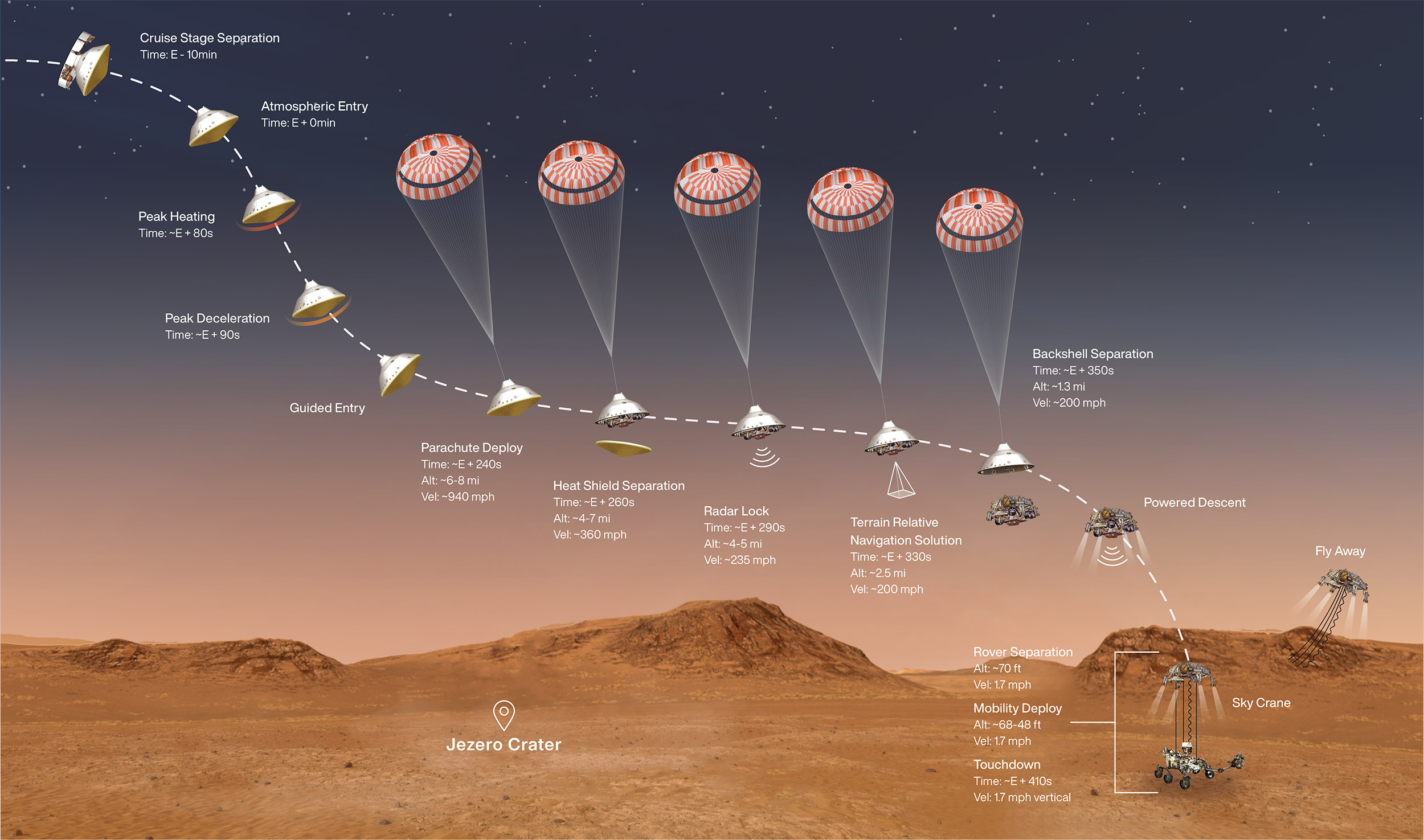
Image Credits: NASA/JPL-Caltech
The whole process takes about seven minutes, the last few seconds of which which are an especially white-knuckle ride.
While previous rovers sent back lots of telemetry and some imagery, this level of visual documentation is a first. Even Insight, launched in 2018, wasn’t able to send back this kind of footage.
“This is the first time we’ve actually been able to capture an event like the landing of a spacecraft on Mars,” said Mike Watkins, head of JPL, at a press conference. “These are really amazing videos, we all binge watched them over the weekend if you can call a one minute video binge watching. We will learn something by looking at the performance of the vehicle in these videos but a lot of it is also to bring you along on our journey.”
The team discussed the entry, descent, and landing camera system or EDL cams, which were made both to monitor how the process went and to provide the visceral experience that the whole team craved.
“I don’t know about you, but it is unlikely at this point in my career that I will pilot a spacecraft down to the surface of Mars,” said Matt Wallace, deputy project manager of Perseverance at JPL. “But when you see this imagery I think you will feel like you are getting a glimpse into what it would be like to land successfully in Jezero crater with perseverance.”
There were upward-facing cameras on the capsule, jetpack, and rover, and downward-facing cameras on the latter two as well, providing shots in both directions for practically the whole process. This image of the heat shield falling away feels iconic already – revealing the desert landscape of Mars much like film we’ve seen of Apollo landings on the Moon:

Image Credits: NASA/JPL-Caltech
You can see the whole thing below:
Over 30 gigabytes of imagery were captured of the descent even though one of the cameras failed when the parachute deployed. Sending data back (via Mars orbiters overhead) is a slow process at first, about a 2 megabit connection (still incredibly fast compared with old systems) that slowly gets stepped up to multiples of that.
Practically every frame of the video offers new information about the process of landing on Mars — for instance, one of the springs used to eject the heat shield can be seen to have disconnected, though it didn’t affect the process. All the footage has been and no doubt will continue to be scrutinized for other insights.
In addition to these amazing landing videos, Perseverance has sent back a number of full-color images taken by its navigation cameras, though not all of its systems are up and running yet. The team stitched together the first images of Perseverance inspecting itself and its surroundings to form this panorama:
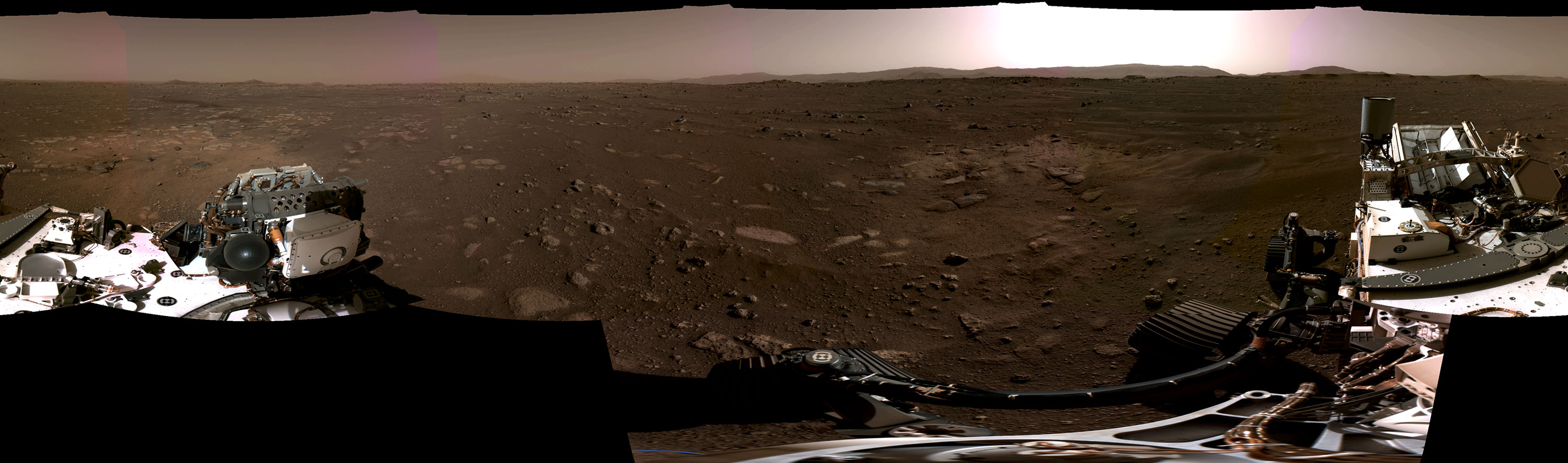
Image Credits: NASA/JPL-Caltech
We’ll have many, many more images soon as the team processes and uploads them.
As a parting “gift,” the team provided the remarkable first sound recording from the surface of Mars; they hoped that this would both provide new insights and also let anyone who can’t see the images experience the landing in a different way.
The EDL system included a microphone to capture the sound of the landing, but sadly didn’t work during the descent. It is, however, working perfectly well on the surface and has now captured the ambience of the Red Planet — and while the sound of a gust of wind may not be particularly alien, it’s incredible to think that this truly is wind blowing across another world.
Source: https://techcrunch.com/2021/02/22/watch-perseverances-harrowing-descent-to-the-surface-of-mars/
EquityBee, a stock option marketplace startup, has raised $20 million in a Series A round of funding.
Group 11 led the financing, which also included participation from Oren Zeev Ventures, Battery Ventures and ICON Continuity Fund. It brings the company’s total raised to over $28 million since its 2018 inception.
EquityBee CEO and co-founder Oren Barzilai says his company’s mission is to help educate startup employees on the meaning of their stock options, as well as provide them with funds to be able to purchase them.
“I have seen many of my friends and colleagues negotiate a $500 salary increase, but completely disregard their stock options package, from lack of knowledge due to the whole field of startup stock options being opaque,” said Barzilai, who also founded Tapingo, which was acquired by Grubhub in 2018 for $150 million. “As a founder I saw my team members who helped build the company not take part in our success because they left prematurely and didn’t exercise their stock options.”
The way it works is fairly straightforward. EquityBee provides capital to startup employees so they can purchase stock options. The employees get money to cover the cost of exercising their stock options and the taxes. The investors who helped provide the funding so they could do that get a return, or a share of the profit, if there’s “a liquidity event.” EquityBee makes money by charging an upfront fee from the investor on the investment day, as well as any carried interest upon a successful exit or IPO.
Barzilai said that many employees don’t realize they have about 90 days to exercise options before they expire once they leave a company. And even if they do, they may not always have the money to exercise them. That’s where EquityBee wants to help.
The company was originally founded in Israel before launching in the U.S. market, and moved its headquarters to Silicon Valley in February 2020. Since then, it’s funded employees from “hundreds” of companies, including Airbnb, Palantir, DoorDash and Unity, with capital provided by family offices, funds and high-net individuals. Its investor community is made up of 8,000 funds, family offices and high-net worth individuals.
2020 was a good year for EquityBee, according to Barzilai, who says it grew by more than 560% the amount of money it raised to fund employee stock options. It also saw a 360% increase in the number of individual employees funded through its platform.
Looking ahead, the 33-person company plans to use the money toward hiring and expanding product offerings.
Dovi Frances, founding partner of Group 11, said it doubled down on EquityBee after backing the company in its $6.6 million funding round in February 2020 because it’s impressed by what it described as the company’s “perfect product market fit” and triple-digit growth.
WeWork co-founder Adam Neumann led the company’s $1.5 million seed round in September of 2018.
Spotify provided more details today about how it plans to monetize its investments in podcasts. The company said it’s launching a new audio advertising marketplace, the Spotify Audience Network, which will allow advertisers to reach listeners across Spotify’s own Originals and Exclusives, as well as podcasts via Megaphone and creation tool Anchor, and its ad-supported music, all in one place. The company also said it plans to offer podcasts on its self-serve ad platform, Spotify Ad Studio, starting with Spotify Originals and Exclusives in the U.S., in a beta test phase.
This will expand to include third-party podcasts in the future, the company noted today during its live online event, “Stream On.”
Currently, Spotify Ad Studio is being used by advertisers across 22 markets following its 2017 launch, to reach Spotify music listeners with both audio and video advertisements. Spotify said the service is its fastest-growing buying channel, but didn’t provide specific figures to detail that growth.

Image Credits: Spotify
However, the larger news on the advertising side was the launch of the new audio ad marketplace, Spotify Audience Network. Similar to some of its other forward-looking announcements today, Spotify was light on details about how exactly Spotify Audience Network would work — saying only that it’s in the “early stages of developing the offering,” and it expects to be able to share more at a later date.
However, the company positioned the marketplace as a “game changer,” particularly for podcasters looking to make money from ads, as well as for advertisers who want to reach Spotify’s audience of hundreds and millions, both on and off Spotify.
This news follows an investigative report by The Verge earlier this year which found Spotify was the main sponsor for Anchor advertising to date — despite its promises to find sponsors for smaller podcasters. It now appears Spotify has been in the process of building out its ad marketplace and tooling to make good on those promises, and may not have prioritized advertiser outreach in the meantime.
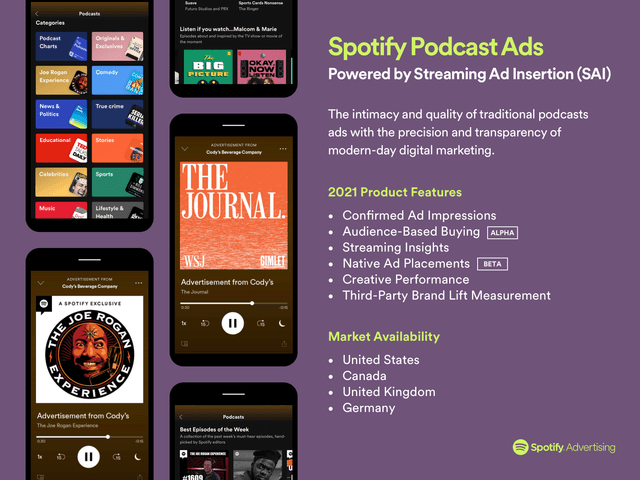
Image Credits: Spotify
Spotify today also spoke about how its recent acquisition of Megaphone would allow it to scale its Streaming Ad Insertion (SAI) technology, launched in early 2020, to publishers beyond its own Originals and Exclusives audio programs. Today, SAI is available in the U.S., Canada, Germany, and the U.K., and will expand to other new markets in 2021.
Since its debut, SAI has been rolling out new features like audience-based buying, native ad placements, and reporting on creative performance. Later this year, Spotify says it will make SAI available to Megaphone podcast publishers and “leading” Anchor creators.
But Anchor creators won’t be limited to advertising to grow revenues.
Spotify also briefly noted it will, in a few months, begin beta testing a new feature that will allow Anchor creators to publish paid podcast content to Spotify aimed at their most dedicated fans, as TechCrunch previously reported.
Splice, the New York-based, AI-infused, beat-making software service for music producers created by the founder of GroupMe, has managed to sample another $55 million in financing from investors for its wildly popular service.
The github for music producers ranging from Hook N Sling, Mr Hudson, SLY, and Steve Solomon to TechCrunch’s own Megan Rose Dickey, Splice gained a following for its ability to help electronic dance music creators save, share, collaborate and remix music.
The company’s popularity has made it from bedroom djs to the Goldman Sachs boardroom as the financial services giant joined MUSIC, a joint venture between the music executive Matt Pincus and boutique financial services firm, Liontree, in leading the company’s latest $55 million round. The company’s previous investors include USV, True Ventures, DFJ Growth, and Flybridge.
“The music creation process is going through a digital transformation. Artists are flocking to solutions that offer a user-friendly, collaborative, and affordable platform for music creation,” said Stephen Kerns, a VP with Goldman Sachs’ GS Growth, in a statement. “With 4 million users, Splice is at the forefront of this transformation and is beloved by the creator community. We’re thrilled to be partnering with Steve Martocci and his team at Splice.”
Splice’s financing follows an incredibly acquisitive 2020 for the company, which saw it acquiring music technology companies Audiaire and Superpowered.
In addition to the financing, Splice also nabbed Kakul Srivastava, the vice president of Adobe Creative Cloud Experience and Engagement as a director for its board.
The funding news comes on the heels of Splice’s recent acquisitions of music-tech companies Audiaire and Superpowered, creating more ways to improve and inspire the audio and music-making process. Splice is also pleased to announce that Kakul Srivastava has joined the company’s board.
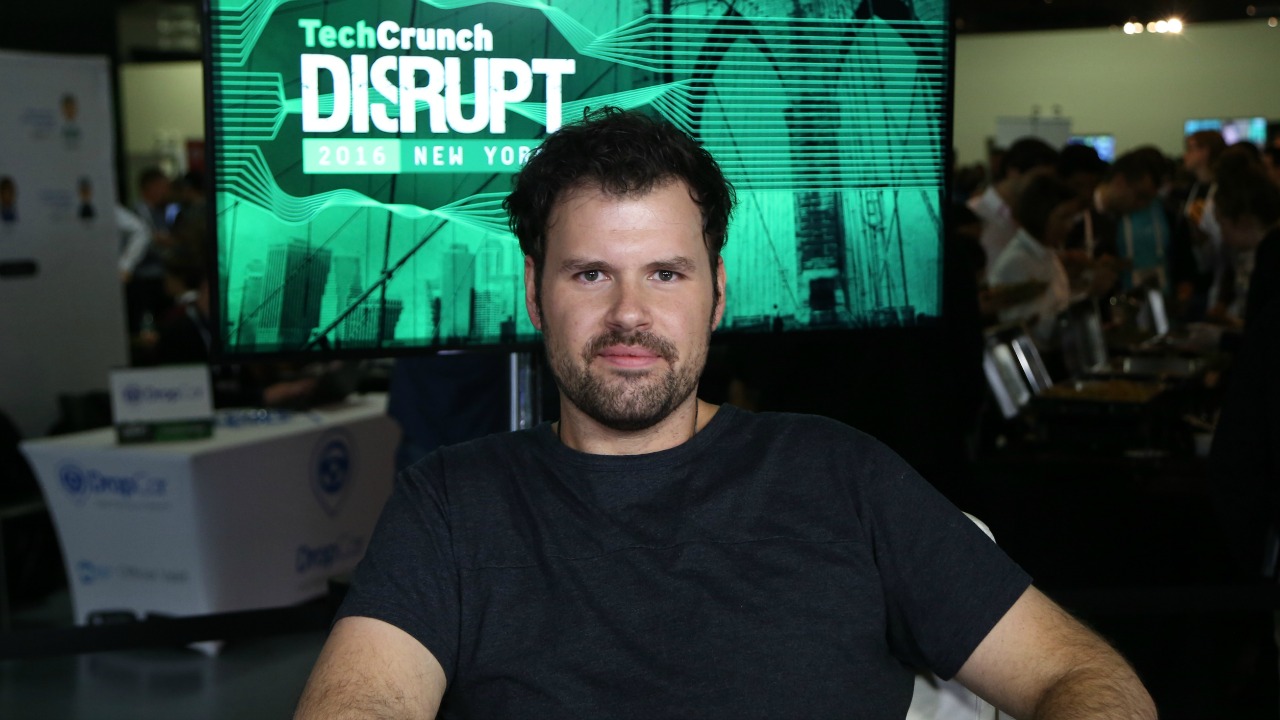
Steve Martocci at TechCrunch Disrupt in 2016. Image Credits: Getty Images
Splice’s beefed up balance sheet comes as new entrants have started vying for a slice of Splice’s music-making market. These are companies like hardware maker Native Instruments, which launched the Sounds.com marketplace last year, and there’s also Arcade by Output that’s pitching a similar service.
Meanwhile Splice continues to invest in new technology to make producers’ lives easier. In November 2019 it unveiled its artificial intelligence product that lets producers match samples from different genres using machine learning techniques to find the matches.
“My job is to keep as many people inspired to create as possible” Splice founder and chief executive, Steve Martocci told TechCrunch.
It’s another win for the serial entrepreneur who famously sold his TechCrunch Disrupt Hackathon chat app Group.Me to Skype for $85 million just a year after launching.
As part of its news announced at its live event today, Spotify announced a set of new creator tools and resources, including the expansion of Marquee, the launch of a tool called “Discovery Mode” into beta testing, the opening of the Canvas looping visual feature to all artists, and its plans to expand its Spotify for Artists platform to be available in 25 additional languages.
Marquee, launched in 2020, is a tool that allows artists and their teams to promote their new releases through full-screen, sponsored recommendations to both free and paid subscribers. Spotify says that users who see a Marquee pop-up are twice as likely to save the music.
Now, Marquee will be available as a self-serve buying experience for artists, allowing their teams to book campaigns at any time, as easily as they update their artist profile.
This self-serve feature will launch in the U.S., and this summer will expand outside North America, to the U.K. Ireland, Australia and New Zealand, before rolling out more broadly.
Spotify is also launching a beta of its audience development tool, Discovery Mode, a feature that lets artist teams select the music they want to prioritize for discovery, including through Spotify’s recommendations. During its pilot testing, this feature helped labels achieve higher royalty payments through the expanded discovery, the company claimed.
It will also require zero upfront budget to get started.
Finally, Canvas, the artwork feature that shows looping visuals as the music plays, will also now be available to all artists.
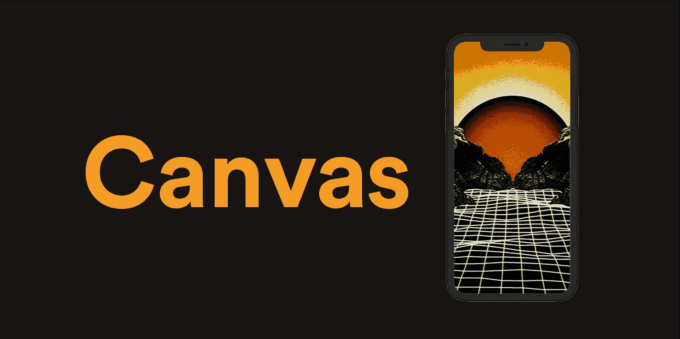
Image Credits: Spotify
Along with the news of Spotify’s global expansion to 85 new markets, Spotify’s dashboard for artists will also expand to include support for 25 more languages.
“From providing new ways for artists to express themselves, to creating more chances to be discovered, to giving artists the ability to pitch their music for playlist consideration, we continue to iterate based on artist feedback, building new ways to surface artists to new fans,” said Spotify’s Head of Marketplace, Charlie Hellman, about the expansions. “We’re seeing greater adoption of our tools by artists and labels of all sizes, and we’ve just scratched the surface of what’s to come,” he added.


