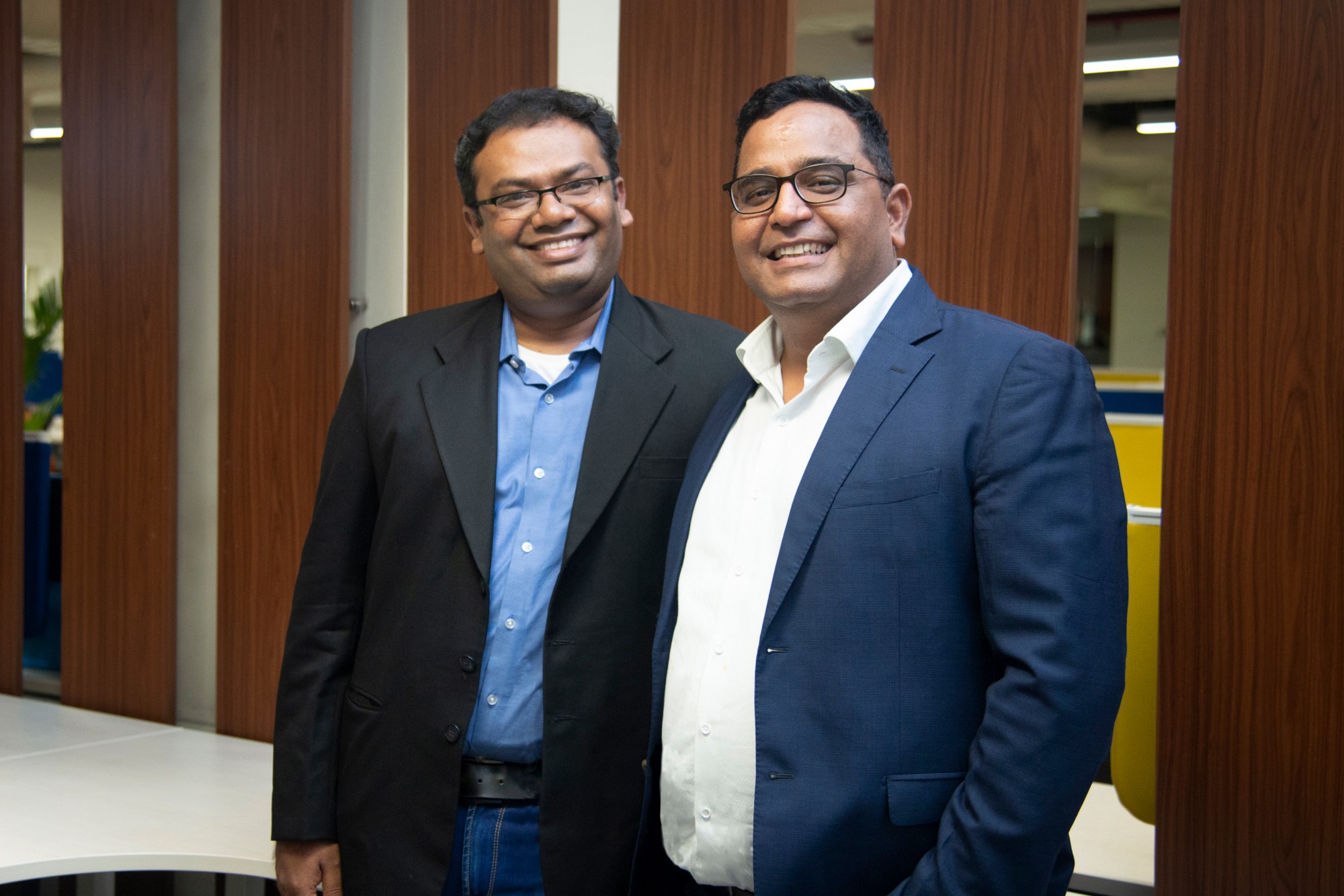
Zhou Yuxiang doesn’t have the typical profile for working in China’s manufacturing world. A soft-spoken yet incisive person in his early thirties, Zhou graduated from Dartmouth College with a degree in government and went on to work in investment banking in Hong Kong, following the path of many Chinese overseas returnees.
But a few years into his career, Zhou realized he wanted to build his own business. This was around 2015, a time when China was consumed by a startup craze amid Premier Li Keqiang’s campaign for “mass entrepreneurship and innovation.” Rather than going into the sleek world of consumer lifestyle, fintech or AI, Zhou picked manufacturing as a starting point.
During his time at Barclays, Zhou helped deep-pocketed Chinese manufacturers scour for merger and acquisition deals in Europe. He saw how factories in Germany digitize their operations using Siemens and SAP solutions. In China, “factories had a lot of money and could buy top-of-the-line equipment. But on the software management front, they were still very primitive,” said Zhou in an interview with TechCrunch.
“Most of the operation was done on paper. Every day, workers received a stack of papers telling them what to do, and in turn, they filled up the sheets reporting what material they had used… When you acquire these financially underperforming factories in Europe, you realize their software infrastructure capabilities are still far superior to yours,” Zhou added.
That digital gap encouraged Zhou to start Black Lake, a software platform for factory workers to log their daily tasks and managers to oversee the plant floor. Since its inception in 2016, the startup has raised over $100 million from GGV Capital, Bertelsmann Asia Investments, GSR Ventures, ZhenFund and others. The company recently closed a Series C round, pocketing nearly 500 million yuan ($77 million) and bringing on new backers including Singapore’s sovereign wealth fund Temasek, who led the round, as well as China Renaissance and Lightspeed Venture Partners.
Black Lake’s vision is to be a one-stop collaboration platform for factory workers and managers, digitizing data incurred in all stages of production, from client orders, material procurement, quality compliance, warehouse management, to logistics and shipment. The software analyzes these reams of data, churning out reports for bosses to check for abnormalities in production and for workers to see how they could increase their output and income.
Compared to SaaS incumbents from the West, Black Lake’s more localized services and affordable prices have a greater appeal to China’s wide swathes of small and medium-sized factories, Zhou argued. Black Lake tries to simplify its user experience to a Lego-like building process so factory bosses can easily customize the software for their own use. Workers access the cloud-based software from their smartphones, which have become ubiquitous in China’s affluent cities thanks to increasingly friendly device prices and data fees. A foreign SaaS giant’s solution could cost a factory at least three million yuan a year, while Black Lake 300,000 yuan or less, Zhou said.
To date, the company has served nearly 2,000 manufacturers and suppliers across the Greater China Region and Southeast Asia, counting in its customers Tesla, L’Oréal, Xiaomi, Sinopec, and Chinese state-owned conglomerate China Resources’ pharmaceutical group. The company claims to have reached 500,000 production workers.

Black Lake’s collaboration and data management software for factories
Black Lake is riding a perfect wave of “upgrading” in China’s manufacturing world. For one, the demand for customized products is rising as consumers become savvier. Instead of producing bottled water with the same packaging, for instance, beverage companies now design various looks tailored to different demographics. Factories need to adjust quickly to the flood of customized orders, and a cloud-based data management platform could be the solution, Zhou suggested.
The U.S.-China trade war is another impetus for China’s push for factory upgrade. Having felt the heat from trade sanctions, Chinese manufacturers look to cut expenses and improve productivity. That shift, along with the government’s “new infrastructure” policy to breathe high tech into traditional industries, makes Zhou all the more bullish about his business.
But Black Lake is certainly not the only one to have spotted opportunities in China’s push to modernize production, and enterprise software in China has a notoriously slow monetization cycle in part due to low adoption and companies’ reluctance to pay for services. The key is finding a viable business model to fund its dream to be the ultimate “data entry point” for China’s millions of factories.
With proceeds from its new funding, Black Lake plans to spend on product development, hiring, market expansion, and building an open platform for third-party developers. The startup realizes it can’t build everything factories need, and it’s already working with partners across telecommunications, cloud computing, automation and consulting, such as Huawei, Alibaba, SAP and McKinsey.
“When Chinese factories ‘wake up’, their speed of digitization will definitely leapfrog that of their American and European counterparts,” Zhou asserted.
Source: https://techcrunch.com/2021/02/21/black-lake-fundraise-77-million/
“Ten years in, TransferWise is now Wise,” screams the press release that landed in my in-box late last week. The fintech giant, most recently valued by private investors at $5 billion, is re-branding ahead of an expected IPO.
Of course, the company doesn’t actually make reference to a public listing — for regulatory reasons, it probably shouldn’t even if it wanted to — but the change of name will certainly make for a more streamlined ticker, while more broadly, the new moniker reflects how the decade-old company has long moved beyond B2C international money transfers alone to build what it now dubs a “cross-border payments network”.
“Originally launched in 2011 as a money transfer service for people, the company has expanded to build a cross-border payments network helping to make international banking cheaper, faster and more pleasant for its 10 million personal and business customers,” explains TransferWise.
The company has come far in tens years — you can view an early funding deck here — and today processes £4.5 billion in cross-border transactions every month, claiming to help customers save approximately £1 billion a year in reduced fees compared to using legacy banks.
More recently, having launched consumer and business products akin to a multi-currency bank account, including its own debit card, Wise has started to resemble a challenger bank, too, even if it has previously stated that there are no plans to apply for a full bank license.
Here’s how the company pitches the current product line:
Wise – building the world’s most international account. Send and spend money internationally, hold money in 55 currencies and get real account numbers in 10 currencies. Customers now hold over £3 billion in Wise, with 1.4 million debit cards issued.
Wise Business – the business account for going global, it has all the features of the personal account plus extras like bank feeds, mass payouts and multi-user access. Over 150,000 businesses joined Wise in the last 12 months
Wise Platform – the platform banks and companies like Monzo, GoCardless, and Xero use to tap into the Wise infrastructure, giving their customers cheaper, faster payments and international banking features. Wise Platform is live with banks in 10 countries across 4 continents.
Cue quote from Kristo Käärmann, CEO and co-founder, of Wise: “Today our name catches up with who we’re already building for – a community of people and businesses with multi-currency lives. That community now even includes the banks themselves. We’ve evolved to fix more than just money transfer, but the core experience of using Wise will remain faster, cheaper, and more convenient than anything else. Our mission remains the same. We’re still making — and always will be making — money work without borders.”
Customers can already opt into the new website at Wise.com. “The final switchover for all customers to the Wise brand will take place in March 2021,” says the company.
It’s been almost 10 years since Justworks launched. The platform, founded by Isaac Oates, was yet another example of software eating the world; in this particular instance, it was the world of HR. Since, the company has raised nearly $150 million in funding.
All the way back in 2016, Bain Capital Ventures caught a whiff of Justworks’ potential for success. Partner Matt Harris led the company’s $13 million Series B round back when Justworks hadn’t even hit $1 million in annual revenue.
On the next episode of Extra Crunch Live, we’ll sit down with Oates and Harris to discuss how they met, how the deal went down, and how they’ve managed their board member/founder relationship over the last five years.
As with any episode of ECL, Oates and Harris will also give live feedback on audience-submitted pitch decks during the Pitch Deck Teardown.
Extra Crunch Live is a members-only series that goes down each Wednesday at 12pm PT/3pm ET. If you’re not yet an Extra Crunch member, you should take a hard look in the mirror and then hit up this link.
Matt Harris started his investing career at Bain Capital private equity in 1995. In 2000, he founded his own firm called Village Ventures where he spent 12 years and invested primarily in fintech startups. In 2012, he returned to Bain Capital Ventures. His portfolio includes Acorns, Finix, Ribbon, and of course, Justworks, among many others.
Oates served for 12 years in the National Guard and Army Reserve as an intelligence officer. He also served as a software engineer at Amazon before starting his first company, Adtuitive, which was acquired by Etsy. Oates led the HR and payments team at both Adtuitive and Etsy, learning first-hand the ways in which the system was fundamentally broken. Justworks was born in 2012 and has gone on to become a household name in enterprise tech.
On Wednesday’s episode, we’ll talk about why Harris felt conviction in making a bet on Justworks and why Oates went with Harris over other investors. We’ll also learn more about how they handle disagreements, build trust, and their broader thoughts on current enterprise trends.
Then, we’ll dive into the Pitch Deck Teardown. Anyone can submit a pitch deck to be featured on an episode of Extra Crunch Live, but EC members will be prioritized in the list. If you want to get in on the action, submit your deck right here.
As with just about everything we do here at TechCrunch, audience members can also ask their own questions.
Extra Crunch Live has left room for you to network (you gotta network to get work, amirite?). Networking is open starting at 2:30 p.m. EST/11:30 a.m. PST and stays open a half hour after the episode ends. Make a friend!
As a reminder, Extra Crunch Live is a members-only series that aims to give founders and tech operators actionable advice and insights from leaders across the tech industry. Here’s yet another chance for you to join.
Harris and Oates join a world-class cast of speakers on Extra Crunch Live. In February alone we spoke to Lightspeed’s Gaurav Gupta and Grafana’s Raj Dutt, Felicis’ Aydin Senkut and Guideline’s Kevin Busque, and Accel’s Steve Loughlin and Ironclad’s Jason Boehmig.
You can check out past episodes of ECL here and upcoming schedule here.
Information on how to register for the Bain + Justworks episode on Wednesday is below.
See you there!
It turns out the most important decision made was not the vote to choose (and remove) in the election but Twitter’s permanent banning of the former President from the social network. Suddenly the temperature cooled, the new administration engaged with the details of vaccine rollout, and the second impeachment trial ended with an expected outcome. Twitter’s move was bipartisan if the trial was not.
Twitter’s other big move was the acquisition of Revue, a Substack competitor we’re moving to in production of the Gillmor Gang newsletter. It features tools to drag and drop articles from Twitter, Feedly, and other newsletters, but crucially the ability to reorganize these chunks as the writing develops. It’s my bet that the newsletter container will absorb blogs, podcasts, and streaming into a reorganized media platform available to creators small and large.
This kind of organic process development meshes well with the newsletter model. It encourages more timely releases, and an editorial feel that prizes quality over quantity. As newsletters proliferate, an evaluation of time over volume becomes most significant. It’s less an eyeballs pattern than a prioritization of what is not chosen and then what is, consumed or annotated with social recommendations. As with the Gang’s Frank Radice Nuzzel newsletter, the focus becomes less flow and more authority or resonance.
Daily Commentary
I have made the decision to cover the media exclusively in “The Radice Files” There are plenty of general news aggregators out there, and I for one, am just tired of those stories. I hope you’ll stay with me.
Instead of non-stop Trump, the only political story in the revamped Radice File is about how Fox News cut away from House manager video testimony to a commentary on the futility of covering the violence given the lack of votes for conviction. This shadow dance happens not just on Fox but the other centrist or left networks like CNN and MSNBC. The slant is not what’s interesting; the networks’ business model and the subtle effect on media programming is.
No wonder that streaming’s impact is being felt in the latest unicorn from Silicon Valley, Clubhouse. The audio streaming podcast disruptor is marketed as a FOMO inside hallway conversation, with a Twitter social cloud viral onboard mechanism that digs deep into your contact list and never lets go. Big ticket items such as a keynote-like conversation with Elon Musk are overbooked from the first minute. I tried unsuccessfully to join this week’s follow up with Marc Andreessen and his VC partner Ben Horowitz but it was sold out at 5000 after 30 minutes.
But there is definitely something tugging at me as I get notifications of people joining and creating rooms on various glitzy Valley topics. The live feeling of serendipity and catch it as you can promises the possibility of lightning in a bottle, the sensation of history being made, not just observed. Probably just an illusion, but it’s reminiscent of the feeling we used to get when putting a record on the turntable and daring the artist(s) to succeed. I still get that every time Miles’ Kind of Blue resumes, the awe with which time is reorganized at the atomic level.
People say a Clubhouse can go easily from 1 to 5 hours. I think RSS was killed by the red unread marks indicator. Size matters? Probably, if my college research suggests. But more important than length is ROI, and that’s where the Clubhouse effect dovetails with the newsletter moment. The ingredients of both are intuition, choice, the organic breadcrumb trail, and the payload.
Does this notification fit in with what pattern I’m trying to discern this moment. I love movies like Citizen Kane and North By Northwest for the mirage that they project of a universe fated by a biologically innate DNA. Sometimes we call it fate, other times dumb luck, but always that dumbest of phrases: It is what it is. Only this time the conceit is: It is what it’s about to be is. And if something happens, yes, I knew it. Not specifically, but given the mood the planet is in, it figures this could happen.
In a newsletter: the game is not to read everything, but only what and when and in what order. The prize is the analytics, which reward the reader with more stuff, and the publisher with validation of the impact of the combination of choice (citations) and context (writing.) In Clubhouse, it’s being in the room and what — knowing when to bail? For me it’s escaping the inevitability of the point being made in a podcast, or the filter of the business model of what I’m going to do next. If it’s Sunday, it’s Meet the Press. Maybe…
There’s a bunch of choice: Choice of room, people, time invested, moment of throwing good money after bad. Choice of what I’m playing hookey on — work, cable news, family fun, sleep. Clubhouse lets you publicly eavesdrop, a broadcast @mention that doesn’t give you the option of lurking. But you can do the closest thing to multitasking: doing the dishes, playing with the dog, monitoring. cable news with the sound off, DJ-ing for a private room, driving, etc. It is the new radio, pandemic be damned. Wherever you go, there you still are.
Newsletters? People, time reading, research replacement, subscription development, form of payment (money, authority, trust), influence or eyeballs. The game is trading current media for future rebundling, where the new publishers, studios, and artists are grown.
These choices create the breadcrumb trail, plowing under the old and furrowing the new. Newsletters are the leading edge of this refactoring, tilling the memes, models, and markets for the trends that become viral. The analytics of opens, email vs. web clicks, and notification triage are implicit for the most part in their signal. Harvesting these breadcrumbs requires the impact of new content created in response to the earlier data. Once you’ve identified a valuable consumer, your real work has just begun.
First, you look for the signature of exultation, the embedded essence of the experience that a certain combination of intuition and action rewards the detective. For that is what this new media is: an information thriller that taps into deep reading, listening, and sharing. Every catch phrase — round up the usual suspects, or we are not the droids you are looking for — represent uber themes we crave to navigate a terrifying treacherous world. We are the droids we’re looking for, and these new medias represent possible parallel worlds where we can not just survive but honor values of our choosing.
In the movies, it’s called the plotline. Clubhouse presumes there’s a story worth waiting for, the moments where we gain power by sharing and decorating reactions with clues as to what part of the same elephant we are investigating. We know intuitively that we’re not going to learn business secrets, but there is gold to be retrieved from the participants as they share their sense of humor or lack of it, their rhythm of when they join, raise their hand, are successful at being invited on stage, when they leave, whether they boomerang, and only a little what they actually say. The price for this is your breadcrumbs.
As much as I’m intrigued by Clubhouse, I’ve only actually joined or started a room twice. Once was by accident, as I realized by clicking on a link to see who was there. Me, I found out. Another was a conversation about a Techmeme podcast by the podcaster and Chris Messina of hashtag fame. I never could get into the big A16Z attractions. Like Frank Radice’s newsletter pivot, I was primarily interested in the atmospherics surrounding Andreessen Horowitz’s media strategy. But that doesn’t obviate the steady feeling that something substantial is going on here.
Media generally is swallowing its pride in the wake of the political nightmare we’ve been living through. Notice I say media, not mainstream media or social media. Smarter people than me can debate the distinction, but I think the difference between the two is overstated, and more importantly, not that indicative of what the value of these new media surges will turn out to embody. More and more, the substantial writing that filters in on Twitter, RSS (through Feedly), and aggregators like Nuzzel and Medium is significant in its approach to the central issues we’re struggling with. That includes traditional players like the New York Times, Wall Street Journal, The Information, and the tech journals, as they combine newsletter techniques with their substantial resources.
We’re seeing a merger of the medias, with the consensus around value and weight being measured by new metrics. In television, it’s the NewFronts combining digital and linear TV; in music it’s at the song level, not the album. Streaming has shaken the old networks to their core, with a horse race between Netflix, Amazon Prime, and Hulu, and ABC, NBC, and the old CBS. M&A has swallowed Fox, Time Warner, FX, and even an old studio, Paramount. And radio? You could say the usual suspects Apple, Google, Amazon, and Spotify, but Clubhouse? Like Zoom, I think so. Twitter and Facebook have bigger fish to fry, but Apple Car and Glasses are the key platforms Clubhouse will play in as we move into the autonomous work from anywhere reality. The payload is value, time management, and notifications at the core of the move to digital.
from the Gillmor Gang Newsletter
__________________
The Gillmor Gang — Frank Radice, Michael Markman, Keith Teare, Denis Pombriant, Brent Leary and Steve Gillmor. Recorded live Friday, February 19, 2021.
Produced and directed by Tina Chase Gillmor @tinagillmor
@fradice, @mickeleh, @denispombriant, @kteare, @brentleary, @stevegillmor, @gillmorgang
Subscribe to the new Gillmor Gang Newsletter and join the backchannel here on Telegram.
The Gillmor Gang on Facebook … and here’s our sister show G3 on Facebook.
Source: https://techcrunch.com/2021/02/20/gillmor-gang-leave-quietly/
You’ve landed on the web version of the weekly Human Capital newsletter. Sign up here to get this in your inbox every Friday at 1 p.m.
Welcome back to Human Capital. A lot happened this week pertaining to on-demand companies like Uber, Postmates, DoorDash and Instacart, and their respective gig workforces. Meanwhile, New York’s attorney general hit Amazon with a lawsuit over its warehouse labor practices and Twitter made some new commitments to increase diversity at the leadership level by 2025.
But that’s not all. Google fired another AI top ethicist, Margaret Mitchell. The company also internally published the results of its investigation into what happened with Dr. Timnit Gebru.
Apologies in advance for a slightly lengthier than usual newsletter but it’s all worth knowing, I promise.
Quick note: Human Capital is getting a new name because it seems to be causing some confusion, so don’t be alarmed when this hits your inbox next week with a different name. Name TBD.
New bill aims to regulate Amazon warehouses
California assemblyperson Lorena Gonzalez, who was behind gig worker bill AB 5, introduced new legislation that would regulate productivity quotas from companies like Amazon, Walmart and others. Called AB 701, the bill aims to better protect warehouse workers by implementing statewide standards.
“While corporations like Amazon are collecting record profits during the pandemic, employees in their warehouses are being expected to do more, go faster and work harder without clear safety standards,” Assemblywoman Gonzalez said in a statement. “It’s unacceptable for one the largest and wealthiest employers in the country to put workers’ bodies and lives at risk just so we can get next-day delivery.”
NY AG sues Amazon
New York Attorney General Leticia James filed a lawsuit against Amazon for allegedly failing to provide adequate health and safety measures for its workers. As part of the lawsuit, James alleges Amazon retaliated against workers Christian Smalls and Derrick Palmer after they complained to Amazon about the company’s lack of support during the COVID-19 pandemic. James’ suit came after Amazon’s preemptive lawsuit against her office, alleging that workplace safety is not something she has authority over.
While Amazon and its CEO made billions during this crisis, hardworking employees were forced to endure unsafe conditions and were retaliated against for rightfully voicing these concerns. Since the pandemic began, it is clear that Amazon has valued profit over people and has failed to ensure the health and safety of its workers. The workers who have powered this country and kept it going during the pandemic are the very workers who continue to be treated the worst. As we seek to hold Amazon accountable for its actions, my office remains dedicated to protecting New York workers from exploitation and unfair treatment in all forms.
Meanwhile, of course, Amazon warehouse workers in Bessemer are actively seeking to form a union. This week, reports showed Amazon was altering traffic signals as a way to prevent workers from being able to effectively talk with each other.
Ex-Postmates VP speaks out about the gig economy
Vikrum Aiyer, the now-former vice president of global public policy and strategic communications at Postmates, penned a memo to his former colleagues and other stakeholders in the gig economy outlining what he thinks needs to happen next in the industry.
In his letter, Aiyer says “it would be a mistake for us to think that mild tweaks to worker classification, or a single state ballot measure, create a durable path forward for meaningfully addressing what Americans truly worry about: the chance to work, take care of their families, and not fret about what comes next.”
Postmates drivers say they’ve become prey to scammers
A new report in The Markup showed scammers sometimes target Postmates workers. In one instance, a scammer stole $346.73 from a worker. You can read the full story here.
In related news, Uber, which owns Postmates, recently hired labor researcher and Uber critic Alex Rosenblat to lead the company’s marketplace policy, fairness and research efforts.
Uber drivers demand PPE and compensation for time spent sanitizing vehicles
Uber drivers shut down Market Street outside of Uber’s San Francisco headquarters to demand the company provide them with enough personal protective equipment during the COVID-19 pandemic. They also want to be compensated for time spent sanitizing vehicles in order to keep themselves and riders safe.
Uber lobbies in the EU for Prop 22-like legislation and loses key battle in the U.K.
Meanwhile, over in the EU, Uber is lobbying for Prop 22-like standards. In a white paper, Uber proposed a “new standard” for platform work, where it outlines the need to offer some benefits to workers while simultaneously steering away from the possibility of collective bargaining among workers. From TC’s Natasha Lomas:
A universal standard for platform benefits may sound progressive, but the notion of “relevant” benefits for gig workers risks fixing this labor force to a floor far below agreed standards for employment — closing off any chance of a better deal for a class of workers who are subject to persistent, algorithmic management.
In the UK, the Supreme Court ruled Uber drivers are employees and therefore entiteld to minimum wage and holiday pay. Also from Lomas:
The case, which dates back to 2016, has major ramifications for Uber’s business model (and other gig economy platforms) in the U.K. — and likely regionally, as similar employment rights challenges are ongoing in European courts.
DoorDash drivers are banding together to decline low-paying orders
The strategy, reported on Vice, is designed to beef up the base pay for drivers by working together to game the system.
From Vice:
The fundamental principles of the official #DECLINENOW movement rely upon all drivers in the movement to exercise their right to use the decline button to decline lowball offers for higher, more feasible ones,” reads a pinned post on the main Facebook group. “Declining lowball offers forces the algorithm to raise the base pay UP on the declined offer for the next driver as the need for DoorDash to service the order increases. In turn, Dashers will see an increase in higher paying offers, many times doing less deliveries for more money and a much higher paying ‘Per mile rate.’”
Turning jobs into gig work
Bloomberg had a really good feature about how the tech industry’s gig economy is impacting workers in other industries. It’s a must-read, but here’s a snippet:
Companies in a range of industries could use the Prop 22 model to undermine or eliminate employment protections. A week after the election, Shawn Carolan, a partner at early Uber investor Menlo Ventures, wrote an op-ed heralding the potential to spread Prop 22’s vision of work “from agriculture to zookeeping,” including to “nursing, executive assistance, tutoring, programming, restaurant work and design.”
President Biden nominates Jennifer Abruzzo to lead NLRB as general counsel
Abruzzo is currently the special counsel for strategic initiatives for the Communications Workers of America. For those unfamiliar, CWA has been making a name for itself in the tech industry by helping tech companies like Glitch and Alphabet unionize. Her appointment could prove to be quite beneficial for tech workers and gig workers alike.
In a statement, CWA President Chris Shelton said:
There is no one who has a more thorough grasp of the National Labor Relations Board and the purpose of the National Labor Relations Act than Jennifer Abruzzo. She is a brilliant attorney who understands how the actions of the NLRB impact the daily lives of people at their workplaces. President Biden’s selection of Jennifer as the NLRB General Counsel shows that under his watch, issues affecting working people will be handled by people like Jennifer who have dedicated their lives to helping workers — and not union busters like we saw during the Trump administration. We hope Jennifer’s confirmation process is speedy — working people need her at the helm of the NLRB now more than ever.
Instacart at odds with workers again
The company has reportedly suspended workers’ accounts for cancelling orders. According to Vice, these workers said they had good reason to cancel some of these orders, citing things like fears of safety and someone providing the wrong address.
Instacart, however, said it’s part of a fraud prevention policy that places accounts on pause if they suspect fraudulent or suspicious activity.
Twitter commits to increasing diversity at leadership level
Twitter has committed to the Silicon Valley Leadership’s Group 25×25 pledge, which challenges companies to do one of two things:
Currently, Twitter’s leadership team is just 6.5% Black, 3.9% Latinx, 2.8% multiracial and less than one percent Indigenous, according to its most recent diversity report.
Examining the “pipeline problem”
As I mentioned last week, I had the pleasure of chatting with Dr. Joy Lisi Rankin, a researcher at AI Now, about her research pertaining to the pipeline problem myth in tech. The story also features some insight from Uber Chief Diversity Officer Bo Young Lee, as well as Paradigm Director Courri Brady.
You can check that out here.
Tech engineer alleges sexism and bullying at Mailchimp
Kelly Ellis, a now-former principal engineer at Mailchimp, left her job earlier this week, alleging she was paid less than her male counterparts. In an email to employees, a higher-up at Mailchimp said the company “thoroughly and independently investigated the allegations and found them to be unsubstantiated.”
Glassdoor lets you filter ratings by demographics
Despite efforts from companies to create equitable environments, it’s clear that employees of certain demographics, like Black women, sometimes have very different experiences from their counterparts. Glassdoor aims to better surface those experiences through a new feature that allows folks to filter ratings by demographics.
Justice Through Code teaches returned citizens how to code
Justice Through Code, a semester-long coding and interpersonal skills intensive that takes place at Columbia University, aims to provide alternative paths for people once they reenter society.
The program has support from tech companies like Amazon Web Services, Coursera, Google and Slack.
Promise raises $20 million Series A round
Promise, a platform that makes it easy for people to navigate payments for child support, utilities, parking tickets and more, raised a $20 million Series A round. This round makes Promise founder Phaedra Ellis-Lamkins one of a handful of Black women who has raised more than $1 million.
Hey, Google…WTF?
Google fired Margaret Mitchell, the founder and former co-lead of the company’s ethical AI team. Mitchell announced the news via a tweet.
Google confirmed Mitchell’s firing in a statement to TechCrunch, Google said:
After conducting a review of this manager’s conduct, we confirmed that there were multiple violations of our code of conduct, as well as of our security policies, which included the exfiltration of confidential business-sensitive documents and private data of other employees.
News of Mitchell’s firing came shortly after Google internally announced the results of its investigation of Gebru’s exit, according to Axios. The company did not reveal what it found, but said it would implement some new policies to enhance diversity and inclusion at Google.
Google has a new ethical AI lead
Meanwhile, Google appointed Dr. Marian Croak to lead its responsible artificial intelligence division within Google Research, Bloomberg reported earlier today. Croak was previously the vice president of engineering at the company.
In her new role, Croak will oversee the teams working on accessibility, AI for social good, algorithmic fairness in health, brain fairness, ethical AI and others. She’ll report to Jeff Dean, SVP of Google AI Research and Health.
Also, we’re a little over a week away from TechCrunch Sessions: Justice, which takes place March 3. Be sure to snag your $5 ticket here to hear from folks like Backstage Capital’s Arlan Hamilton, former Amazon warehouse worker Christian Smalls, Congresswoman Barbara Lee and others.
Source: https://techcrunch.com/2021/02/20/essential-workers-advocate-for-themselves/