& meet dozens of singles today!
User blogs

Pula, a Kenyan insurtech startup that specialises in digital and agricultural insurance to derisk millions of smallholder farmers across Africa, has closed a Series A investment of $6 million.
The round was led by Pan-African early-stage venture capital firm, TLcom Capital, with participation from nonprofit Women’s World Banking. The raise comes after Pula closed $1 million in seed investment from Rocher Participations with support from Accion Venture Lab, Omidyar Network and several angel investors in 2018.
Founded by Rose Goslinga and Thomas Njeru in 2015, Pula delivers agricultural insurance and digital products to help smallholder farmers navigate climate risks, improve their farming practices and bolster their incomes over time.
Agriculture insurance has traditionally relied on farm business. In the U.S. or Europe with typically large farms, an average insurance premium is $1,000. But in Africa, where smallholding or small-scale farms are the norms, the number stands at an average of $4.
It is particularly telling that the value of agricultural insurance premiums in Africa represents less than 1 percent of the world’s total when the continent has 17 percent of the world’s arable land.
This disparity stems from the fact that the traditional method of calculating insurance through farm visits is often unaffordable for these smallholder farmers. Thus, they are often neglected from financial protection against climate risks like flood, drought, pestilence and hail.
Pula is solving this problem by using technology and data. Through its Area Yield Index Insurance product, the insurtech startup leverages machine learning, crop cuts experiments and data points relating to weather patterns and farmer losses, to build products that cater to various risks.
But getting farmers on board has never been easy, Goslinga told TechCrunch. According to her, Pula has understood not to sell insurance directly to small-scale farmers, because they can suffer from optimism bias. “Some think a climate disaster wouldn’t hit their farms for a particular season; hence, they don’t ask for insurance initially. But if they witness any of these climate risks during the season, they would want to get insurance, which is counterproductive to Pula,” said the founder in a phone call.
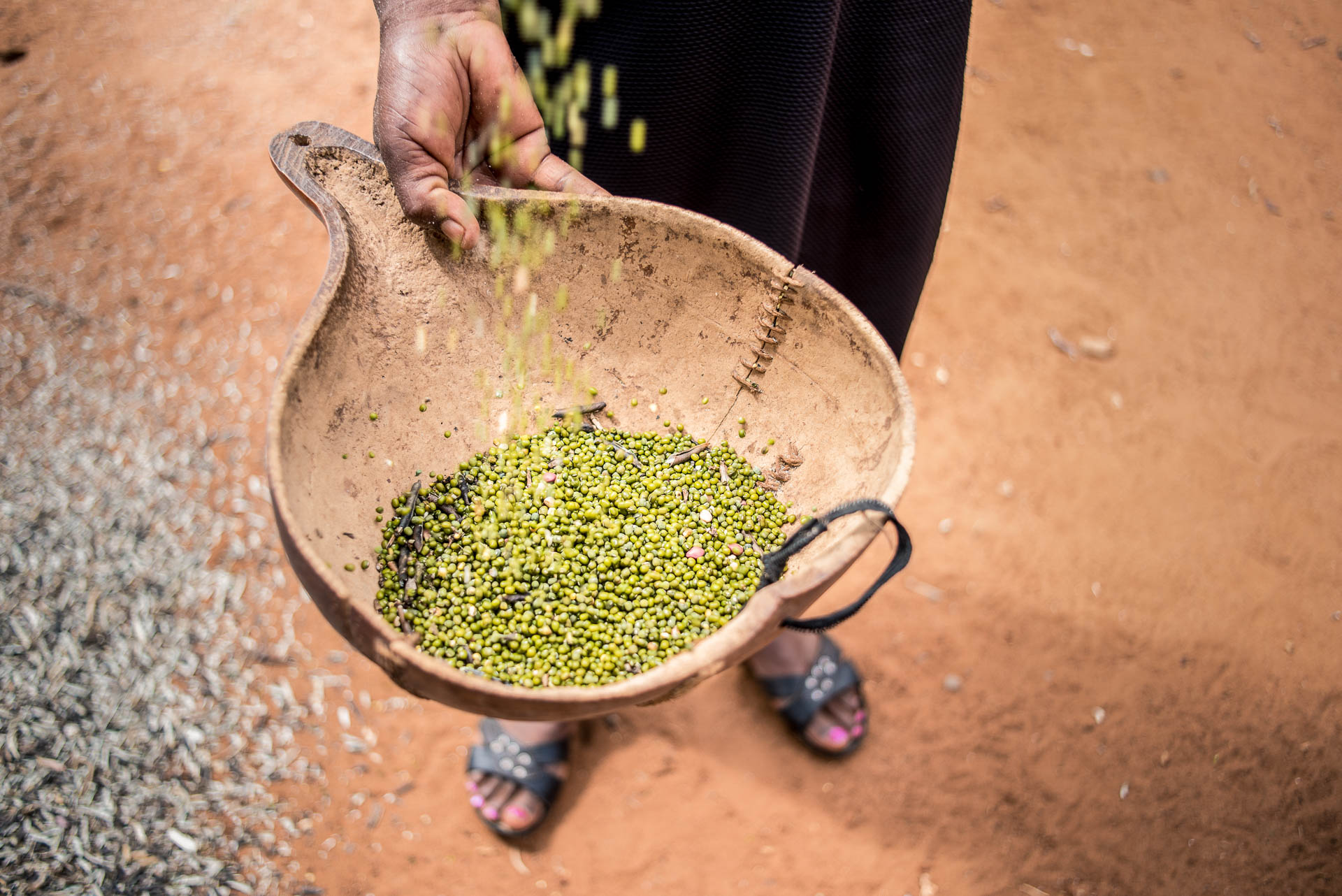
Image Credits: Pula
So the startup instead partners with banks. Banks provide loans to farmers and make it compulsory for them to have insurance. With the loan, banks can pay the insurance on behalf of the farmers at the start of the season. But at the end of the season, the farmer has to repay the loan with interest.
“The unit economics doesn’t work for us to work with farmers directly. But with banks, we know they provide loans to farmers with much better margins to pay for insurance. Also, we work together with government subsidy programs since they’re also interested in protecting their farmers.”
Through its partnerships with banks, governments and agricultural input companies, Pula is at the center of an ecosystem that provides insurance to smallholder farmers and has amassed 50 insurance partners and six reinsurance partners.
Its clientele includes the likes of the World Food Programme and Central Bank of Nigeria as well as the Zambian and Kenyan governments. Social enterprises like One Acre Fund, startups like Apollo Agriculture, and agribusiness giants like Flour Mills and Export Trading Group are also among Pula’s clients.
Co-CEOs with agricultural backgrounds
When Goslinga met Njeru in 2008, she worked for Syngenta Foundation for Sustainable Agriculture (SFSA). There, she started Kilimo Salama, as a micro-insurance program for more than 200,000 farmers in Kenya and Rwanda. She met Njeru who was the lead actuary at UAP Insurance, a partner to the Kilimo Salama program, at the time.
After staying with Syngenta for six years and recognising the need to provide standard insurance products for smallholder farmers, Goslinga left to start Pula with Njeru in 2015. However, it wasn’t until two years later that Njeru joined fulltime as he had a six-year engagement with Deloitte South Africa from 2012 as a consultant actuary. The pair both act as co-CEOs.
“When Thomas and I launched Pula in 2015, we had one goal in mind: to build and deliver scalable insurance solutions for Africa’s 700 million smallholder farmers,” Goslinga said. “With our latest funding, now is the time to break into new ground. In our five years since launching, we’ve built strong traction for our products. However, the fact remains that across Africa and other emerging markets, there are still millions of smallholder farmers with risks to their livelihoods that have not been covered.”
According to Goslinga, the COVID-19 pandemic helped Pula double its footprint and size as rural farming activities and operations continued despite pandemic-induced lockdowns.
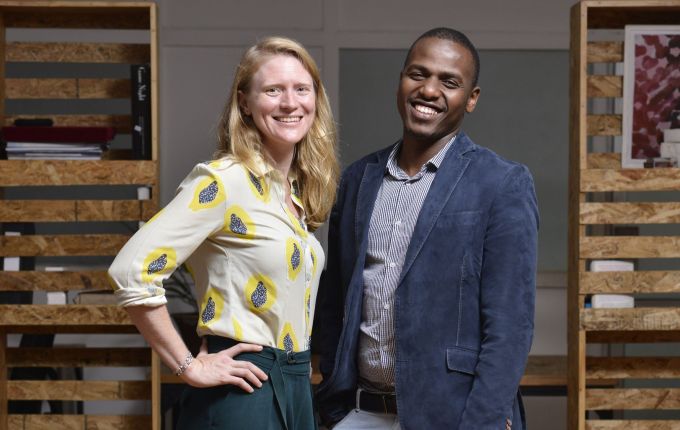
Pula co-founders and Co-CEOs (Rose Goslinga and Thomas Njeru)
Therefore, the new financing will scale up operations in its existing 13 markets across Africa, where it has insured over 4.3 million farmers. They include Senegal, Ghana, Mali, Nigeria, Ethiopia, Madagascar, Tanzania, Kenya, Rwanda, Uganda, Zambia, Malawi and Mozambique. Likewise, the Kenyan startup hopes to propel its expansion for smallholder farmers in Asia and Latin America.
Pula is one of the few African startups disrupting the farming industry with technology. Its Series A investment attests that investors’ appetite for agritech startups is still on the rise.
A week ago, Aerobotics, a South African startup that uses artificial intelligence to help farmers protect their trees and fruits from risks, raised a Series B round of $17 million. Last month, SunCulture, a Kenyan startup that provides solar power systems, water pumps and irrigation systems for small-scale farmers, raised $14 million.
Another startup is Apollo Agriculture which raised $6 million Series A, akin to Pula. Not only did the pair raise the same round, Apollo Agriculture and Pula both deal with providing financial resources to smallholder farmers. But while both companies might look like competitors, even to the admission of Goslinga, she argues that the startups are partners and complement each other.
As part of the new fundraise, TLcom’s senior partner Omobola Johnson will join Pula’s board. However, it was her colleague, Maurizio Caio, the firm’s managing partner, who had something to say about the round.
“The potential for the insurance market for smallholder farmers in Africa is huge, and under the leadership of Rose and Thomas, Pula has rapidly established a strong presence throughout the continent and has several high-profile clients on their books. We are confident of Pula’s potential for growth in spite of the pandemic and look forward to partnering with them as they execute the next phase of their journey,” he said in a statement.
For the lead investor, Pula’s investment marks the culmination of its busiest run of investments having led and co-led rounds in Okra, Shara, Autochek and Ilara Health within the past year.
Christina Juhasz, CIO at Women’s World Banking, the other investor in the round, explained that the organisation cut a check for Pula “given the legions of women engaged in small-hold farming and securing the food supply for communities around the globe.”
Sano Genetics, a startup with a broad mission to support personalised medicine research by increasing participation in clinical trials, has raised £2.5 million in seed funding.
The round is led by Episode1 Ventures, alongside Seedcamp, Cambridge Enterprise, January Ventures, and several Europe and U S.-based angel investors. It adds to £500,000 in pre-seed funding in 2018.
Sano Genetics says part of the new capital will be to fund free at-home DNA testing kits for 3,000 people affected by Long Covid. It will also further invest in the development of its tech platform and grow the team
Founded in 2017 by Charlotte Guzzo, Patrick Short and William Jones after they met at Cambridge University while studying genomics as postgrads, Sano Genetics has built what it describes as a “private-by-design” tech platform to help patients take part in medical research and clinical trials. This includes at-home genetic testing capabilities, and is seeing the company support research into multiple sclerosis, ankylosing spondylitis, NAFLD, and ulcerative colitis2, with a research programme for Parkinson’s disease on the agenda for later in 2021.
“For participants in medical research, the process is not user friendly,” says Sano Genetics CEO Patrick Short. “There is usually little to no benefit for participants beyond altruism, taking part is difficult and time consuming, and people are also concerned about the privacy of their sensitive genetic and medical information.
“[Therefore], for researchers in biotech, pharma, and academia, it is very difficult to attract and retain research participants, which adds substantial costs and time to their research. In particular for research involving genetics and precision therapies, it is doubly challenging to find the ‘right’ patients because genetic testing is not routine in the healthcare system”.
To help solve this, Sano Genetics matches relevant participants to research via its platform. It then makes participation easier by enabling at-home genetic testing and by guiding participants through the process.
“The system is designed so users know exactly what will happen with their data, and we give them straightforward ways to control their data,” explains Short. “We keep our users engaged and involved in the research process by giving them updates on the research they have been a part of, and with free personalised content including genetic reports, and stories from other people like them on our blog”.
A typical end user is someone who has a chronic or rare disease and is using the platform to take part in research that helps them personally (e.g. access to a new therapy via a clinical trial) or to help others like them.
Meanwhile, Sano Genetics generates revenue by charging biotech and pharma companies fees to find the right patients for their studies. “The typical study for us consists of a set-up fee, a per-test fee for our at-home genetic testing and analysis, and a fee for each referral we make of an interested and eligible participant to their research study,” adds the Sano Genetics CEO.
French startup Alma is raising a $59.4 million Series B funding round (€49 million). The company has been building a new payment option for expensive good. You can choose to pay over three or four installments. This product sounds familiar if you’ve used Klarna in the past. But Klarna isn’t available in France.
Cathay Innovation, Idinvest, Bpifrance’s Large Venture fund, Seaya Ventures and Picus Capital are participating in today’s funding round. In addition to today’s equity round, Alma is raising a credit line of $25.5 million (€21 million) to finance merchant payments.
What makes Alma attractive to merchants is that the startup is handling 100% of the risk involved with a payment over multiple installments. When a customer buys a bike over four installments, they’ll get charged over several months. But the merchant gets paid on day one.
Since I first covered Alma, the startup has launched the ability to pay later. You enter your card information right now but you get charged 15 days or a month later. It can be particularly useful if you’re unsure about something you’re buying and if you think there’s a chance you’ll send it back.
And it’s an attractive option in France where debit cards are the norm — not credit cards. Alma also plans to offer longer plans, such as the ability to buy now and pay over 6, 10 or 12 installments.
Thanks to the new influx of cash, the startup plans to triple the size of its team and reach €1 billion in annual payment volume within two years. It’s also going to expand to other countries, but with a specific focus on helping French merchants reach European customers living in other European countries.
Source: https://techcrunch.com/2021/01/25/alma-raises-59-4-million-for-its-klarna-like-payment-option/
Dubai-based cybersecurity startup SpiderSilk has raised $2.25 million in a pre-Series A round, led by venture firms Global Ventures and STV.
In the past two years, SpiderSilk has discovered some of the biggest data breaches: Blind, the allegedly anonymous social network that exposed private complaints by Silicon Valley employees; a lab leaked highly sensitive Samsung source code; an inadvertently public code repository revealed apps, code, and apartment building camera footage belonging to controversial facial recognition startup Clearview AI; and a massive spill of unencrypted customer card numbers at now-defunct MoviePass may have been the final nail in the already-beleaguered subscription service’s casket.
Much of those discoveries were found from the company’s proprietary internet scanner, SpiderSilk co-founder and chief security officer Mossab Hussein told TechCrunch.
Any company would want their data locked down, but mistakes happen and misconfigurations can leave sensitive internal corporate data accessible from the internet. SpiderSilk helps its customers understand their attack surface by looking for things that are exposed but shouldn’t be.
The cybersecurity startup uses its scanner to map out a company’s assets and attack surfaces to detect vulnerabilities and data exposures, and it also simulates cyberattacks to help customers understand where vulnerabilities are in their defenses.
“The attack surface management and threat detection platform we built scans the open internet on a continuous basis in order to attribute all publicly accessible assets back to organizations that could be affected by them, either directly or indirectly,” SpiderSilk’s co-founder and chief executive Rami El Malak told TechCrunch. “As a result, the platform regularly uncovers exploits and highlights how no organization is immune from infrastructure visibility blind-spots.”
El Malak said the funding will help to build out its security, engineering and data science teams, as well as its marketing and sales. He said the company is expanding its presence to North America with sales and engineering teams.
It’s the company’s second round of funding, after a seed round of $500,000 in November 2019, also led by Global Ventures and several angel investors.
“The SpiderSilk team are outstanding partners, solving a critical problem in the ever-complex world of cybersecurity, and protecting companies online from the increasing threats of malicious activity,” said Basil Moftah, general partner at Global Ventures.
Source: https://techcrunch.com/2021/01/24/spidersilk-pre-series-a/
There is no lack of state funding for China’s smart driving startups nowadays as the country advances its goal to become a global leader in artificial intelligence in a decade’s time. The latest to get a financial boost is Uisee, a Beijing-based company founded by a group of tech veterans including the former head of Intel Labs China, Wu Gansha.
Uisee said Monday it has closed a funding round north of 1 billion yuan ($150 million) from investors including the National Manufacturing Transformation and Upgrade Fund, a $21 billion state-backed fund set up in 2019 to promote and upgrade the manufacturing value chain in China, with the Ministry of Finance as the biggest shareholder.
Five-year-old Uisee is the first autonomous driving company the Fund has ever backed, according to the announcement, and the firm is expected to help propel forward the public transit and logistics sectors and become a “benchmark” autonomous driving enterprise in China, said a manager from the Fund in a statement.
Unlike Mobileye or China’s Momenta, which sell advanced driver-assistance systems as they invest in the development of more advanced Level 4 driving, Uisee leapfrogs ADAS and focuses on unmanned driving, co-founder and CEO Wu Gansha said in a previous interview.
Uisee enables autonomous driving for cases ranging from robotaxis and city buses to airports and logistics hubs. It’s secured a handful of major customers, including the Hong Kong International Airport, which is using Uisee’s tech to automate its baggage tractors, alongside state-backed automakers FAW Group, Dongfeng Motor, and more.
The new funding round, which also counts a number of undisclosed “industrial investors,” will allow Uisee to ramp up research and development and promote the industry’s at-scale monetization.
More to come…
Source: https://techcrunch.com/2021/01/24/uisee-150-million-round/


