& meet dozens of singles today!
User blogs

Millions of Ford and Lincoln-branded vehicles will be powered by Android operating system beginning in 2023 as part of a six-year partnership announced Monday that will bring embedded Google apps and services to drivers.
Ford and Google said as part of the partnership they will establish a new collaborative group called Team Upshift that will be used to develop new consumer experiences and services powered by the Android Automotive operating system. The team might create services that will change how customers buy a vehicle, for instance. The companies are also working together to create new business models with data. Google Cloud CEO Thomas Kurian noted that could mean using data to send consumers real-time notices or handle maintenance requests.
The two companies also announced that Ford has chosen Google Cloud as its preferred cloud provider.
The partnership marks a reversal for Ford, which has for years attempted to avoid third-party companies like Google and Apple, and instead pushed its open source platform. In 2017, Ford and Toyota Motor even formed a consortium known as SmartDeviceLink Consortium — a reference to an open source software version of Ford’s AppLink. The aim, at the time, was to speed up the deployment of the open source software to give consumers more options in how they connect and control their smartphone apps.
Android Automotive OS shouldn’t be confused with Android Auto, which is a secondary interface that lies on top of an operating system and relies on the user’s smartphone. Android Automotive OS is modeled after its open-source mobile operating system that runs on Linux. But instead of running smartphones and tablets, Google modified it so it could be used in cars.
Ford isn’t the only company with plans to incorporate a version of its Android operating system into its vehicles, although David McClelland, Ford Vice President of Strategy and Partnerships emphasized that the services and offerings would be unique.
For instance, Volvo announced in 2017 that it would use the Android OS and a year later said it would embed voice-controlled Google Assistant, Google Play Store, Google Maps and other Google services into its next-generation Sensus infotainment system. lvo. Polestar, the electric vehicle brand under Volvo, also uses Android Automotive OS to power the infotainment system for its newest vehicle, the Polestar 2.
Source: https://techcrunch.com/2021/02/01/ford-vehicles-will-be-powered-by-googles-android-operating-system/
Google and Ford today announced a new partnership around bringing Android Automotive to Ford’s Ford- and Lincoln-branded cars, starting in 2023. But at the same time, the two companies also announced that Ford has chosen Google Cloud as its preferred cloud provider.
“With Google Cloud, Ford will digitally transform from the front office to the car to the manufacturing plant floor,” Google Cloud CEO Thomas Kurian said in a press conference today. “And there are a number of different applications, including modernizing product development, improving manufacturing and supply chain management, using computer vision AI for employee training, inspection of equipment on the assembly line and other applications.”
Kurian also noted that Google and Ford are working to find new ways to monetize Ford’s data through features like maintenance requests and trade-in alerts.
“At Ford, we’ve got world-class in-house data insights and analytics teams,” David McClelland, Ford’s VP for strategy and partnerships, said. “We’ve recruited significant software expertise and we’re making great progress in this area. And we’re moving rapidly towards commercializing our new self-driving business. And with this news that Thomas [Kurian] and I are announcing today, we’re turbocharging all of that.”
McClelland stressed that Google “brought the entire company to the table for us across cloud, Android, Maps and much more.” It’s maybe also no surprise, given Google’s expertise in this area, that for is looking to leverage Google Cloud’s AI tools as well. This work will go beyond the actual driving experience, too, and include work on modernizing Ford’s product development, manufacturing and supply chain, as well as predictive maintenance in Ford’s plants.
Like other car manufacturers, Ford is also looking to find ways to use the data it collects to create a connection to its drivers that goes beyond the buying experience and (maybe) the occasional maintenance visit to a dealership. For this to work, it needs to be able to understand its customers and offer personalized experiences.
Today’s announcement marks a bit of a turnaround for Ford, which had previously banded together with a group of other car manufacturers with the explicit goal of keeping Google’s role in the automotive industry to a minimum. Now, only a few years later, the two are coming together in one of the deeper partnerships in the industry.
It’s also worth mentioning, that not too long ago, Ford had a deep partnership with Microsoft, which provided the basis of Ford’s Sync technology.
“From the first moving assembly line to the latest driver-assist technology, Ford has set the pace of innovation for the automotive industry for nearly 120 years,” said Sundar Pichai, CEO of Google and Alphabet. “We’re proud to partner to apply the best of Google’s AI, data analytics, compute and cloud
platforms to help transform Ford’s business and build automotive technologies that keep people safe and connected on the road.”
–
Source: https://techcrunch.com/2021/02/01/ford-bets-on-google-cloud-for-its-digital-transformation/
Apple has introduced an iCloud Passwords Chrome extension that will make life easier for those who use both Windows computers and other Apple devices, like a Macbook or an iPhone. The new browser extension lets you access the passwords you saved in Safari on your other Apple devices, then use them within Chrome when you’re on a Windows PC.
You can also save any new passwords you create in Chrome to your iCloud keychain, so it’s synced across your Apple devices.
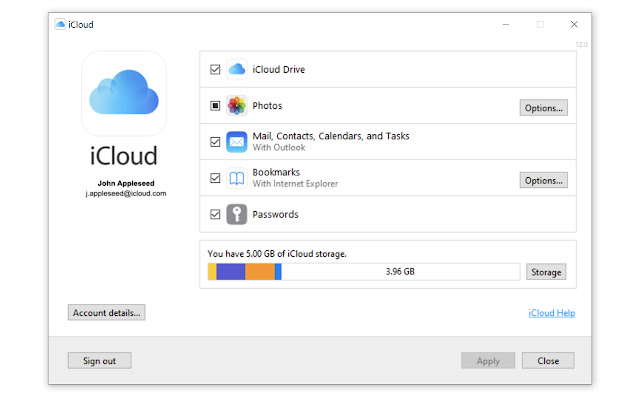
Image Credits: Apple
Apple didn’t formally announce the new feature, but reports of an iCloud Passwords extension had already been referenced in the release notes of the new iCloud for Windows 10 (ver 12), which arrived at the end of January. After the update, a “Passwords” section appeared in the app designated by the iCloud Keychain logo. This directed users to download the new extension, but the link was broken, as the extension was not yet live.
That changed on Sunday, according a report from 9to5Google, which found the new Chrome add-on had been published to the Chrome Web Store late on Sunday evening. Now, when Windows users access the new Passwords section, the dialog box that prompts the download will properly function.
Once installed, Chrome users on Windows will be able to access any passwords they saved or allowed iCloud Keychain to securely generate for them within Safari for macOS or iOS. Meanwhile, as Windows users create new credentials, these, too, will be synced to their iCloud Keychain so they can later be pulled up on Mac, iPhone, and iPad devices, when needed.
This is the first Chrome extension to support iCloud Keychain on Windows, as before Apple had only offered an iCloud Bookmarks tool for older Windows 7 and 8 PCs, which reached over 7 million users.
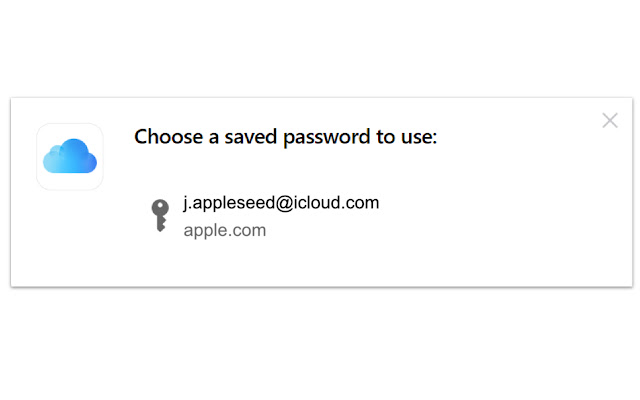
Image Credits: Apple
Some users who have tried the extension are reporting problems, but it seems that’s related to their PCs not having been first updated to iCloud for Windows 12.0, which is a prerequisite for the new extension to work.
Though Apple typically locks users into its own platforms, it has slowly expanded some of its services to Windows and even Android, where it makes sense. Today, Apple offers its entertainment apps like Apple Music and Apple TV on other platforms, including Android, and has launched Apple TV on its media player rival, Amazon Fire TV, among others. And 9to5Mac notes that Apple appears to be working to bring Music and Podcasts to the Microsoft Store in the future, as well.
New transparency figures released by Amazon show the company responded to a record number of government data demands in the last six months of 2020.
The new figures land in the company’s bi-annual transparency report published to Amazon’s website over the weekend.
Amazon said it processed 27,664 government demands for user data in the last six months of 2020, up from 3,222 data demands in the first six months of the year, an increase of close to 800%. That user data includes shopping searches and data from its Echo, Fire, and Ring devices.
The new report presents the data differently from previous transparency disclosures. Amazon now breaks down the top requesting countries. U.S. authorities historically made up the bulk of the overall data demands Amazon receives, but this latest report shows Germany with 42% of all requests, followed by Spain with 18%, and Italy and the U.S. with 11% share each.
But the report also removes the breakdown by legal process, and now only differentiates between the requests it gets for user’s content and for non-content. Amazon said it handed over user content data in 52 cases.
For its Amazon Web Services cloud business, which it reports separately, Amazon said it processed 523 data demands, with 75% of all requests made by U.S. authorities, and Amazon turned over user’s content in 15 cases.
An Amazon spokesperson would not say what led to the sharp rise in data demands. (Amazon seldom comments on its transparency reports.)
Amazon’s transparency report is one of the lightest reads of all the tech giants at just three pages in length, and spends most of the report explaining how it responds to each legal demand than on the data itself. The company, known for its notorious secrecy, became the last of the major tech giants to push out a transparency report in 2015. Where most tech companies added data to their transparency reports, like takedown notices and account removals, Amazon bucked the trend by removing data from its reports, despite the company’s growing reach into millions of homes.
The Financial Times reported this weekend that Ring, the video doorbell and home security startup acquired by Amazon for $1 billion, now has 2,000 law enforcement partners across the United States, allowing police departments to access homeowners’ doorbell camera footage.
Source: https://techcrunch.com/2021/02/01/amazon-government-demands-spiked/
Hello and welcome back to Equity, TechCrunch’s venture capital-focused podcast where we unpack the numbers behind the headlines.
This is Equity Monday, our weekly kickoff that tracks the latest private market news, talks about the coming week, digs into some recent funding rounds and mulls over a larger theme or narrative from the private markets. You can follow the show on Twitter here and myself here — and make sure to check out last week’s main episode and companion chat about Robinhood.
This morning we ran into quite a lot of the same material, with Robinhood back in the news and the stock market looming large. Here’s what we talked about:
- American stocks are set to rise, bitcoin is flat, and meme-stocks are mixed.
- In India, news is out that a new law could ban bitcoin (whatever that means), and this morning India forced Twitter to take down some accounts that had been critical of government policy. That’s a pretty bad look. And it comes as we see a coup in Myanmar leading to a decline in internet connectivity; there is a clear link between authoritarianism and a desire for Internet control.
- Robinhood’s CEO went on Clubhouse, where he was interviewed by Elon Musk about last week’s mess; it turns out the National Securities Clearing Corporation, or NSCC, had asked Robinhood for $3 billion in deposit requirements. That number was reduced to $700 million, with Robinhood limiting some consumer behavior, allowing the company to open Friday morning.
- This morning the key news stories include the mess that is Facebook Groups, and the EU is appealing a tax decision that could impact tech company structure for years to come.
- Ben raised $2.5 million
- Phocas Software raised $34 million
- DesignCrowd raised $7.6 million
- And, finally, we are heading into earnings season, so strap in and get ready for a deluge of results.
All that and we are back Thursday, if not before. Hugs and hellos from the Equity crew!
Equity drops every Monday at 7:00 a.m. PST and Thursday afternoon as fast as we can get it out, so subscribe to us on Apple Podcasts, Overcast, Spotify and all the casts


