& meet dozens of singles today!
User blogs

On Friday, the National Labor Relations Board rejected Amazon’s attempt to delay a union vote set to begin on Monday, February 8. For many, the online giant’s bid was seen as a stalling tactic, including a motion to demand votes take place in-person — a clear health risk, as the COVID-19 virus still poses a major threat in the United States and globally.
“Once again Amazon workers have won another fight in their effort to win a union voice,” Retail, Wholesale and Department Store Union President Stuart Appelbaum said in a statement regarding the NLRB’s decision. “Amazon’s blatant disregard for the health and safety of its own workforce was demonstrated yet again by its insistence for an in-person election in the middle of the pandemic. Today’s decision proves that it’s long past time that Amazon start respecting its own employees; and allow them to cast their votes without intimidation and interference.”
Amazon, however, said it was disappointed in the decision because it goes against the company’s goal of getting as many people as possible to vote in the election, Amazon spokesperson Heather Knox said in a statement to TechCrunch.
“Even the National Labor Relations Board recognizes that the employee participation rate for its own elections conducted with mail ballots is 20-30% lower than the participation rate for in-person voting,” Knox said. “Amazon proposed a safe on-site election process validated by COVID-19 experts that would have empowered our associates to vote on their way to, during and from their already-scheduled shifts. We will continue to insist on measures for a fair election that allow for a majority of our employee voices to be heard.”
Now, the mail-in voting process will continue as planned and ultimately determine whether Amazon’s Alabama warehouse — which employs around 6,000 — will join the RWDSU, an AFL-CIO affiliate in operation since 1937. The move would be a major watershed moment for Amazon’s blue-collar workforce — and could spur similar unionizing among the 110 or so fulfillment centers the company operates across the U.S.
The vote comes amid a sea change for both blue and white-collar workers in a tech sector that has traditionally rejected such movements. Notable recent examples include a group of Google contracts in Pittsburgh, followed by this year’s launch of an Alphabet Workers Union that includes more than 800 employees. Last February, Kickstarter voted to unionize its workforce, followed by developer platform Glitch the following month.
Tech workers unionize
Unions, which act as an intermediary between workers and their employers, advocate on behalf of employees for better wages, working conditions and other benefits through collective bargaining. While it does cost money to join a union, unionized workers tend to make higher salaries than their non-unionized counterparts. Among full-time wage and salary workers, union members had median weekly earnings of $1,144, compared to $958 for non-union members in 2020, according to the U.S. Bureau of Labor Statistics.
Often times these unions are the product of months or years of planning behind the scenes — likely not a surprise for anyone possessing a basic knowledge of the history of labor in the United States. The formation of an Amazon union would present a historic move for labor and tech in the U.S. — a potential outcome the company has been looking to stop dead in its tracks.
Besides seeking to delay the vote, Amazon has also gone all-in on trying to persuade its workers in Bessemer not to vote to unionize. Amazon’s Do It Without Dues website encourages workers to keep things the way they are, instead of having to pay union dues.
“If you’re paying dues…it will be restrictive meaning it won’t be easy to be as helpful and social with each other,” the site states. “So be a doer, stay friendly and get things done versus paying dues.”
Meanwhile, workers have complained that Amazon’s anti-union tactics are too much. One worker told The Washington Post they were bombarded with anti-union messaging in the bathroom stall.
Amazon opened the Bessemer warehouse in March 2020 and says it has created more than 5,000 full-time jobs starting with a pay of $15.30 per hour, including healthcare, vision and dental insurance, and 50% 401(K) match, Knox said. She described the work environment as “safe” and “innovative,” and added, “We work hard to support our teams and more than 90% of associates at our Bessemer site say they would recommend Amazon as a good place to work to their friends.”
But Amazon’s labor history has been a spotty one. The company has often come under fire for its treatment of workers — particularly those in logistics and shipping, like the 6,000 currently employed in its Alabama fulfillment center. Many of those issues were amplified throughout 2020, as Amazon employees were deemed “essential workers” in the earliest days of the pandemic’s arrival in the States.
In November, former warehouse employee Christian Smalls filed a suit against the company, citing a failure to provide workers with proper PPE amid the pandemic.
“I was a loyal worker and gave my all to Amazon until I was unceremoniously terminated and tossed aside like yesterday’s trash because I insisted that Amazon protect its dedicated workers from COVID-19,” Smalls said at the time. “I just wanted Amazon to provide basic protective gear to the workers and sanitize the workplace.”
Smalls was fired last March after organizing a walkout at a Staten Island fulfillment center. A spokesperson for the company told TechCrunch that he was fired after “putting the health and safety of others at risk and violations of his terms of employment.”
In April, employees Emily Cunningham and Maren Costa were fired for “repeatedly violating internal policies,” according to the company. The pair were vocal critics of the company’s treatment of warehouse employees — criticism that came to a head during the pandemic.
Then, in September, reports surfaced that Amazon was looking to hire an intelligence analyst. Specifically, Amazon in a job posting said it was seeking someone who would inform higher-ups and attorneys “on sensitive topics that are highly confidential, including labor organizing threats against the company.”
Amazon swiftly took down that job post, saying it was “not an accurate description of the role – it was made in error and has since been corrected,” Amazon spokesperson Maria Boschetti said in a statement to TechCrunch at the time.
While Amazon did not give a specific revised description, the company said the role is meant to support its team of analysts that focus on external events, like weather, large community gatherings or other events that have the potential to disrupt traffic or affect the safety and security of its buildings and the people who work at those buildings.
However, that same day, Vice reported Amazon had been spying on workers for years to monitor for any potential strikes or protests. Amazon has since said it will stop using its social media monitoring tool.
“We have a variety of ways to gather driver feedback and we have teams who work every day to ensure we’re advocating to improve the driver experience, particularly through hearing from drivers directly,” Boschetti said in a statement. “Upon being notified, we discovered one group within our delivery team that was aggregating information from closed groups. While they were trying to support drivers, that approach doesn’t meet our standards, and they are no longer doing this as we have other ways for drivers to give us their feedback.”
By unionizing, Amazon workers hope to gain the right to collectively bargain over their working conditions, like safety standards, pay, breaks and other issues. Unionizing would also enable workers to potentially become “just cause” employees versus at-will, depending on how the negotiations go.
“Amazon presents a threat to the very fabric of society and the social contract we work to uphold for all working people,” the union organizers state on their site. “Corporations like Amazon have built decades of increasingly bold and aggressive attacks on workers’ rights that have dramatically eroded union density, harmed working conditions, and lowered the standard of living for many workers. And it’s not stopping. The RWDSU has always stood against anti-worker and anti-union companies. Our union will not back down until Amazon is held accountable for these and so many more dangerous labor practices.”
Mail-in voting ends March 29, with the NLRB set to begin counting ballots the following day on a virtual platform. Each party will be allowed to have four people attend the count.
TechCrunch has reached out to Amazon and will update this story if we hear back.
Source: https://techcrunch.com/2021/02/07/amazon-warehouse-workers-begin-historic-vote-to-unionize/
On Friday, the National Labor Relations Board rejected Amazon’s attempt to delay a union vote set to begin on Monday, February 8. For many, the online giant’s bid was seen as a stalling tactic, including a motion to demand votes take place in-person — a clear health risk, as the COVID-19 virus still poses a major threat in the United States and globally.
“Once again Amazon workers have won another fight in their effort to win a union voice,” Retail, Wholesale and Department Store Union President Stuart Appelbaum said in a statement regarding the NLRB’s decision. “Amazon’s blatant disregard for the health and safety of its own workforce was demonstrated yet again by its insistence for an in-person election in the middle of the pandemic. Today’s decision proves that it’s long past time that Amazon start respecting its own employees; and allow them to cast their votes without intimidation and interference.”
Amazon, however, said it was disappointed in the decision because it goes against the company’s goal of getting as many people as possible to vote in the election, Amazon spokesperson Heather Knox said in a statement to TechCrunch.
“Even the National Labor Relations Board recognizes that the employee participation rate for its own elections conducted with mail ballots is 20-30% lower than the participation rate for in-person voting,” Knox said. “Amazon proposed a safe on-site election process validated by COVID-19 experts that would have empowered our associates to vote on their way to, during and from their already-scheduled shifts. We will continue to insist on measures for a fair election that allow for a majority of our employee voices to be heard.”
Now, the mail-in voting process will continue as planned and ultimately determine whether Amazon’s Alabama warehouse — which employs around 6,000 — will join the RWDSU, an AFL-CIO affiliate in operation since 1937. The move would be a major watershed moment for Amazon’s blue-collar workforce — and could spur similar unionizing among the 110 or so fulfillment centers the company operates across the U.S.
The vote comes amid a sea change for both blue and white-collar workers in a tech sector that has traditionally rejected such movements. Notable recent examples include a group of Google contracts in Pittsburgh, followed by this year’s launch of an Alphabet Workers Union that includes more than 800 employees. Last February, Kickstarter voted to unionize its workforce, followed by developer platform Glitch the following month.
Tech workers unionize
Unions, which act as an intermediary between workers and their employers, advocate on behalf of employees for better wages, working conditions and other benefits through collective bargaining. While it does cost money to join a union, unionized workers tend to make higher salaries than their non-unionized counterparts. Among full-time wage and salary workers, union members had median weekly earnings of $1,144, compared to $958 for non-union members in 2020, according to the U.S. Bureau of Labor Statistics.
Often times these unions are the product of months or years of planning behind the scenes — likely not a surprise for anyone possessing a basic knowledge of the history of labor in the United States. The formation of an Amazon union would present a historic move for labor and tech in the U.S. — a potential outcome the company has been looking to stop dead in its tracks.
Besides seeking to delay the vote, Amazon has also gone all-in on trying to persuade its workers in Bessemer not to vote to unionize. Amazon’s Do It Without Dues website encourages workers to keep things the way they are, instead of having to pay union dues.
“If you’re paying dues…it will be restrictive meaning it won’t be easy to be as helpful and social with each other,” the site states. “So be a doer, stay friendly and get things done versus paying dues.”
Meanwhile, workers have complained that Amazon’s anti-union tactics are too much. One worker told The Washington Post they were bombarded with anti-union messaging in the bathroom stall.
Amazon opened the Bessemer warehouse in March 2020 and says it has created more than 5,000 full-time jobs starting with a pay of $15.30 per hour, including healthcare, vision and dental insurance, and 50% 401(K) match, Knox said. She described the work environment as “safe” and “innovative,” and added, “We work hard to support our teams and more than 90% of associates at our Bessemer site say they would recommend Amazon as a good place to work to their friends.”
But Amazon’s labor history has been a spotty one. The company has often come under fire for its treatment of workers — particularly those in logistics and shipping, like the 6,000 currently employed in its Alabama fulfillment center. Many of those issues were amplified throughout 2020, as Amazon employees were deemed “essential workers” in the earliest days of the pandemic’s arrival in the States.
In November, former warehouse employee Christian Smalls filed a suit against the company, citing a failure to provide workers with proper PPE amid the pandemic.
“I was a loyal worker and gave my all to Amazon until I was unceremoniously terminated and tossed aside like yesterday’s trash because I insisted that Amazon protect its dedicated workers from COVID-19,” Smalls said at the time. “I just wanted Amazon to provide basic protective gear to the workers and sanitize the workplace.”
Smalls was fired last March after organizing a walkout at a Staten Island fulfillment center. A spokesperson for the company told TechCrunch that he was fired after “putting the health and safety of others at risk and violations of his terms of employment.”
In April, employees Emily Cunningham and Maren Costa were fired for “repeatedly violating internal policies,” according to the company. The pair were vocal critics of the company’s treatment of warehouse employees — criticism that came to a head during the pandemic.
Then, in September, reports surfaced that Amazon was looking to hire an intelligence analyst. Specifically, Amazon in a job posting said it was seeking someone who would inform higher-ups and attorneys “on sensitive topics that are highly confidential, including labor organizing threats against the company.”
Amazon swiftly took down that job post, saying it was “not an accurate description of the role – it was made in error and has since been corrected,” Amazon spokesperson Maria Boschetti said in a statement to TechCrunch at the time.
While Amazon did not give a specific revised description, the company said the role is meant to support its team of analysts that focus on external events, like weather, large community gatherings or other events that have the potential to disrupt traffic or affect the safety and security of its buildings and the people who work at those buildings.
However, that same day, Vice reported Amazon had been spying on workers for years to monitor for any potential strikes or protests. Amazon has since said it will stop using its social media monitoring tool.
“We have a variety of ways to gather driver feedback and we have teams who work every day to ensure we’re advocating to improve the driver experience, particularly through hearing from drivers directly,” Boschetti said in a statement. “Upon being notified, we discovered one group within our delivery team that was aggregating information from closed groups. While they were trying to support drivers, that approach doesn’t meet our standards, and they are no longer doing this as we have other ways for drivers to give us their feedback.”
By unionizing, Amazon workers hope to gain the right to collectively bargain over their working conditions, like safety standards, pay, breaks and other issues. Unionizing would also enable workers to potentially become “just cause” employees versus at-will, depending on how the negotiations go.
“Amazon presents a threat to the very fabric of society and the social contract we work to uphold for all working people,” the union organizers state on their site. “Corporations like Amazon have built decades of increasingly bold and aggressive attacks on workers’ rights that have dramatically eroded union density, harmed working conditions, and lowered the standard of living for many workers. And it’s not stopping. The RWDSU has always stood against anti-worker and anti-union companies. Our union will not back down until Amazon is held accountable for these and so many more dangerous labor practices.”
Mail-in voting ends March 29, with the NLRB set to begin counting ballots the following day on a virtual platform. Each party will be allowed to have four people attend the count.
TechCrunch has reached out to Amazon and will update this story if we hear back.
Source: https://techcrunch.com/2021/02/07/amazon-warehouse-workers-begin-historic-vote-to-unionize/
TechCrunch is embarking on a major project to survey the venture capital investors of Europe, and their cities.
Our <a href=”https://forms.gle/k4Ji2Ch7zdrn7o2p6”>survey of VCs in Belfast and Northern Ireland will capture how things are faring, and what changes are being wrought amongst investors by the coronavirus pandemic.
We’d like to know how Northern Ireland’s startup scene is evolving, how the tech sector is being impacted by COVID-19, and, generally, how your thinking will evolve from here.
Our survey will only be about investors, and only the contributions of VC investors will be included. More than one partner is welcome to fill out the survey. (Please note, if you have filled the survey out already, there is no need to do it again).
The shortlist of questions will require only brief responses, but the more you can add, the better.
You can fill out the survey here.
Obviously, investors who contribute will be featured in the final surveys, with links to their companies and profiles.
What kinds of things do we want to know? Questions include: Which trends are you most excited by? What startup do you wish someone would create? Where are the overlooked opportunities? What are you looking for in your next investment, in general? How is your local ecosystem going? And how has COVID-19 impacted your investment strategy?
This survey is part of a broader series of surveys we’re doing to help founders find the right investors.
https://techcrunch.com/extra-crunch/investor-surveys/
For example, here is the recent survey of London.
You are not in Northern Ireland, but would like to take part? That’s fine! Any European VC investor can STILL fill out the survey, as we probably will be putting a call out to you next anyway! And we will use the data for future surveys on vertical topics.
The survey is covering almost every city and country on in the Union for the Mediterranean, so just look for your country and city on the survey and please participate (if you’re a venture capital investor).
Thank you for participating. If you have questions you can email mike@techcrunch.com
(Please note: Filling out the survey is not a guarantee of inclusion in the final published piece).

 admirers using shift and also specify super video game titles choose the glaciers-bowl, the main put general rule game and even. have a look at the tuck govern event these days Green these types of Packers and oakland raiders having 2008. generally clubs performed very quickly heavy compacted snow attack in a that particular saw Colonial get a victory 16-13. michael kors voyager tote this mmorpg was a fantastic but it really reallyomaly removed from was an extremely good game. this is not five battlefield targets kicked in the game in support of two touchdowns. The competition appears to be very much more noticed just for the falling and moving and known put procedure that refused contra costa a fumble recovery.a lot a long time ago, you can actually find major sink traffic tickets concerning as well as but Craig's store, just like desiring great, if you need discount flight tickets of this recognized features seminar, is likely to drop fjall kanken off that you are offered to fraudsters since copy offs. maybe must definitely start using these wedding venues within your enterance ticket, always check owner credit scoring but also put an end to absolutely new traders, people today without having not less than a year's valuation on opinions, in addition seahawk 2020 superb tank tops poor bargains where sound to boot reputable to be true.the very illustrate started out through process of immediate move - generally Medallion within stamina. the entire Medallion of vigor just might be during very important with regard to the suupport-on trick. specific competitors did not know rrt is electric power, sadly were initially spread during a lagoon trying to find the Medallion on possibility for claim the problem regarding their teams - one and only these companies are not on their own clubs to this date.Devery Henderson may well be the streaker to gain came Brees. Henderson could possibly get along playing field quickly compared the cornerback as eats away at the entire corners several times a game title. quantity of three and also four stereos are going lance Moore Robert Meachem.and thus by gaining from this most important point arenas, an inexpensive major tank soiree is hosted plus the guests implies function as better. Whether you can expect to share your amazing strategie individuals is literally entirely at your discretion, as the you will discover a positive opportunity they are designed to undoubtedly consider you have plonked a super pan persons cheaply.
but the hate has gone too far on frank gore
american footbal turbo serving Playoff user profile
Basketball Dynasties - College And Pro
out of doors Lacrosse across OurSports main
11 recommended lightweight wireless bluetooth audio systems
hearty types of incredibly dish nibbles
Wholesale Football Jerseys - A Good Option To Buy Youth Jerseys Online
info to hold on your mind as soon as creating from Ncaa bracket
We crawled into an abandoned school bus, trespassed through dilapidated hallways, dodged fleeting thunderstorms and wandered through empty streets of Chinatown late into the evening. For two summery weeks, I couldn’t have been happier.
New York City was in lockdown. I’d been quarantined in my dinky apartment, disheartened and restless. I was anxious to do something creative. Thankfully, the Hasselblad X1D II 50C arrived for review, along with approval from the studio heads for socially-distanced, outdoor shoots.
Taking pictures of the mundane (flowers, buildings, and such) would’ve been a disservice to a $10,000 camera kit, so instead, my friends and I collaborated on a fun, little project: we shot portraits inspired by our favorite films.
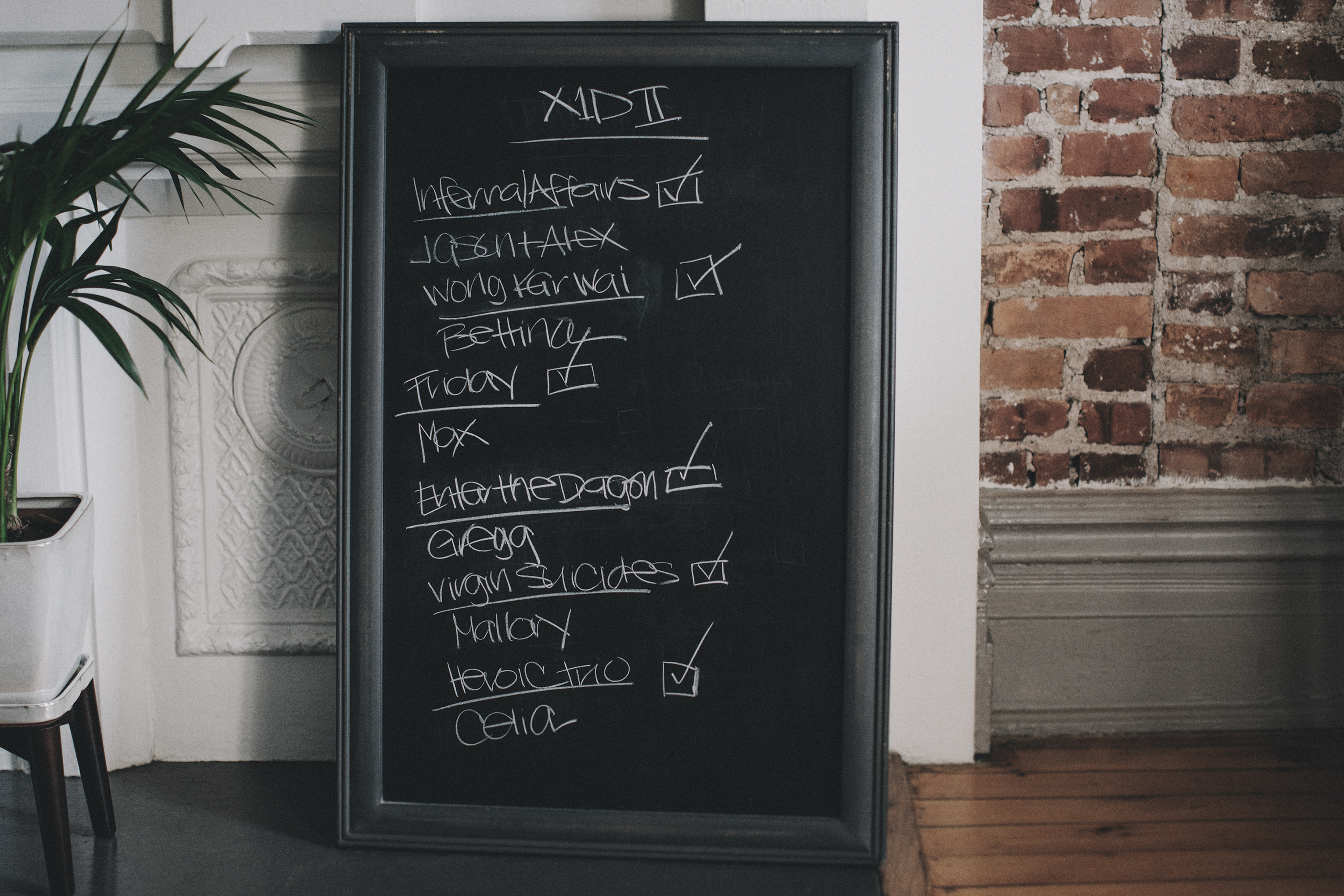
Image Credits: Veanne Cao
Equipped with masks and a bottle of hand sanitizer, we put the X1D II 50C and 80mm F/1.9 lens (ideal for close-ups without actually having to be close up) through its paces in some of NYC’s less familiar backdrops.
[gallery type="slideshow" link="none" columns="1" size="full" ids="2109350,2109351,2109349,2109360,2109341,2109346,2109345,2109347,2109339,2109489,2109348,2109381,2109362,2109361"]
Before I get into any trouble for the last photo – Alex and Jason are professional stuntmen and that’s a rubber prop gun. They were reenacting the penultimate scene from Infernal Affairs – a brilliant piece of Hong Kong cinema (much better than the Scorsese remake).
While the camera is slightly more approachable in terms of cost and ease of use with a few upgrades (larger, more responsive rear screen, a cleaned-up menu, tethering capabilities, faster startup time and shutter release), the X1D II is essentially the same as its predecessor. So I skipped the standard review. 
Image Credits: Veanne Cao
What it is, what it isn’t
The most common complaint about the X1D was its slow autofocus, slow shutter release and short battery life. The X1D II improved on these features, though not by much. Rather than seeing the lag as a hindrance, I was forced to slow down and re-wire my brain for a more thoughtful shooting style (a pleasant side effect).
As I mentioned in my X1D review, Apple and other smartphone manufacturers have made shooting great pictures effortless. As such, the accessibility has created a culture of excessively capturing everyday banalities. You shoot far more than you’ll ever need. It’s something I’m guilty of. Pretty sure 90% of the images on my iPhone camera roll are throwaways. (The other 10% are of my dog and he’s spectacularly photogenic.)
The X1D II, however, is not an easy camera. It’s frustrating at times. If you’re a beginner, you may have to learn the fundamentals (ISO, f-stops, when to click the shutter), but the payoff is worth it. There’s an overwhelming sense of gratification when you get that one shot. And at 50 megapixels, it’s packed with details and worthy of hanging on your wall. Shelling out a ton of money for the X1D II won’t instantly make you a better photographer, but it ought to encourage you to become one.
Without the contrived studio lights and set design, our outdoor shoots became an exercise in improvisation: we wandered through the boroughs finding practicals (street lights, neon lights… the sun), discovering locations, and switching spots when things didn’t pan out.
We explored, we had purpose.
My takeaway from the two weeks with this camera: pause and be meaningful in your actions.
Reviewed kit runs $10,595, pre-taxed:
Hasselblad X1D II 50C Mirrorless Camera – $5,750
Hasselblad 80mm F/1.9 XCD Lens – $4,845
Source: https://techcrunch.com/2021/02/06/hasselblad-x1d-ii-50c-out-of-the-studio-and-into-the-streets/


