& meet dozens of singles today!
User blogs

In a large win for the Korean startup ecosystem, dating powerhouse Match Group announced this afternoon that it would buy social networking company Hyperconnect for a combined cash and stock deal valued at $1.73 billion.
Hyperconnect, which is projected to have $200 million in revenue in 2020 (up 50% from 2019) according to the company, offers two apps — Azar and Hakuna Live — which allow users to connect to each other across language barriers. The two are complementary, with Azar focused on one-to-one video chats and Hakuna Live focused on the online live broadcast market. In their press statement, the companies noted that 75% of Hyperconnect’s revenue originates in Asia.
It’s the largest acquisition to date by Match Group, which also owns the popular dating apps Tinder and Hinge along with many other assorted properties.
One theme of the acquisition and Hyperconnect’s story is technology. The company built what it describes as “the first mobile version” of WebRTC, a now well-developed standard that is designed to offer resilient peer-to-peer connections between users without relying on a company to serve as a middleman server.
For instance, a video chat between two participants would be transmitted directly between the two of them using WebRTC, without the video being broadcast through Hyperconnect’s servers. That’s designed to improve reliability by removing latency while also reducing the cost of bandwidth for the service to Hyperconnect. WebRTC is now a well-deployed open-source standard, with companies such as Google using it in products like Google Meet.
In addition to its innovative work on WebRTC, Hyperconnect built infrastructure to support two users who speak and text in different languages to interact with each other directly through its apps using real-time translation. In a marketing post on Google Cloud, Hyperconnect is a marquee customer of the cloud service’s speech, real-time translation and messaging APIs.
In the companies’ joint press statement, both sides emphasized R&D and engineering as key wins for the deal. That begs the question then what Match Group is looking to build with its massive new purchase? While the group has largely confined itself to dating, live broadcast and other media verticals may well be in its sights once it acquires the technology from Hyperconnect.
The deal is expected to close in 2021Q2.
Source: https://techcrunch.com/2021/02/09/match-hyperconnect-acquisition/
OpenOcean, a European VC which has tended to specialise in big data-oriented startups and deep tech, has reach the €92 million ($111.5 million) mark for its third main venture fund, and is aiming for a final close of €130 million by mid-way this year. LPs in the new fund include the European Investment Fund (EIF), Tesi, pension funds, major family offices and Oxford University’s Corpus Christi College.
Ekaterina Almasque — who has already led investments in IQM (superconducting quantum machines) and Sunrise.io (multi-cloud hyper-converged infrastructure) and is leading the London team and operations for the firm — has been appointed as general partner. Before joining, Almasque was a managing director at Samsung Catalyst Fund in Europe, led investments in Graphcore’s processor for Artificial Intelligence, Mapillary’s layer for rapid mapping and AIMotive’s autonomous driving stack.
The enormous wealth of data in the modern world means the next generation of software is being built at the infrastructure. Thus, the fund said it would invest primarily at the Series A level with initial investments of €3 million to €5 million, across OpenOcean’s principle areas of artificial intelligence, application-driven data infrastructure, intelligent automation and open source.
OpenOcean’s team includes Michael “Monty” Widenius, the “spiritual father” of MariaDB, and one of the original developers of MySQL, the predecessor to MariaDB; Tom Henriksson, who invested in MySQL and MariaDB; as well as Ralf Wahlsten and Patrik Backman.
Tom Henriksson, general partner at OpenOcean, commented: “Ekaterina… brings an immense amount of expertise to the team and exemplifies the way we want to support our founders. Fund 2020 is an important step for OpenOcean, with prestigious LPs trusting our approach and our knowledge, and believing in our ability to identify the very best data solutions and infrastructure technologies in Europe.”
Almasque said: “The next five years will be critical for digital infrastructure, as breakthrough technologies are currently being constrained by the capabilities of the stack. Enabling this next level of infrastructure innovation is crucial to realising digitisation projects across the economy and will determine what the internet of the future looks like. We’re excited by the potential of world-leading businesses being built across Europe and are looking forward to supporting the next generation of software leaders.”
Speaking to TechCrunch she added: “It’s very rare to find such a VC so deep in the stack which also invested in one of the first unicorns in Europe and really built the open source ecosystem globally. So for me, this was absolutely an interesting team to join. And what OpenOcean was doing since inception in 2011 was very unique among pioneering ecosystems, such as big data analytics… and it remains very pioneering, pushing the frontiers in artificial intelligence and now quantum computing. This is what really attracts me, and I think there is a very, very big future.”
In an interview Henriksson told me: “What we are seeing is that our economy is shifting more and more towards the digital, data-driven economy. It started with few industries, but now we see a larger shift, including new industries like healthcare, like manufacturing.”
Asked about the effects of the pandemic on the sector, he said: “Obviously we see a lot of startups who are plugging into things like the UiPath platform. This is very relevant for the pandemic. Because the companies that had started automating strongly before the pandemic hit… they’ve actually accelerated and they find benefits for their teams and organisations and actually the people are happier because they have better automation technologies in place. The ones that didn’t start before [the pandemic hit] they’re a little behind now.”
NASA has announced that SpaceX will take two major parts of the Gateway lunar orbiter that will function as a pit stop for future moon missions. The Power and Propulsion Element and Habitation and Logistics Outpost — which together will form the first usable lunar space station — will go up in 2024 on a Falcon Heavy, with an estimated price tag of $332 million.
The Falcon Heavy, which provides a far larger lift capacity than SpaceX’s now commonly used Falcon 9, has only had two commercial launches since its successful test launch in early 2018 (with Starman and a Tesla Roadster, you may remember). Arabsat-6A launched in April of 2019, and STP-2 a few months later, but since then the Heavy hasn’t seen any action. (Several missions are planned for the next year, however.)
NASA’s selection of the launch vehicle as the one that will bring these two crucial components to lunar orbit is a huge endorsement, however, and may actually snowball into more work down the line if the agency’s own Space Launch System continues to be delayed.
The PPE and HALO, as the two pieces are called, provide the essentials for a self-sustaining lunar orbital habitat: essentially the pressurized cabin and the power source that keeps it operational and allows maneuvering. So you could say they’re fundamental.
They’re also big, and can’t be sent up in 10 different pieces on smaller rockets. But there are precious few heavy launch vehicles available — and it looks like they decided that SpaceX’s was the best bet, having flown three successful missions already.
This mission is valued at $332 million in launch and related costs, so it’s a serious investment that will require a lot of collaboration between SpaceX, NASA, Northrop Grumman (which is building the HALO) and Maxar (making the PPE).

CG image of the lunar Gateway with the propulsion element and first habitable element attached. Not particularly roomy, but you can’t beat the view. Image: NASA
For now launch is set for no earlier than may of 2024, but that date may (and in fact is highly likely to) slip as various delays accrue. The whole Artemis program is experiencing a period of reality alignment, and while new target dates haven’t been given for all the ambitious plans made during the last four years, few of the old ones have been repeated the way they were as recently as last fall. Nevertheless even a five or six-year plan to return to the moon’s surface is still quite ambitious, considering — as has become the standard NASA refrain — “we’re going there to stay.”
We’ll likely hear more about the new timeline as the agency comes to grips with it itself over the next few months.
The pandemic has upended many aspects of urban life but perhaps the most visible upheaval is to citydwellers’ social lives, with curfews calling time on traditional night life across much of the Western world and social distancing putting a chilly spin on opportunities for getting together with people outside your usual circle. Who knew leaving the house was going to seem like such a mission?
Opportunities to escape the city entirely — such as by jetting off somewhere — remain severely limited or even impossible right now, depending on where you live. And for many urbanites COVID-19 may feel as if it’s turned the advantages of city living on its head, despite lockdowns generally not being as hard-line as they were at times last year and vaccines now (slowly) being rolled out.
Sharify is a startup that reckons it can help with the weird flatness of pandemic city living. It’s a real-time events app (iOS and Android) that wants to bring back a little of the serendipitous joy of urban living by making it easier to discovery things going on around you — maybe even just a few blocks away. To do this it’s combined real-time event listings with a map view (via the medium of emoji-style icons plus filters) to quickly and cheerfully surround you with stuff that’s happening in the vicinity.
Though the business idea predates COVID-19, Sharify isn’t blind to the changes wrought by the pandemic. And the app displays a star icon next to events that are deemed COVID-19 ‘safe’ — a subtle promotion meaning the organizer has measures in place to reduce the risk of contagion, such as controlling venue capacity, providing disinfectant hand gel and ensuring tables/seating are safety spaced. (Which may well be legal requirements for a venue to be open for business, of course.)
At the same time, the app lets users share their own meeting plan with other users — potentially encouraging a bunch of strangers to meet up to play some music or hang out in the park or whatnot — so its appropriateness for the pandemic moment in which we find ourselves does depend on how you use it.
It’s open to social swings or roundabouts, you could say. (And limits on when/how clubs and bars can open may well be pushing a socially oriented and app-savvy demographic toward alternative ways (and tools) to mingle with strangers.)
More broadly, Sharify invites users to rethink the concept of travel and trips — asking them to refocus their attention and energy on discovering entertaining things to do without having to go far or plan far ahead. Because, well, what else can anyone really do right now? Apart from stay at home ofc.
The app does have two ‘view’ modes: One for events geared towards locals and/or a dedicated ‘tourist’ view to cater to those wanting to do more typical sightseeing — though content for the latter is obviously thinner on the ground at the moment. (And, well, ‘tourism’ as a concept is starting to feel rather quaint and old-fashioned vs properly exploring your own backyard.)
Officially Sharify is launched in Barcelona, Madrid and New York City — but says it’s “expanding quickly” and touts being “present” in 25+ cities around the world (presumably with a lighter events cadence vs those three).
I tested the app in Barcelona and quickly found a bunch of local events that looked interesting — at least compared to another night of thumbing through the Netflix catalogue — from a Banksy art exhibition, to a stand up comedy show (in English!), lots of theatre, a bunch of markets, yoga classes and a skateboarding event all going on within, at most, a couple of miles and days from where I’ve been spending the vast majority of my time for, like, almost a whole entire year.
Just the act of seeing stuff still going on in a city which, frankly, hasn’t felt very familiar or open for much of anything for close to 12 months was a bit of an eye opener.
[gallery ids="2111138,2111139,2111137,2111136"]
After so much time locked down indoors maybe we all need a bit of a nudge/visual reminder that life is still going on — and socializing is still possible (with appropriate safety measures and distancing) — beyond the front door and away from the Zoom screen (or any other screen tbh). Even if I’m not about to sign up for everything I spotted in the app. But feeling like I could is almost exciting enough.
As well as providing key details about each event (when, where, any website etc), Sharify lets you signal an intent to go that’s visible to other users by ‘joining’ an event. It also hosts per event chat where those who have joined are invited to “talk to people who join the plan” — which is another neat little nudge to get users excited about going to a local thing, maybe without their usual friend group in tow.
Sharify isn’t disclosing how many users it has but it says it has 100,000+ monthly event views (3K+ daily), and 5,000+ events every month. (On Google Play the app has had 10,000+ installs.)
Where users create their own plans to advertise to others it touts an impressively high “join” rate of 95%. (Albeit saying you’re going to something you found via an app isn’t the same as actually turning up.)
To encourage users to discover and attend others’ events, Sharify displays a smilie face on the map in locations where several people are up for ‘sharing plans’ — listing the number of people theoretically up for joining in stuff around there and nudging you to ‘create a plan in this area’ to tap into that potential guest pool.
It also lets you drill down to check out micro profiles of these (public) socially interested locals — displaying a first name, perhaps a photo and any ‘interests’ if they’ve chosen to select some from its curated lists of culture, hobbies, sports and social activities etc. (Happily there’s no option to message individual users via their profile so no fear of stupid in-app spam.)
Location-based and social sharing is not new, of course. Indeed, it’s an idea that’s been around the tech block so many times the sound of a ‘real-time events map’ probably triggers a fuzzy feeling of ‘haven’t I seen this before somewhere?’ The deja vu may be real but context is ever shifting, is the point. Or, to put it another way, here and now, in an open-ended pandemic, going about finding something to do probably looks and feels quite a bit different to how you did it, pre-March 2020.
Put simply: Best laid plans are toast. Friends who don’t live in the same city are likely reachable only on Zoom or by text. And at very least you’re dealing with hard limits on how far you can range for your entertainment in time and space.
Local and/or virtual is the new global, all of a sudden. So Sharify reckons its real-time events map is just the ticket/tonic in this curtailed context — by cheerfully surrounding you with nearby stuff to do. The 2017-founded startup says it’s been growing “despite” the pandemic.
“We’re stuck at home, and we saw all the Netflix series. Is there any plan near my home for this afternoon? Event agendas simply don’t work in this user case. That’s why we built a real-time map,” says co-founder and CEO Gemma Prenafeta. “And the problem we will face in some months from now: I’m not stuck at home anymore. Where do I find new events easily?”
“As Sharify is a collaborative platform, we let people share their own events for free, we scrape different event sources such as Google and Tiqets, and we highlight those businesses that want to promote themselves,” she adds, giving a succinct explainer on how the app populates the map view with stuff to do.
Social maps aren’t new, of course — and features like Snap Map, which was added to Snap’s social network via its acquisition of Zenly, certainly has a bit of overlap (while Sharify’s smiley octopus logo on a yellow background has more than a little of Snap’s ghost in look and feel), though Snap Map is more obviously focused on friends’ location and social sharing vs Sharify being about event discovery, first and foremost. (Friends may follow from this real-life socializing, is the suggestion.)
There are also event discovery network startups (like calendar-focused IRL). But, again, with such a glance-friendly map view, Sharify is paying closer attention to immediacy/hyper-local event discovery vs IRL — which pivoted to helping people surface virtual events as the pandemic shuttered lots of real world events last year and has since focused on building out its own social network.
“The ‘immediacy’ factor is key at Sharify, as you can see what’s happening, in real-time,” says Prenafeta. “We say going to a local event is a kind of ‘Local Trip’. Traveling before was about taking flights, now it’s about taking a Bird or a eCooltra to an event nearby.”
Whether mapping real-time events is a standalone business or a feature/tool that could just be added to a dominant platform/social network is perhaps a more pressing question for this fledgling startup. And it’s notable that tech (and mapping) giant Google added a ‘Community Feed’ to Maps late last year.
Facebook has also had an ‘Events Near Me‘ feature on its platform for years. Albeit, anything listed inside its walled garden has to contend with all the baggage Facebook brings with it. So an indie app with a fresh approach should have a chance to attract users who wouldn’t be caught dead on Facebook (even in a pandemic).
Sharify has certainly come up with a really effortless way to spark a sense of possibility — to feel like you can cut through the monotony of lockdown life — just by firing up a super simple overview of stuff going on around you.
It then layers on some more powerful tools that are designed to help you find others to do stuff with, which adds a subtle but maybe deeper hook in these socially distanced times.
“Life is still pretty locked down, and that’s why it’s more important than ever to know what’s open and what isn’t, close to our house,” suggests Prenafeta. And, well, it’s pretty hard to argue with that.
She’s looking beyond the pandemic too — back to more normalcy and anticipating helping local businesses announce their reopenings, once that’s possible. The team is “currently working on a seed investment round to prepare for the post-pandemic momentum”, she says.
So far the Barcelona-based startup has raised a pre-seed and an angel round led by IESE Group, per Prenafeta — with a total of €501,000 (~$600k) invested to date into what has turned out to be a contextually fresh twist on the old SoMoLo trend.
Mate Fertility, the new Los Angeles startup launching today with $2.8 million in financing, has a mission to create a more inclusive network of family planning services for people struggling with the high cost and low availability of fertility clinics around the country.
Founded by serial entrepreneur Oliver Bogner and his brother Gabriel, Mate was born from both brothers’ struggles with trying to start a family. For Oliver, that was when he and his partner were looking at IVF as a way to screen for the BRCA1 gene from her embryos after she found out that she was a carrier. Meanwhile, Gabriel, an IVF baby who is a member of the LGBTQ community, felt that the services for family planning weren’t always accepting of the gay community.
“IVF and surrogacy were the only options for me to have kids,” the younger Bogner said. “And the queer community has been locked out of these services. It became my mission to democratize healthcare for my community.”
Once Oliver started doing research into the market and discovered that there were only 460 fertility clinics in the U.S. and that over 80% were concentrated in five major metropolitan areas, he knew there was an opportunity for a new business.
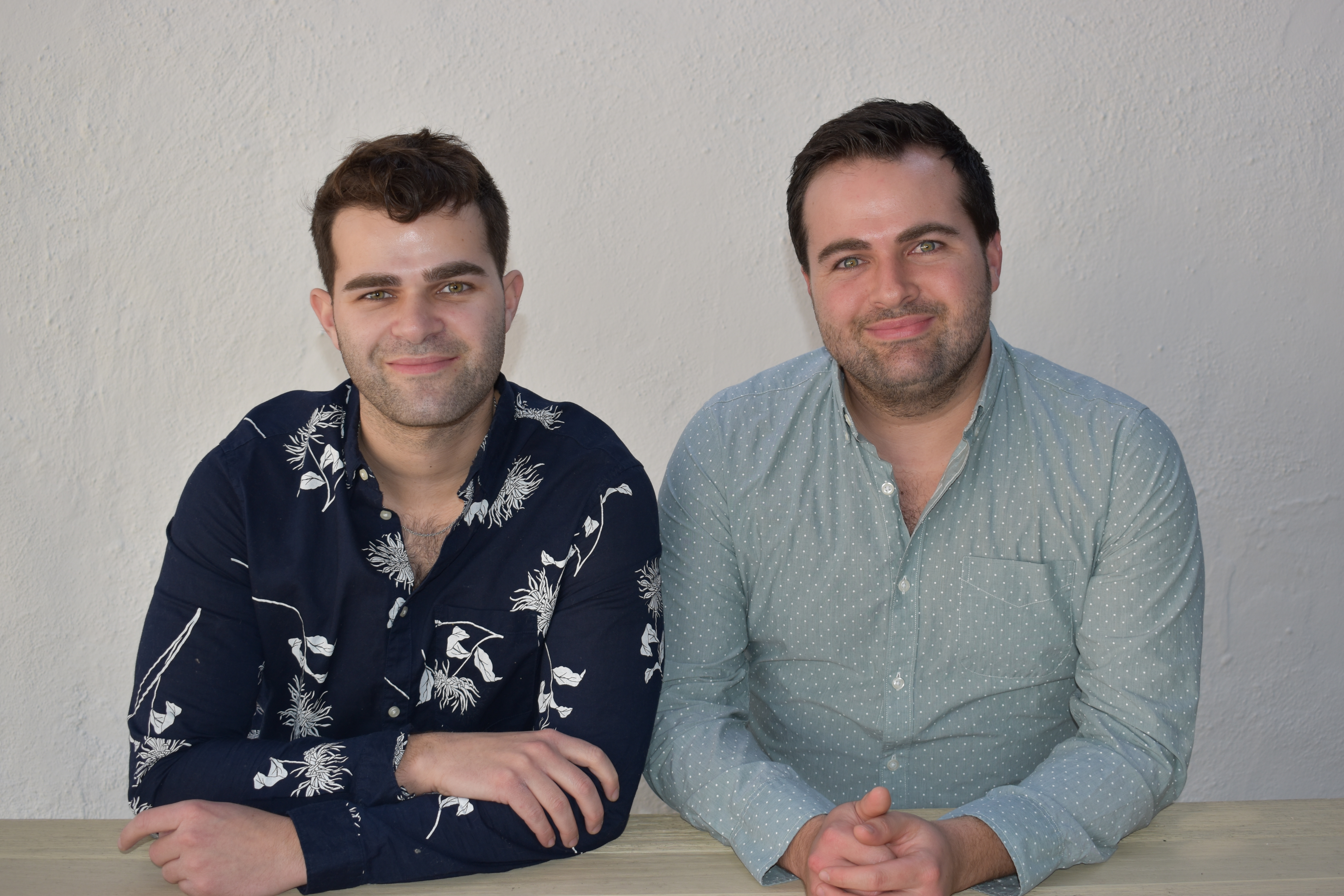
Mate Fertility co-founders Gabriel and Oliver Bogner. Image Credit: Mate Fertility
The Bogner brothers enlisted famed reproductive endocrinologist Dr. Jeffrey Steinberg, who trained under the British doctors that pioneered In Vitro Fertilization, to come on board and together the three men launched Mate Fertility.
The co-founders have enlisted an impressive array of financiers to back their business boasting an investor base that includes Andy Dunn, the founder of Bonobos; Peter Pham, the co-founder of the LA-based consumer focused company incubator, Science; Patrick Schwarzenegger; Brian Schwartz; the investors behind Roman, Allbirds, and Caspar, Rosecliff Ventures; Pure Imagination Brands; Mana Ventures, and Maschmeyer Group Ventures.
Mate is launching first in Oklahoma City, where two legacy providers are charging anywhere from 10% to 15% above the national average for family planning services. “We’re going in at anywhere from 50% to 60% lower costs than they are,” said Oliver Bogner.
The company said it would offer egg freezing services for as low as $5,000 and IVF for $8,000, while the national average for IVF cycle costs ranges from $15,000 to $18,000, including medication.
“We’re still making healthy margins that allow us to operate the business. It’s not a matter fo these procedures costing more. These 460 clinics are allowed to radically mark up the process,” said the elder Bogner. “One of these clinics is making approximately 1,000% profit margin on every procedure.”
Given the fact that the company estimates roughly 18% of the U.S. population will face some fertility issue, the need for more clinics — setting aside the lower costs — would be enormous.
“We need 3,000 clinics to properly serve our population, today we have 460. There’s a huge gap in care,” said Bogner.
The company is working with the architects behind Dry Bar, Heitler Houstoun, to design its clinics in an effort to popularize and destigmatize the services.
“We were really intrigued by Oliver and Gabe. In terms of what the biggest risks are… you’re not playing around. You’re not creating software, you’re creating life,” said Adam Struck, the founder of Mate Fertility’s lead investment firm, Struck Capital. “The ultimate KPI which is success rate for our patients is top tier. There’s a lot that Nate is doing to ensure that some of the best medical personnel in the world are part of the Mate mission.”
Mate Fertility offers modern EHR platforms, an e-pharmacy, proven protocols, payment assistance and digital patient and provider portals for services that include IVF, genetic screening, egg freezing, surrogacy and LGBTQ family building treatments, the company said.
Its first locations will be clinics in Oklahoma City, Anchorage, Ark., Bakersfield, Calif. Lancaster, Pa., Austin, and Portland.


