& meet dozens of singles today!
User blogs

“For All Mankind: Time Capsule” is a new augmented reality app created by Apple to promote the upcoming second season of “For All Mankind,” which premieres on February 19 on Apple TV+.
Even for those of you who aren’t fans of the the show — which tells the story of an alternate history in which the Soviet Union beat the United States to the moon leading to an extended space race in the ’70s and beyond — the app is still noteworthy as another sign of Apple’s interest in AR, even beyond the reports that it’s working on AR glasses.
“Time Capsule” takes place during the decade-long gap between seasons one and two, tracing the relationship between Danny Stevens and his parents, the astronauts Gordo and Tracy Stevens. Users who download the free iOS app will be able to interact with a variety of objects — such as a mixtape and an Apple II computer — that illustrate the family relationship.
“Time Capsule” walks users through a linear experience with between 45 and 60 minutes of content, but it sounds like it’s also designed to support further exploration and additional visits. You’ll be able to check “D-mail” and play a text adventure game on the computer, and if you’ve got an Apple device with a LiDAR scanner (such as an iPhone 12 Pro, iPhone 12 Pro Max or iPad Pro) you can use a virtual slide projector to project Danny’s family photos onto your own walls.
“For All Mankind” producer Ben McGinnis said the app was created in parallel with the show’s second season, with the creative team working with Apple to figure out “which objects were best for getting the story across,” and offering feedback as the actual AR objects were developed.
Creator and executive producer Ron Moore added that he’s excited about the possibility of giving fans new ways to explore the show’s world and characters, especially since writers on the show often create far more material than what ends up on screen.
“Part of the promise of this technology is that a fan of any show, by definition, usually wants to know more about it, more about the characters,” Moore said.
In this case, “For All Mankind”‘s team had written things like love letters and newscasts that are only seen briefly on screen. They could then be used in the app, along with additional material by Stephanie Shannon, a writer on the show. The key, Moore said, is to “play fair by the audience that just wants to show up.”
“You can certainly watch ‘For All Mankind’ on-air without the AR stuff,” he added. “But if you do the AR stuff first, it enriches your experience.”
Source: https://techcrunch.com/2021/02/11/for-all-mankind-time-capsule/
Public.com, a social-focused free stock trading service, is nearing the close of a Series D just two months after raising a $65 million Series C, sources familiar with the matter told TechCrunch.
The San Francisco-based fintech aims to give people the ability to invest in companies using any amount of money, with a focus on community activity over active trading. It competes with Robinhood, M1 Finance and other American fintech companies that offer consumers a way to invest in equities with low or zero fees.
Public.com apparently got a flurry of investor interest over the past couple of weeks after Robinhood found itself in hot water and essentially raised $3.4 billion in a matter of days to help get itself out of a mess.
That new capital came at a challenging time for the unicorn, which could pursue an IPO this year. And some investors reportedly want a piece of rival Public.com’s pie.
One source told TechCrunch that many of those offering term sheets believe there could be “a mass exodus from Robinhood” and want a way to capture that value.
Public recently shook up its business model, moving from generating revenue from order flow payments, a key way that Robinhood monetizes, to collecting tips from users in exchange for executing their orders. Payment for order flow, or PFOF, has become a touchstone in the debate surrounding low-cost trading platforms, and how users may pay for their transactions if not in direct fees.
Investors betting on Public, then, would be placing a wager on not merely future user growth, but the startup’s ability to monetize effectively in the future.
The sources for this story were granted anonymity due to the sensitivity of the discussions.
Public grew quickly in 2020, expanding its user base by a multiple of 10 since the start of the year.
Co-founder Leif Abraham told TC’s Alex Wilhelm in December that the company’s growth has been consistent instead of lumpy, expanding at around 30% each month. The co-founder also stressed that most of Public’s users find its service organically, implying that the startup’s marketing costs have not been extreme, nor its growth artificially boosted.
We don’t know yet how much Public is raising in its Series D, or who all is investing. Public has not responded to multiple requests for comment. VC firm Accel — which led its Series A, B and C rounds — also declined to comment. But we’ll definitely report details as we get them.
Source: https://techcrunch.com/2021/02/11/robinhoods-pain-is-publics-gain-as-vcs-rush-to-give-it-more-money/
Demetrius Curry has spent the last couple years chasing a dream.
His startup, College Cash, allows brands to petition users to create photo and video marketing content highlighting their product or service, with the wrinkle being that content creators are paid by the brands in the form of credits that go directly towards paying down their student loan debt. This model awards the brands involved a level of social good will and tax benefits.
The Dallas area founder was inspired to tackle student loan debt crisis after talking with his daughter about the prospect of eventually paying down her own loan debt. Curry has spent the past two years building out the nascent platform, tracking down brand partners, navigating accelerator programs, enticing users and pounding the pavement to find investors that are willing to bet on his vision.
College Cash has raised $105,000 to date, and is hoping to eventually wrap the funding into a $1 million seed round.
Filling out the round has been its own challenge for Curry who has struggled at times to find opportunity, even among historic levels of capital flowing into the startup ecosystem, a distinction that has been less noticeable for black founders that still make up just a small percentage of VC allocation. In the aftermath of last summer’s protests against police brutality, a number of venture capital firms issued statements decrying institutional racism and pledging to back more underserved founders, spinning up new programs for diverse founders.
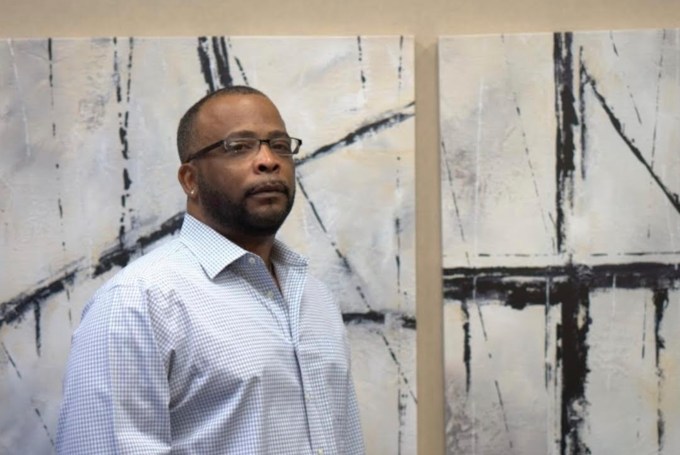
Demetrius Curry, CEO of College Cash
While Curry says he appreciates the scope of the problem and the good intentions of those making the statements, he believes that venture capital networks still have a lot to learn about what being an “underserved” founder means and that plenty of the existing efforts feel like “lip service.” He says that even as Silicon Valley continues to idolize dropouts from prestigious universities, stakeholders have less interest in recognizing the accomplishments of founders who fought their way through poverty or found opportunity in geographies where opportunities are harder to come by.
“You can’t look for something different if you’re looking in the same places,” Curry tells TechCrunch. “When you look at the topic of ‘underserved founders,’ it’s not only a skin color thing, it’s also about where they came from and what they’ve been through.”
Curry says that it can be frustrating to compete for early stage opportunities when investors aren’t willing to meaningfully adjust their parameters. Of particular frustration to Curry has been navigating the world of “warm introductions” to even get a foot in the door for programs meant for diverse founders, or applying for early stage programs geared towards the “underserved” only to be told that they weren’t far enough along to qualify.
“Think about how much we had to go through to even get in the room with you,” Curry says. “I’ve sold plasma to pay a web hosting fee, nothing is going to stop me.”
College Cash’s mission of expanding opportunities for people struggling to manage their student loan debt is personal to Curry who saw his life turn around after going back to school.
Decades ago, fresh out of the military, Curry said he had a random conversation with a stranger while eating at a Hardee’s — the discussion about what more he wanted from life ended up pushing him to to go back and get his GED and later a business degree. What followed was a career in finance that eventually led towards his recent entrepreneurial pursuits with College Cash.
The platform is firmly an early-stage venture at the moment, but Curry has big ambitions he’s building toward. His next effort is building out a College Cash tipping integration with gig economy platforms, with the aim that users of those platforms could ultimately opt to tip a worker and route that money directly towards paying down that person’s student loan debt.
Curry says the team at College Cash has been working with a “national gig economy platform” to run a pilot of the integration and has run focus groups showing that users are more likely to tip when they know that money goes towards erasing loan debt.
Video collaboration startup Frame.io unveiled a new technology today that it calls Frame.io Camera to Cloud.
Michael Cioni, the startup’s global senior vice president of innovation, explained that while consumers expect to instantly upload video footage to the cloud, professional film and TV productions still rely on hard drives.
There’s a good reason for that: Those productions use much higher-quality footage, which means that the files are enormous. But Frame.io gets around that by uploading “proxy” footage that’s not nearly so bandwidth intensive.
It can, in fact, be uploaded on an LTE connection, as the Frame.io team demonstrated for me by shooting brief footage that was accessible a few seconds later from a computer on the other side of the country.
Cioni said this means the editing process no longer has to wait on the movement of hard drives: “We take this linear process and make it parallel.”

Image Credits: Frame.io
Footage uploaded through Camera to Cloud can then be edited in Frame.io, but the technology is also integrated with popular editing software like Final Cut Pro and Adobe Premiere. And because the proxy footage has the same timecodes and metadata as the original, any edits can be synchronized once you receive the drives.
In addition, Camera to Cloud allows production members on and off the set to view footage from their computer, iPhone or iPad, as soon as it’s shot.
“The moment that you hit stop [on the camera], wouldn’t it just be great to pull the footage up on your phone, because you want to see what you shot?” said Frame.io CEO Emery Wells. “You can’t do that right now on a professional set. There’s person whose job it is to do that, there are playback monitors all over the set and everybody watches playback at the same time.”
And while the company started to develop this technology before the pandemic, Wells said, “It turns out there’s even more of a need for this now, when fewer people can be on sets.”
In fact, the technology was already used during the production of the pandemic movie “Songbird,” The movie was filmed last summer, and by using Camera to Cloud, producers who were not allowed on the set (due to new safety protocols) could still keep up with the footage.
Camera to Cloud works on existing devices like the Teradek CUBE 655, Sound Devices 888 and Scorpio recorders, which can be attached to compatible cameras from Arri, RED and Sony. It’s available at no additional charge to paying Frame.io subscribers.
“It’s our prediction that by the end of the decade, everybody shooting audio, video and whatever, they’re going to shoot into the cloud,” Cioni said.
Source: https://techcrunch.com/2021/02/11/frame-io-camera-to-cloud/
In general, ESG stands for “environment-social-governance” and comprises a set of principles that touches on issues from diversity and board structures to labor relations, supply chain, data ethics, environmental impact and legal requirements.
Unlike impact investing, which is squarely focused on the (external) effects of a business, ESG concerns mostly internal practices and processes that could support both a fund and its portfolio companies to make them more sustainable.
While other asset classes from buyout funds to public equities have seen a big push toward ESG ratings and initiatives, venture capital has been lagging behind. What has changed recently?
Over the last several months, quite a few mostly European funds have stepped forward with initiatives to tackle ESG. Balderton, for instance, announced its Sustainable Future Goals with a bang at the startup event Slush in early December 2020. Their efforts are focused both internally on the fund and externally on investment decisions and portfolio support. I asked Colin Hanna, one of the leaders of the development internally and a principal at the firm, how this initiative came about:
While our efforts on this front preceded COVID, this year we saw that a real impact was possible on climate-change-related goals […] we have become accustomed to doing virtual board meetings, cutting down on travel; the challenge will be to continue those efforts going forward and rolling them out to our portfolio companies even as the world returns to normal. Having a framework helps us do that.
This rationale also recently brought a group of about 25 VCs to form a community around ESG for VC for the first time. The initiative is led by GMG Ventures and Houghton Street Venture, a new firm affiliated with the London School of Economics that met for the first time in December with representatives from LocalGlobe and Latitude, Kindred Capital, Balderton, the Westly Group and Blisce. The group’s stated goal is to share expertise from the bottom up and fill the gap where existing frameworks don’t quite work.
This is direly needed right now, says Sophia Bendz, partner at Berlin-based firm Cherry Ventures:
Beginning with topics around DEI and climate issues, we are really keen on upping our ESG game. ESG involves such important issues and we have to dedicate the time to learn more to ultimately do more on these fronts now. Yet, I also believe that true impact doesn’t result from knowledge silos. It’s great that we are learning from and supporting each other to have more societal impacts in our day-to-day roles. I am really passionate about this.
What are the main drivers for this push?
I asked Susan Winterberg, an ESG consultant who recently finished a two-year fellowship at Harvard producing a groundbreaking report on the subject of ESG for VCs specifically about the “why now”:
There are broadly two sets of reasons why investors and company leaders adopt ESG. The first set relates to increased awareness of how their activities impact external events happening in the world such as climate change and social justice. The second relates to increased awareness of how adopting ESG can advance specific business goals they have such as increasing sales, attracting top talent, and reducing operating risks.”
Obviously, 2020 was a watershed year to drive change based on both of these sets of rationales. Social justice issues — from Black Lives Matter and racial equity, COVID-19 and healthcare to freedom of expression and democracy — were prevalent across the spectrum. Startup leaders and investors were influenced by these societal movements as much as by new research helping them understand how ESG can help advance business objectives in venture capital. The two reports published by CDC/FMO and the Belfer Center are only two examples of this evidence.
What do VCs say, how has change happened for them? Hana told me that at Balderton a combination of factors mentioned by Winterberg above, worked together to start the process:
It was both a push and a pull within Balderton. Our investors and the leaders at the top of our firm were proponents of this change but the efforts were also driven by the younger generation within the firm; they felt it was important. Overall, we were silent about climate change and sustainability for a long time, which was not really an option anymore.
For Martin Weber, founding partner at HV Capital that’s working with the St. Gallen-based ESG initiative ROSE, the conversation really started with Leaders for Climate Action. Weber admits: “We didn’t think about ESG enough […] beyond our own horizon really […] sometimes you really need a kick in the butt, that’s what Leaders for Climate Action did for us; a small change started our awareness and commitment to ESG.”
ESG concerns mostly internal practices and processes that could support both a fund and its portfolio companies to make them more sustainable.
For HV Capital but also some funds in the U.S. such as the Westly Group a specific ESG vector started the journey — that could be the E as in environment but also DEI as part of the S and G of ESG.
I also spoke to several LPs recently among others moderating a panel at the U.K.-based Allocate conference; the atmosphere seems to be shifting more drastically toward “doing business better” among the asset owners, too. Particularly family offices managing their own money are outspoken already, but big asset owners are becoming aware (and active) as well.
Michael Cappucci, managing director of Compliance and Sustainable Investing at the Harvard Management Company — Harvard’s endowment — thinks that “we are long past the time to ‘wait and see’ if ESG integration is a worthwhile undertaking for investors” (see the UNPRI report for more context).
The movement here seems to be coming even stronger from Europe again, however. As a result, the same group around Houghton Street Ventures and GMG Ventures pushing ESG for VCs is also in the process to get more LPs on board with a special workshop in February, as I learned. The tempo on the LP front is increasing as we speak.
What is still missing?
While lots of progress has been made on the level of individual funds, individual LPs and in baby steps toward a more general industry-wide push, there are still some core elements that are not in place. I believe the five key gaps concern a clear differentiation of ESG from impact, finding the right language, establishing a common framework, agreeing on metrics and real LP commitment.
- Know what ESG is: Many investors (and LPs) I speak with still don’t really know the difference between impact and ESG. In very simple terms, ESG principles are about the (internal) processes (of a fund, portfolio company, etc.) while impact investing is about outcomes (sometimes operationalized through the Sustainable Development Goals (SDGs)). While impact will likely remain a niche asset class for the foreseeable future, ESG principles should inform the practices of all investors in one way or the other.
- Find the right language: On a related note, finding the right language to talk about what ESG (versus impact) is, might help us to differentiate better. As Sarah Drinkwater of Omidyar Network made very clear in her post from September last year, we simply don’t have a good word to describe (and own) what ESG expresses in the world of venture capital and technology — principled, progressive, equitable? Possibly, “setting a standard” can help with this issue, too.
- Somebody, set a standard: ESG (and impact) frameworks developed and deployed slowly in the venture industry are still all over the place; they are influenced by all kinds of other frameworks (from other asset classes and related activities, such as impact) and mostly made up by individual funds themselves. There is certainly a risk of green washing if it stays that way; (self-proclaimed and reported) marketing is one thing but if we really want to change the industry, an authoritative body will have to step forward. What the biggest European anchor investor — the European Investment Fund — has done on that front so far with a very high-level questionnaire is not enough. How about, for instance, the UNPRI descends from the plane of high level down to individual industry principles?
- What isn’t measured: One part of what could really lead to an industry standard is a set of widely accepted and benchmarkable metrics; what are the most important measurements across early-stage and late-stage VC portfolio companies? The group of funds in London has for good reason announced that this particularly question will be one of the focus points they are working on next. But how will this again be adopted and spread industrywide? Another set of players might get involved in that again: LPs. If they make their GPs report on ESG on an annual basis, this will surely shift the industry as a whole and make the next generation of startups more equitable, responsible and stakeholder-focused.
- LPs really need to bite: So far, we are still missing real LP commitments when it comes to ESG. On the one hand, many GPs I spoke with that have recently been fundraising reported that LPs in general still don’t ask about ESG. In fact, some LPs particularly in the U.S. believe ESG might be a distraction from generating returns. In any case, ESG still has not become a must-have but is merely regarded a nice-to-do. The ESG questionnaires that do exist — like the EIF framework — are so far really high level and unspecific. When big anchor LPs like the EIF and BBB in Europe or big foundations and university endowments ask about it in their due diligence meetings, GPs will have to comply — all of them. Their influence as agenda setters might in the medium term be the biggest driving factor toward making ESG for VC the normal way of doing business. Given that there is state-money, all of our money, involved here, it seems an absolute no-brainer to take that step.
Source: https://techcrunch.com/2021/02/11/european-vc-funds-are-building-community-around-esg-initiatives/


