& meet dozens of singles today!
User blogs

Imaging has long been the primary battlefield on which the smartphone battles are waged. It makes sense. The thing about smartphones in 2021 is that they’re mostly very good. Sure, there are differentiators, but if you spend a decent amount on a device from any major manufacturer, you’re probably going to get a pretty good device.
But there’s still plenty of opportunity to continually bridge the gap between smartphone imaging and devoted camera systems. And today OnePlus takes a potentially key step in that direction by announcing a partnership with Hasselblad. The DJI-owned Swedish camera maker has signed onto a three-year partnership with OnePlus.
According to a release tied to the news, the pair plan to spend $150 million over the course of the deal, in an attempt to vault OnePlus to the front of the pack. Hasselblad has dipped its toes in the mobile market, including a Moto Z attachment, and has created cameras for DJI drones, but this represents a pretty big move for the 180-year-old camera company.
The first fruits of the partnership will arrive on the OnePlus 9, a new handset set to launch on March 23. The companies promise a “revamped camera system.” The phone will feature a Sony IMX789 sensor, coupled with HDR video and the ability capture 4K at 120FPS and 8K at 30FPS.
Per the release:
The partnership will continuously develop over the next three years, starting with software improvements including color tuning and sensor calibration, and extending to more dimensions in the future. The two parties will jointly define the technology standards of the mobile camera experience and develop innovative imaging technologies, continuing to improve the Hasselblad Camera for Mobile. Both companies are committed to delivering immediate benefit for OnePlus users, while continuously collaborating to further improve the user experience and quality for the long-term.
The deal includes the development of four global labs, including U.S. and Japan locations and:
Pioneering new areas of smartphone imaging technology for future OnePlus camera systems, such as a panoramic camera with a 140-degree field of view, T-lens technology for lightning-fast focus in the front-facing camera, and a freeform lens – to be first introduced on the OnePlus 9 Series – that practically eliminates edge distortion in ultrawide photos.
It will be interesting to see how a company like Hasselblad will take to mobile imaging, though such a deal could be a secret weapon as OnePlus looks to keep on the flagship end of the mobile spectrum against the likes of Apple and Samsung.
Following in the footsteps of Tesla, Chinese app maker Meitu has joined the ranks of cryptocurrency investment.
In the early 2010s, Meitu reached such dominance in the portrait touch-up space that its eponymous flagship app became a verb for “photo beautifying” in China. But in recent years, as smartphones became to offer built-in filters, photo editors like Meitu are struggling to hold their lead. Meitu’s stock shrank from HK$18 apiece in 2017 to less than HK$3 today.
As the company turns 13 years old and seeks alternative growth, it sets its eyes on cryptocurrency.
Meitu purchased 15,000 units of Ether and 379.1214267 units of Bitcoin worth around $22.1 million and $17.9 million respectively on March 5 in open market transactions, the company disclosed Sunday. The purchase is the first tranche of the firm’s investment plan to buy up to $100 million worth of cryptocurrency, which is financed by its cash reserves.
In recent times, Meitu chairman Cai Wensheng has been an outspoken advocate of blockchain technologies. Though China has banned initial coin offerings and crypto trading exchanges, Cai said in 2018 that he personally bought about 10,000 bitcoins.
His support for cryptocurrencies is manifested in Meitu’s latest investment move. In the disclosure, the company states:
“The Board takes the view that blockchain technology has the potential to disrupt both existing financial and technology industries, similar to the manner in which mobile internet has disrupted the PC internet and many other offline industries. The Board believes that the blockchain industry is still in its early stage, analogous to the mobile internet industry in circa 2005.”
It continues: “Against this backdrop, the Board believes cryptocurrencies have ample room for appreciation in value and by allocating part of its treasury in cryptocurrencies can also serve as a diversification to holding cash treasury management.”
Meitu further explains that the Bitcoin investment is part of its “asset allocation” plan while its bet on Ether will aid its general blockchain endeavor, wherein it’s considering baking blockchain into its various overseas businesses, including Ethereum-based dApps. It’s also looking to invest in overseas blockchain projects “that can be synergistic to its large user base.”
As of June 2020, Meitu claimed nearly 300 million monthly active users on its suite of apps released across the globe.
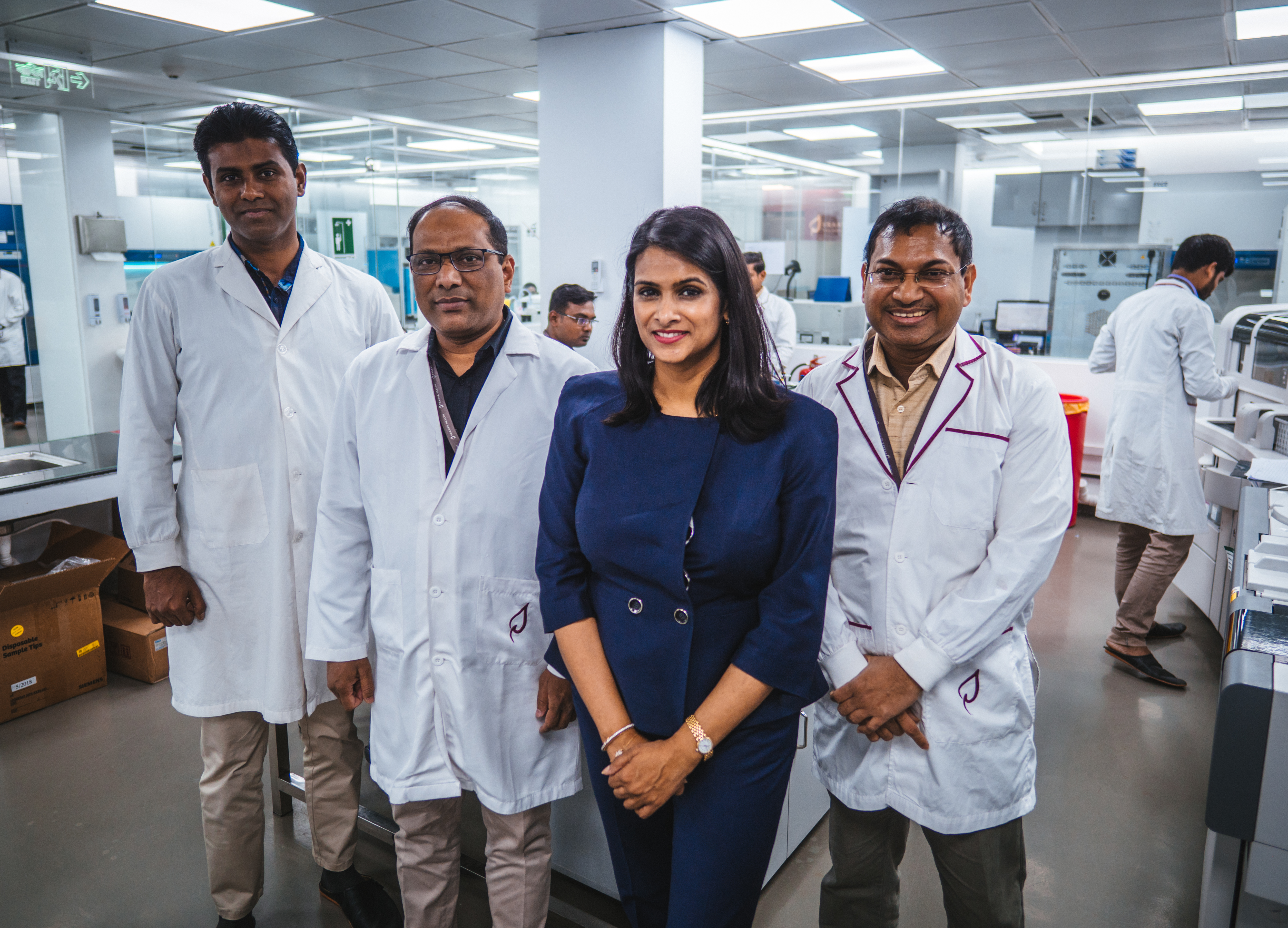
Praava Health founder and chief executive officer Sylvana Sinha (third from left) at one of the company’s healthcare centers
Before launching Praava Health, a company that combines telemedicine with physical clinics, Sylvana Sinha had a successful career in international law, including serving as a foreign policy advisor to Barack Obama’s 2008 presidential campaign and working for the World Bank in Afghanistan. While visiting Bangladesh in 2014 for a family wedding, however, Sinha had a “lightbulb moment” after her mother nearly died after an operation at a top private hospital.
“When I had this experience with my mom, I observed that there was really no amount of money that could afford you access to quality healthcare in Bangladesh,” she told TechCrunch.
“It really struck me that despite all the progress the country had made, and the fact that there is now a middle class of 40 million people, that there are still not really great options for excellent healthcare,” she added. “You have thousands of people traveling abroad every year and billions of dollars a year going outside the country to access better healthcare.”
Born and raised in the United States, Sinha moved to Bangladesh in 2015 to start working on Praava. Today the company is announcing a Series A Prime round that brings its total raised to $10.6 million. Praava claims to have tripled its growth every year since launching services in 2018, and now serves 150,000 patients. In 2020, it also processed 75,000 COVID-19 tests in-house.
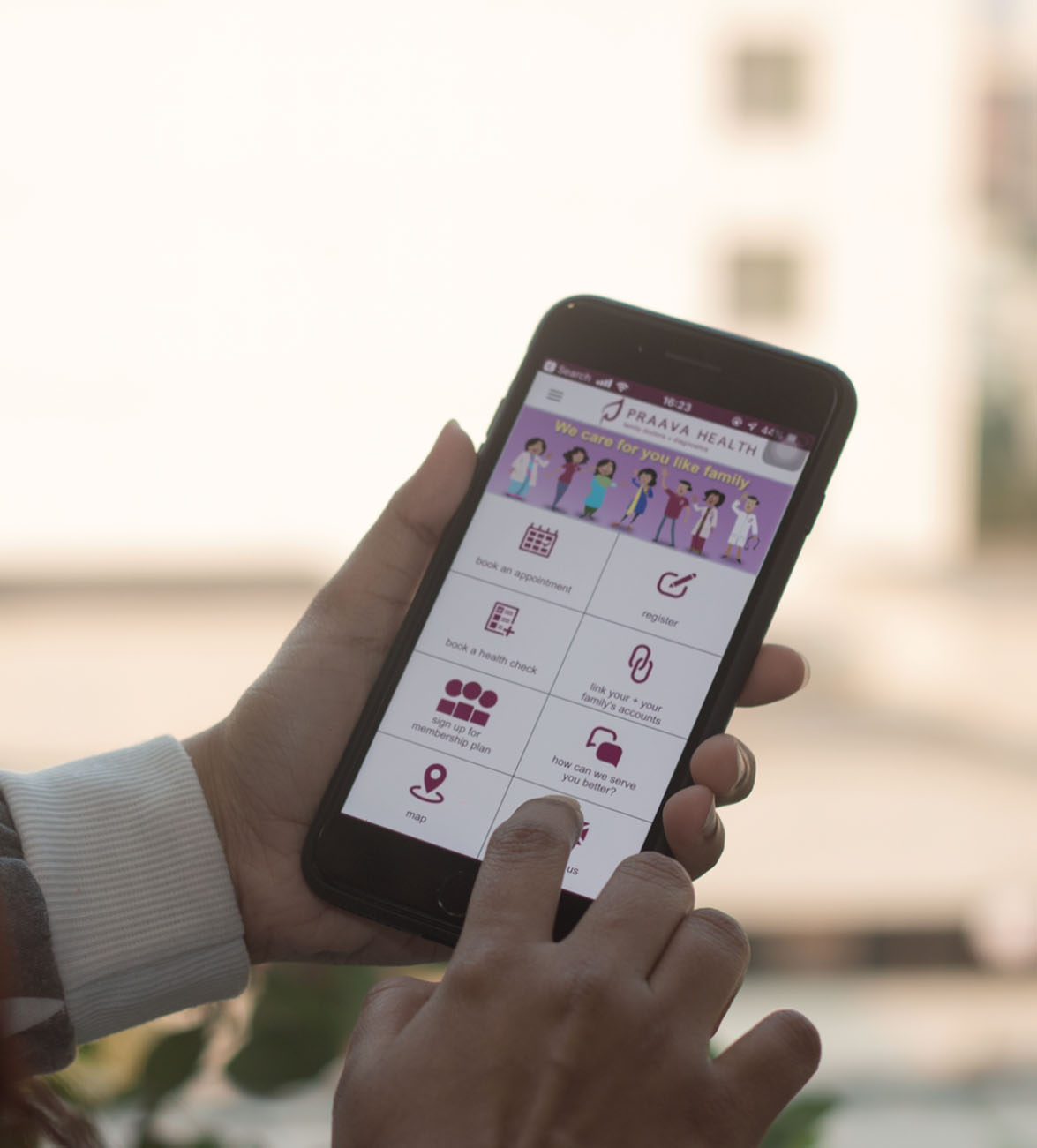
Praava Health’s patient portal app
Praava’s backers include a list of prominent angel investors: former Central Intelligence Agency director and United States army general David Petraeus, who also invested in Praava’s seed round; Wellville executive founder Esther Dyson; SBK Tech Ventures; Dr. Jeremy Link, advisor of digital health to Singapore’s Agency for Science, Technology and Research; Dr. Rushika Fernandopoulle, co-founder and CEO of Iora Health; and Geoff Price, co-founder and chief operating officer of Oak Street Health.
The company has a flagship medical center in the Dhaka, Bangladesh’s capital, and a network of 40 smaller clinics throughout the city. Praava plans to open more clinics in Dhaka, before expanding into Chittagong, the country’s second-largest city.
Its “brick-and-click” model, including online consultations, also allows it to reach patients throughout the country. Virtual healthcare accounts for about 40% of Praava’s services including telemedicine and an online pharmacy.
Bangladesh is one of the fastest-growing economies in the world, but there is a critical shortage of healthcare workers for its 170 million people. The World Health Organization estimates that there are only about 3 physicians and 1 nurse for every 10,000 people, and most work in urban hospitals, even though 70% of Bangladesh’s population is in rural areas. This means people often travel long distances for consultations that may last less than a minute.
“One of the things that we see telemedicine really help with is patients outside of Dhaka to figure out if they even need to make that trip,” said Sinha.
The company found that in over 80% of cases, especially primary care, its providers are able to address patient needs online. In the remaining 20% of cases, they will ask them to come into one of Praava’s clinics, which provide a wide range of outpatient services, imaging and lab diagnostics and a pharmacy.
At the beginning of the COVID-19 pandemic, about 90% of Praava’s consultations were happening virtually, though clinic visits have picked up again. Most of Praava’s doctors are salaried full-time employees and one of its goals is to create deeper provider-patient relationships, with appointments typically lasting about 15 minutes.
“I think technology is the future of health, there’s absolutely no doubt about that,” Sinha said. “But when it come to seeing a doctor and the kind of healthcare needs that we all have over the course of our lifetime, technology is not going to be able to replace that entirely.”
Most of Praava’s patients currently pay per visit, and its pricing is at market rate, between Bangladesh’s public healthcare system and more expensive private hospitals. It has also introduced membership plans with a flat rate for unlimited access to services.
Sinha said this is a very new type of model in Bangladesh, where only 1% of people have health insurance, primarily to cover hospitalizations.
“It’s our experiment of introducing value-based care to the region, so we’re very excited about the product, but it’s a new product and we expect it to pick up more in the coming years,” she added. “It’s already picked up a lot in the last year, because I think people are more health conscious and corporations are more willing to invest in employees’ health.”
With its new funding, Praava will focus on building a “super app” for patients, to consolidate all of its digital services into one mobile app. It also plans to open 10 more healthcare centers in Dhaka, before expanding into Chittagong. Praava’s “brick-and-click” model can scale into other emerging markets, but it plans to concentrate on Bangladesh for the next few years.
“There are 170 million people to take care of first,” Sinha said. “So we’re really focused on this market on this market for now.”
Just finished a Twitter Spaces session. It is an engaging platform, somewhat clunky in feature set but easily a tie overall with Clubhouse. I don’t see this as a horse race, however, more as cooperating teams fleshing out a platform where both will be major players. Like notifications in iOS and Android, the feature set is a push and pull motion where Android delivers deep functionality and Apple alternately pulls ahead and consolidates gains. Though the details can vary, the combined energy of effectively 100 percent of the consumer base mandates best practices and opportunities for innovation.
Something similar is going on in Washington as the Democrats test out their majority of none on the pandemic stimulus bill. The headline in the Times says bipartisanship is dead, but the subheading is the real story. The battle for control of the Senate is closing in on the arcane gerrymandering of the filibuster, or what passes for it after Republican whittling of the original talk ’til you drop croaking of Jimmy Stewart as in Mr. Smith Goes to Washington.
The telltale giveaway is Senator Lindsay Graham, who complains bitterly that the Democrats are steamrolling the COVID Rescue Bill without Republican votes “because they can.” The actual bipartisanship is between the progressives and moderates in the Democratic Party, as the Senator from West Virginia moderates one aspect of the bill to gain the prize of something the President can sign. Not only does it establish Biden’s power to govern but it also provides a roadmap for justifying the necessity of altering the filibuster equation.
Notice how Biden changed the subject from bipartisan negotiations to the power play it turned into. He used the polls to squeeze the Republican moderates where they fear most, the primary battles for control of the House in the midterms. The wave of vaccines are making it almost impossible to put up a political firewall; the anti-mask mandates seem like clueless floundering as people begin to have hope of an exit from the gridlock of partisan obstructionism. It will be hard to run on a platform of denial and death as we reach the end of May.
Governing by success undercuts the argument that government doesn’t work. Breaking the back of the filibuster requires the framing of the issue as finding a way to let government keep working in a bipartisan way. That brings us back to changing the definition of bipartisan as evidenced in the technology arena. In the Apple/Android example, two viable entities bring different strengths to insuring the ability to survive long enough to govern. Google’s lock on the network effect in advertising and “free” services may be challenged by Apple’s focus on privacy and a hardware revenue base, but the net effect is to cancel each other’s vulnerabilities due to the market force of their positions. The bipartisan finesse is that each platform has the other as a dominant customer.
In the same vein, Twitter v. Clubhouse is really not the point. Certainly we can cherrypick the battle as startup v. incumbent: Clubhouse filled with unicorn celebrities and rockstar investors and a builtin tension with the media, Twitter protectively fast following with its natural social graph advantages and struggling with scalability and the fear they’ve sown of abandoning projects before they can thrive. The question begged: what is the nature of the bipartisan compromise that will ensure both end up winners?
The answer is how to make each player the best customer of the other. Twitter’s problem is focus, and harnessing the power of users to hack the system to both theirs and the company’s advantage. The @mention spawned the retweet, providing the analytics that drive Twitter’s indelible social graph. Instagram may be Facebook’s best attempt so far at challenging the fundamental strategic value that the former president used to dominate, but Clubhouse promises to go one big step better with its hybrid of mainstream media and a Warholesque factory engine that creates new stars and the media they generate. This in turn migrates through the entertainment disruption led by the streaming realignment. What exactly is this NFT thing really about?
So Clubhouse has to open up its ability to multitask with Twitter and other curated social graphs. Facebook as a source for Clubhouse notifications and suggested conversations is different than Twitter’s But patching into the sharing icon on iOS will offer substantial access to blunt Twitter’s native integration in Spaces. On the flip side, Twitter’s Revue newsletter tools present an opportunity to mine the burgeoning newsletter surge, using its drag and drop tools to bring not just default social network citations but the implicit social graph of curated editorial rockstars. Not only is the influencer audience rich in signal for advertisers, but these same brands will prove most attractive to Clubhouse listeners looking for value. Win win.
from the Gillmor Gang Newsletter
__________________
The Gillmor Gang — Frank Radice, Michael Markman, Keith Teare, Denis Pombriant, Brent Leary and Steve Gillmor. Recorded live Friday, March 5, 2021.
Produced and directed by Tina Chase Gillmor @tinagillmor
@fradice, @mickeleh, @denispombriant, @kteare, @brentleary, @stevegillmor, @gillmorgang
Subscribe to the new Gillmor Gang Newsletter and join the backchannel here on Telegram.
The Gillmor Gang on Facebook … and here’s our sister show G3 on Facebook.
Chalk this up to inevitability. The iMac Pro is soon to be no more. First noted by 9to5Mac, TechCrunch has since confirmed with Apple that the company will stop selling the all-in-one once the current stock is depleted.
One configuration of the desktop is still available through Apple’s site, listed as “While Supplies Last” and priced at $5,000. Some other versions can also still be found from third-party retailers, as well, if you’re so inclined.
The space gray version of the popular system was initially introduced in 2017, ahead of the company’s long-awaited revamp of the Mac Pro. Matthew called it a “love letter to developers” at the time, though that particular letter seems to have run its course.
Since then, Apple has revamped the standard iMac, focusing the 27-inch model at those same users. The company notes that the model is currently the most popular iMac among professional users. The system has essentially made the Pro mostly redundant, prefiguring its sunsetting. Of course, there’s also the new Mac Pro at the high end of Apple’s offerings.
And let us not forget that the Apple silicon-powered iMacs should be on the way, as well. Thus far the company has revamped the MacBook, MacBook Air and Mac Mini with its proprietary chips. New versions of the 21.5-inch and 27-inch desktop are rumored for arrival later this year, sporting a long-awaited redesign to boot.


