& meet dozens of singles today!
User blogs

Google will lower its Play commissions globally for developers that sell in-app digital goods and services on its marquee store, the company said, following a similar move by rival Apple late last year.
The Android-maker said on Tuesday that starting July 1, it is reducing the service fee for Google Play to 15% — down from 30% — for the first $1 million of revenue developers earn using Play billing system each year. The company will levy a 30% cut on every dollar developers generate through Google Play beyond the first $1 million in a year, it said.
Citing its own estimates, Google said 99% of developers that sell goods and services with Play will see a 50% reduction in fees, and that 97% of apps globally do not sell digital goods or pay any service fee.
Google’s new approach is slightly different from Apple, which last year said it would collect 15% rather than 30% of App Store sales from companies that generate no more than $1 million in revenue through the company’s platform. That drop doesn’t apply to iOS apps if a developer’s revenue on Apple platform exceeds $1 million.
“We’ve heard from our partners making $2 million, $5 million and even $10 million a year that their services are still on a path to self-sustaining orbit,” wrote Sameer Samat, VP of Android and Google Play, in a blog post.
“This is why we are making this reduced fee on the first $1 million of total revenue earned each year available to every Play developer that uses the Play billing system, regardless of size. We believe this is a fair approach that aligns with Google’s broader mission to help all developers succeed.”
The move comes months after changes in Google billing system charges rattled many startups in India. More than 150 startups banded together last year after Google said it will collect as high as 30% cut on in-app purchases in a range of categories made by Android apps.
Following the backlash, Google delayed mandating the planned Play Store payments rule in India to April 2022 and had reached out to several firms in recent months in the country to better understand their concerns, people familiar with the matter told TechCrunch.
Vijay Shekhar Sharma, founder and chief executive of mobile payments provider Paytm, India’s most valuable startup, dismissed Google’s move today as a “PR stunt.”
In an interview with TechCrunch, Sharma said established firms like his will still have to pay an exorbitant amount of fee to Google. Today’s announcement by Google, he said, further raises the question whether Google plans to address concerns raised by serious internet firms at all.
The biggest concern firms face today is the inability to use a third-party payments service for billing, he said. “They are basically saying that as soon as you build a business larger than $1 million — which is a very low bar — you are going to pay a 30% fee, which after taxes, becomes 44%,” he said.
A 30% sales cut and the inability to use third-party billing system have been points of contention between many developers and app store operators — Apple and Google — and led to a lawsuit by Fortnite-maker Epic Games against the iPhone-maker last year. Epic CEO Tim Sweeney had alleged that Apple’s move to lower the App Store fee for smaller developers was orchestrated to sow division among app creators.
Sharma said he was hopeful that Google will address other concerns, especially because in a country like India “we don’t have any other operating system, or distribution platform. They effectively control the destiny of every app developer in the country.”
Android commands 99% of the smartphone market in India, according to research firm Counterpoint. “Earlier India was powered by Android, then we became dependent on Android, and now it is controlled by Android,” said Sharma, whose payments app competes with Google Pay in the world’s second largest internet market.
Google’s Samat said,”We look forward to seeing more businesses scale to new heights on Android, and to further discussions with the Indian developer community to find new ways to support them technically and economically as they build their businesses.”
“Once developers confirm some basic information to help us understand any associated accounts they have and ensure we apply the 15% properly, this discount will automatically renew each year,” he wrote.
A security breach at cryptocurrency platform Roll allowed a hacker to obtain the private key to its hot wallet and steal its contents — worth about $5.7 million.
In a statement, the company said it was investigating the breach, which happened early Sunday.
“As of this writing, it seems like a compromise of the private keys [sic] of our hot wallet and not a bug in the Roll smart contracts or any token contracts,” the statement said. Roll said the attacker had already sold the tokens for Ethereum.
“There is no further user action suggested at this stage. We are temporarily disabling withdraw from the Roll wallet of all social money until we have migrated our hot wallet,” the statement added.
It’s not clear how the attacker broke in and obtained the private key — akin to the password for Roll’s hot wallet. Hot wallets are designed to be connected to the internet to send and receive cryptocurrency, but typically only store a fraction of a cryptocurrency owner’s total reserves, given the inherent security risk of an internet-connected wallet. A cold wallet, or storage device that isn’t connected to the internet, is typically used for holding the bulk of an owner’s cryptocurrency for longer-term periods.
Roll allows creators to mint and distribute their own Ethereum-based cryptocurrency, known as social tokens, under which the creators can decide how the currency is spent. There are hundreds of different kinds of social currency on the platform, including $WHALE, $RARE, and $PICA tokens — which plummeted in value in the aftermath of the breach.
The creator of the $WHALE token said in a tweet more than 2% of its tokens were stolen in the Roll breach, but that the hack was “minimally detrimental” to the project.
Others weren’t so lucky. One person said they had “lost everything,” while others criticized Roll’s new $500,000 fund to help affected creators for not going far enough.
Roll said it will hire a third-party to audit its security infrastructure to prevent another breach. “We will also run a forensic analysis to figure out how the key was compromised,” the statement said.
Talk about surprise comebacks. This morning Google announced the arrival of the next-gen Nest Hub. In spite of rebranding from Google Home Hub back in 2019, the smart screen hasn’t seen many changes since its 2018 introduction. Today’s arrival doesn’t represent a huge upgrade from its predecessor, but it does support a familiar — and largely forgotten — face.
We haven’t heard a peep from Project Soli since the technology was introduced with the Pixel in late-2019. The miniature, motion-sensing radar tech was positioned to be a major selling point, finally arriving on a device some four years after being announced. Applications were relatively few and far between — including gesture detection and a weird, one-off Pokémon app.
And then it just sort of went away. The Pixel 5 arrived the following year, without a trace of Motion Sense. Abandoning features certainly isn’t unheard of in consumer electronics, but it seemed odd for something in which Google had clearly invested time and resources.
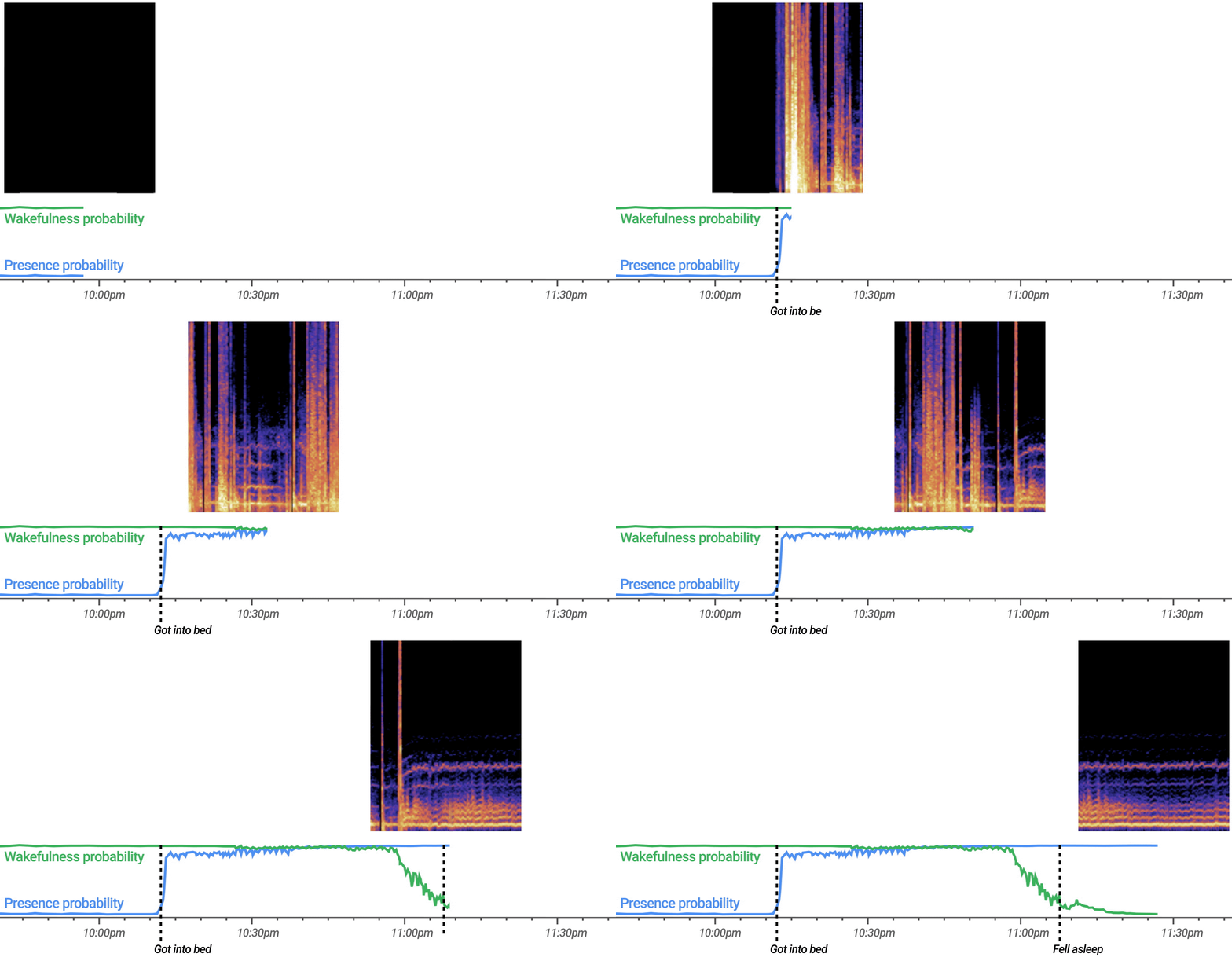
Image Credits: Google
Soli’s reemergence in the new Nest Hub is certainly unexpected, but may ultimately make more sense than any of its attempted mobile applications. The primary use here is sleep tracking, the biggest update between the new Nest Hub and the original. As for why Soli, the answer goes deeper than the fact that Google was looking for a new home for its existing tech (though that no doubt also played a role).
Like the first-gen product, there’s no camera on the new Nest Hub. Google’s decision to keep the tech off the device is a breath of fresh air in a world where the new Amazon Echo uses figure tracking to actually follow you around the room. As before, you can always opt for the Nest Hub Max if that feature’s important to you. But the company rightfully noted that the first-gen model was often deployed at bedsides.
That means:
- Sticking a camera on the connected device raises some major privacy concerns.
-
It’s an ideal spot for doing some sleep tracking.
Which leads us to:
- How do you do sleep tracking without a camera?
The easy answer is a wearable device. Google now has a much stronger foothold in that world now that its Fitbit acquisition has cleared. But that deal is going to take some time to fully take root. And besides, as someone who has tested a lot of wearables in my day, I can definitely say that, no matter how comfortable, I sleep better without one on my wrist. Certainly the irony of being kept awake by a sleep tracker has not escaped me.
Quick refresher on Soli tech, per Google:
Soli consists of a millimeter-wave frequency-modulated continuous wave (FMCW) radar transceiver that emits an ultra-low power radio wave and measures the reflected signal from the scene of interest. The frequency spectrum of the reflected signal contains an aggregate representation of the distance and velocity of objects within the scene. This signal can be processed to isolate a specified range of interest, such as a user’s sleeping area, and to detect and characterize a wide range of motions within this region, ranging from large body movements to sub-centimeter respiration.

Image Credits: Google
So, basically, you’re trading camera-based sensing for mini-bedside radar. It’s a weird thing to wrap your brain around, certainly. The biggest thing here is that the motion-tracking data is not collecting any images, just data based on movement.
The Sleep Sensing system was trained on more than 100,000 hours of sleep data, according to the company, with TensorFlow being used to analyze data. Among other things. It’s able to eliminate external movement like ceiling fans, after the initial calibration process is completed. In addition to tracking, the system leverages other sleep-centric features that were rolled out to the last Nest Hub via software update, including Sunrise Alarm and the ability to snooze your wake-up call with a gesture.
There are other software updates on-board as well, including a new smart home interface. On the whole, however, there really aren’t too many improvements beyond sleep tracking — which is actually okay, since the original remains one of the better smart screens on the market. The speaker got a little bit of love, with added bass, but even that is largely the same. The screen size remains the same at 7-inches, while the overall device footprint is a bit larger to accommodate the slight speaker improvement. The body is made from 54% post-consumer plastic.
At $99, the price is certainly right. Google shaved off $49 from the original Hub. It’s up for pre-order starting today and will be available for sale on the 30th.
https://techcrunch.com/2019/09/09/google-nest-hub-max-review/
Hundreds of thousands of teenagers and young adults get on flights each year from India to a foreign land to pursue higher education. Upon landing, they face a myriad of challenges: They don’t have a local credit history, so they can’t avail a range of financial services including a loan or a credit card — at least not without paying a premium for it.
For banks and other financial institutions, there is an increased risk when they engage with foreigners, so they charge more. An Indian student studying in the U.S., for instance, borrows money at an interest rate over 13%, compared to their local peers who can secure the same amount of credit, if not more, at less than half of that interest rate.
Leap, a two-year-old startup with headquarters in San Francisco and Bangalore, is attempting to solve this problem and many others. The startup grants loans to students at fair interest rate by evaluating the data they generated — alternative and derived — in India itself.
Since the last time we wrote about Leap, the startup has evolved to address several other problems students face, explained Arnav Kumar, co-founder of Leap, in an interview with TechCrunch.
Kumar said Leap today is helping students with guidance on admission, visa, as well as test preparation. Leap has also developed a social network of sorts where over half a million students are talking to one another and use the platform’s other services to get admission in a college abroad.
About ten years ago, when I was looking to join an engineering college, I reached out to several individuals who were already studying in the colleges I had shortlisted. Turns out, over a million students in India do the exact same thing each year when they are about to begin their college life. (If I may complete the loop, I did graduate and have a bachelor’s degree in CSE somewhere in the house.)
Kumar said Leap’s community today is replicating the offline-behavior. Some students, to be sure, reach out to others on LinkedIn, or Facebook. But by just focusing on one problem, Leap is attempting to become the community for students who are looking to pursue higher education. (Its pages are indexed on Google search for better visibility.)

Leap Finance founders pose for a picture
There is a massive opportunity for startups to better solve these problems.
“India is the second-largest market globally for overseas enrolment, and in just a decade higher education enrolments are up by 8 million. This presents a huge opportunity in an otherwise fragmented landscape. Leap is addressing this huge opportunity through its end-to-end tech platform and a community-first approach,” said Amit Anand, Founding Partner of Jungle Ventures, in a statement.
Vaibhav Singh, the other co-founder of Leap, said in an interview that students from India take admission in over 5,000 schools and universities abroad each year to study tens of thousands of courses.
“So the choice spectrum is really, really wide and you need experts who can help you make the right choice. This is the most important decision you or your family will make,” he said.
Investors have spotted an opportunity in this space, too — and are backing Leap. The startup said on Tuesday that it has raised $17 million in its Series B round. The new financing round was led by Singapore-based Jungle Ventures, along with Sequoia Capital India and Owl Ventures. The startup has to-date raised $22.5 million.
The global pandemic prevented many Indian students from traveling abroad. This year, more than 700,000 students are estimated to leave India to pursue higher education. Leap co-founders said they are working to serve 150,000 of such students this year.
Leap said it plans to deploy the fresh capital to expand its tech team and reach more geographies. The startup currently helps students join colleges in several countries including the U.S., Canada, UK, and Australia. Singh said Leap is also looking to hire some tech and business talent.
“2020 was a tough year for international education with Covid related travel restrictions. We are impressed by the resilience of the Leap team during the last year, where not only have they served hundreds of students with their financing solutions but have also expanded with Leap Scholar providing counselling to thousands of Indian students looking to study abroad. This vertically integrated strategy has materially strengthened the moats for Leap,” said Ashish Agrawal, Principal at Sequoia India, which wrote its first check to Leap before the startup had a product.
Meet Resilience, a new startup that wants to help cancer treatment institutes as well as cancer patients at every step of the treatment journey. It’s an ambitious project founded by two well-known French entrepreneurs. They want to leverage their tech skills for this new healthcare startup.
Behind the scenes, there are two co-CEOs — Céline Lazorthes and Jonathan Benhamou. Nicolas Helleringer and Matthieu Pozza are the two remaining co-founders acting as CTO and CPO respectively. Lazorthes previously co-founded Leetchi, the leading money pot company in France. She also started MangoPay, a marketplace payment solution, as a spinout company. Crédit Mutuel Arkéa acquired both companies.
Benhamou co-founded PeopleDoc, a cloud-based HR service. In 2018, his company was acquired by Ultimate Software. Following the acquisition, he served as an executive in the publicly quoted company. Shortly after, private equity firm Hellman & Friedman Capital Partners acquired Ultimate Software.
Last year, they both spent a lot of time working together on a nonprofit called ProtegeTonSoignant. Along with 140 people, they raised €7.4 million ($8.8 million) in donations to buy personal protective equipment and deliver it to hospitals in need. It was a fundraising and logistics challenge.
After spending a lot of time talking with healthcare professionals, they decided to “dedicate at least the next ten years to those who save lives,” Lazorthes said.
It seems like an ambitious bet, and they’re aware of that. “We don’t know anything about healthcare just like we didn’t know anything about HR and finance. We’re entering a market that is highly regulated,” Benhamou told me.
That’s why they chose to focus on one area in particular — cancer care. While research institutes have made some tremendous progress over the past few years, it has become increasingly more complicated to treat cancer. For instance, Benhamou says he expects to see 300 new treatments over the next three years. Treatment is slowly evolving from broad spectrum treatments to targeted treatments.
Cancer treatment facilities face three issues. First, “a human brain can’t assimilate all this data,” Benhamou said. Second, as life expectancy increases, there are more cancer cases every year. A tumor board is going to spend a minute and a half or two minutes on a specific case to make a therapeutic decision.
Third, as a result of the first two problems, patients are left on their own. For instance, they suffer from side effects because there’s no dosage adjustment in their treatment.
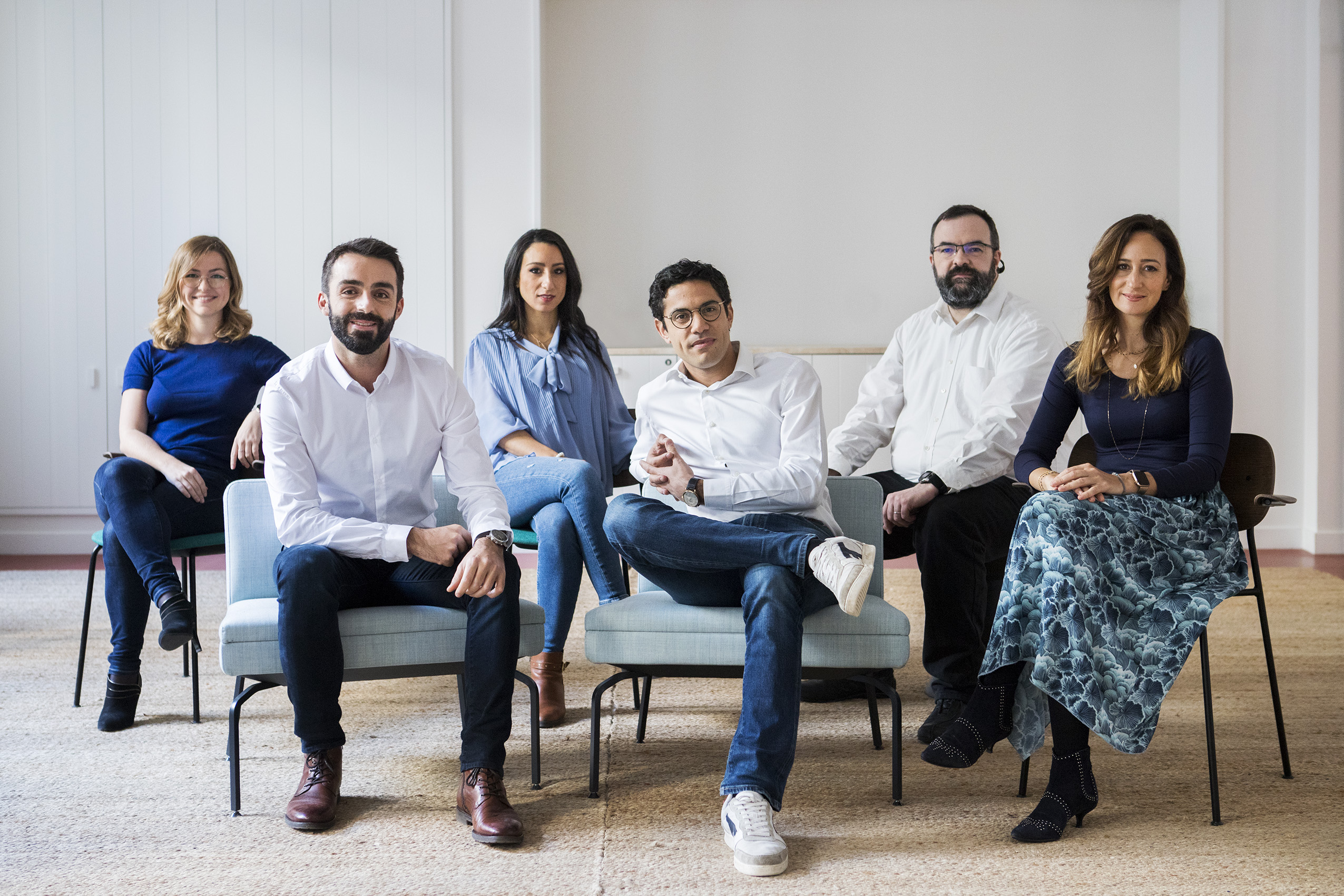
Image Credits: Resilience
Starting from there, Resilience wants to become a full-stack software solution for cancer treatment for both the medical team and patients. When it comes to practitioners, Resilience will be a software-as-a-service solution that can augment therapeutic decisions. The company will categorize scientific literature, use machine learning to find some similarities with past cases and surface clinical trials based on various criteria.
When it comes to patients, there will be a web and mobile app to access content and information about their cancer. In particular, Resilience could help you understand side effects and treat them.
“Our goal is to prove that the app can improve the quality of life of the patients,” Lazorthes said. Resilience also wants to leverage its app to ask questions and collect data to improve treatments.
The startup is already putting together a data science team. It will use natural language processing to parse scientific literature. It will also work with a medical team to double-check everything.
When it comes to finding similarities between patients, the company is signing partnerships with various hospitals to get data from past cases.
Resilience has raised a $6 million funding round (€5 million) led by Singular, the VC firm founded by former Alven partners Raffi Kamber and Jérémy Uzan. Tech business angels Nathalie Balla (La Redoute), Xavier Niel (Free), Jean-Charles Samuelian (Alan), Roxanne Varza (Station F) and more are also participating.
There are also some healthcare investors in today’s funding round, such as Charles Ferté (AstraZeneca), Philippe Dabi (Bioclinic) and Thomas Clozel (Owkin).
Resilience is a mission-driven company — the company is partnering with a scientific board and a patient board. Gustave Roussy, one of the leading cancer research institutes in the world, is also acting as a co-founder in Resilience.
That’s a lot of stakeholders, but it’s the right thing to do when you’re building a healthcare company. Resilience now has the right system of checks and balance to iterate on its product and roll out a product that has a chance of actually improving cancer treatment.


