& meet dozens of singles today!
User blogs

Here’s another edition of “Dear Sophie,” the advice column that answers immigration-related questions about working at technology companies.
“Your questions are vital to the spread of knowledge that allows people all over the world to rise above borders and pursue their dreams,” says Sophie Alcorn, a Silicon Valley immigration attorney. “Whether you’re in people ops, a founder or seeking a job in Silicon Valley, I would love to answer your questions in my next column.”
Extra Crunch members receive access to weekly “Dear Sophie” columns; use promo code ALCORN to purchase a one- or two-year subscription for 50% off.
Dear Sophie:
I just got my U.S. citizenship! My husband and I want to bring my mom and her husband to the U.S. to help us take care of our preschooler and toddler.
My biological dad passed away several years ago when I was an adult and my mom has since remarried. Can they get green cards?
— Appreciative in Aptos
Dear Appreciative:
Congrats on becoming a citizen! That is a long road, and you did it. :) For all those out there awaiting citizenship, good news: It’s a priority for the Biden administration to speed up processing times. Other good news — the Muslim Ban is cancelled! And USCIS is going to make things a lot better for Dreamers seeking DACA.
We can definitely figure out a plan to support your mom and stepdad to get green cards in the U.S. As your mom married your stepdad after you turned 18, you can’t sponsor him directly. You need to sponsor your mom for a green card first, and then she can sponsor him as her husband. My law partner, Anita Koumriqian, who is an expert in family-based immigration, and I discussed getting green cards for parents and siblings in a recent podcast. Check it out for more details. To set clear expectations, this is a multistep process that will probably take a few years. So you may want to consider hiring a nanny if you need childcare sooner than that! ;)
Alternatively, to speed things up for your stepdad, if he has a daughter, son or sibling who is a U.S. citizen, any of them can sponsor him for a green card. If your mom ends up sponsoring him once she’s a permanent resident, that’s quicker than a U.S. citizen sibling sponsoring a brother, for example, but generally is not as quick as a U.S. citizen child sponsoring a parent.
Since your mom is abroad, she won’t be able to come to the U.S. until the U.S. embassy or consulate in her home country reopens and resumes processing routine visa and green card applications. However, U.S. Citizenship and Immigration Services (USCIS) is currently open.

Image Credits: Sophie Alcorn (opens in a new window)(opens in a new window)
It’s possible to get started sponsoring your mom for a green card now, and you can work with an attorney to streamline the process. You need to be at least 21 years of age and be a U.S. citizen. As her sponsor, you will also need to accept legal responsibility for financially supporting her.
You will need to initially submit to USCIS documents such as your birth certificate and proof of U.S. citizenship, and make sure that all foreign language documents have certified English translations. Currently, the USCIS California Service Center is taking about seven months to process green card applications for parents.
Source: https://techcrunch.com/2021/01/27/dear-sophie-how-can-i-sponsor-my-mom-and-stepdad-for-green-cards/
At TC Sessions: Justice on March 3, we’re going to dive head-first into data discrimination, algorithmic bias and how to ensure a more just future, as technology companies rely more on automated processes to make decisions.
Algorithms are sets of rules that computers follow in order to solve problems and make decisions about a particular course of action. But there is an inherent problem with algorithms that begins at the most base level and persists throughout its adaption: human bias that is baked into these machine-based decision-makers.
Algorithms driven by bad data are what leads to biased arrests and imprisonment of Black people. They’re also the same kind of algorithms that Google used to label photos of Black people as gorillas and that Microsoft’s Tay bot used to become a white supremacist.
At TC Sessions: Justice, we’ll hear from three experts in this field. Let’s meet them.
Dr. Safiya Umoja Noble
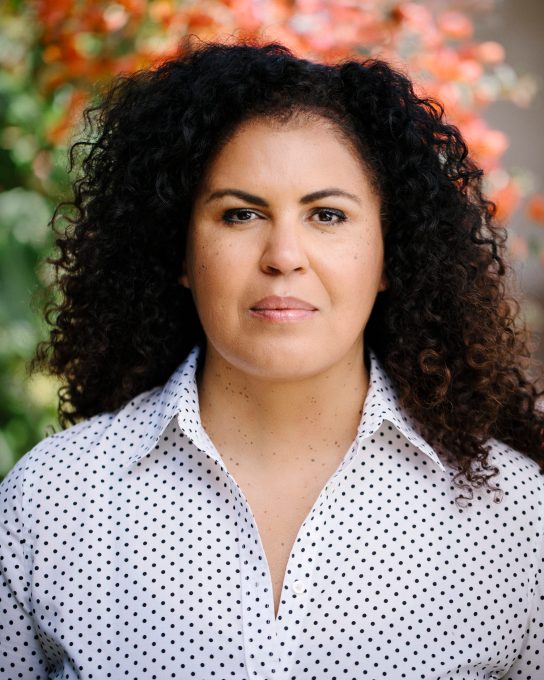
Image Credits: Stella Kallnina (opens in a new window)
Associate Professor at University of California Los Angeles a professor at the University of Southern California and author of “Algorithms of Oppression: How Search Engines Reinforce Racism,” Noble has become known for her analyses around the intersection of race and technology.
In her aforementioned book, Noble discusses the ways in which algorithms are biased and perpetuate racism. She calls this data discrimination.
“I think that the ways in which people get coded or encoded particularly in search engines can have an incredible amount of harm,” Noble told me back in 2018 on an episode of TC Mixtape, formerly known as CTRL+T. “And this is part of what I mean when I say data discrimination.”
Mutale Nkonde

Image Credits: Via Mutale Nkonde
It’s important to explicitly call out race in order to create just technological futures, according to Nkonde. In her research paper, “Automated Anti-Blackness: Facial Recognition in Brooklyn, New York,” Nkonde examines the use of facial recognition, the history of the surveillance of Black people in New York and presents potential ways to regulate facial recognition in the future.
Nkonde is also a United Nations adviser on race and artificial intelligence and is currently working with Amnesty International to advance a global ban on facial recognition technology.
Haben Girma

Image Credits: Courtesy of Haben Girma
Author of memoir “Haben: The Deafblind Woman Who Conquered Harvard Law,” and human rights lawyer, Girma focuses on advancing disability justice.
At Sight Tech Global last month, Girma spoke about how discussions around algorithmic bias as it pertains to race have become somewhat normalized, but too often do those conversations exclude the effects of algorithms on disabled people. Girma told me at that when it comes to robots, for example, the topic of algorithmic bias is lacking among developers and designers.
“Don’t blame the robots,” she said. “It’s the people who build the robots who are inserting their biases that are causing ableism and racism to continue in our society. If designers built robots in collaboration with disabled people who use our sidewalks and blind people who would Use these delivery apps, then the robots and the delivery apps would be fully accessible. So we need the people designing the services to have these conversations and work with us.”
If you’ve made it this far in the post, you’re probably wondering how to attend. Well, you can snag your ticket right here for just $5.
Source: https://techcrunch.com/2021/01/27/battling-algorithmic-bias-at-tc-sessions-justice/

Stilt founders Priyank Singh and Rohit Mittal
Stilt, a provider of financial services for immigrants in the United States, announced today it has raised a $100 million warehouse facility from Silicon Valley Bank for lending to its customers. This brings Stilt’s total debt facilities so far to $225 million, and will enable it to reach more than $350 million in annualized loan volume. The company also announced the public launch of its no-fee checking accounts, which have been in private beta since September.
A Y Combinator alum, Stilt was founded five years ago by Rohit Mittal and Priyank Singh. Both dealt with the challenges of accessing financial services as immigrants and wanted to created a company to serve other people without Social Security numbers or credit histories.
For applicants without traditional credit reports, Stilt’s loan application process considers their personal information, including bank transactions, education, employment and visa status, and also uses proprietary machine-learning algorithms that draws on demographic data from a wide range of financial and non-financial sources.
TechCrunch last covered Stilt when it announced a $7.5 million seed round in May 2020. During the pandemic, demand for loans increased for a wide range of reasons. Some customers sought new loans because their working hours got cut. Other borrowers’ own jobs weren’t impacted, but they needed to transfer money to family members in other countries who had lost income. Several used loans to pay for additional visa processing and many customers turned to Stilt because other financial providers shut down or reduced their loan programs over concerns about repayment.
Despite the economic challenges caused by the COVID-19 pandemic, Stilt’s loan performance has remained steady. Many of Stilt’s customers are using their loans to build a credit history in the United States and even borrowers who lost income because of the pandemic continued making payments on time (Stilt also created temporary programs, including waiving interest for a few months, to help those who were struggling financially).
Mittal said immigrants are also in general more creditworthy, because many moved to the United States to pursue educational or career opportunities. The difficulty of securing visas means “all immigrants move to the U.S. after jumping through a lot of hoops,” said Mittal. He added that “it isn’t just people coming from other countries. We also see it in DACA applicants. They tend to be the best risk-adjusted return customers. These are people who are going to school, they are working, they have seen their families work, they are helping their parents, they are doing all these things, and they understand the value of money, so they end up being a lot more financially responsible.”
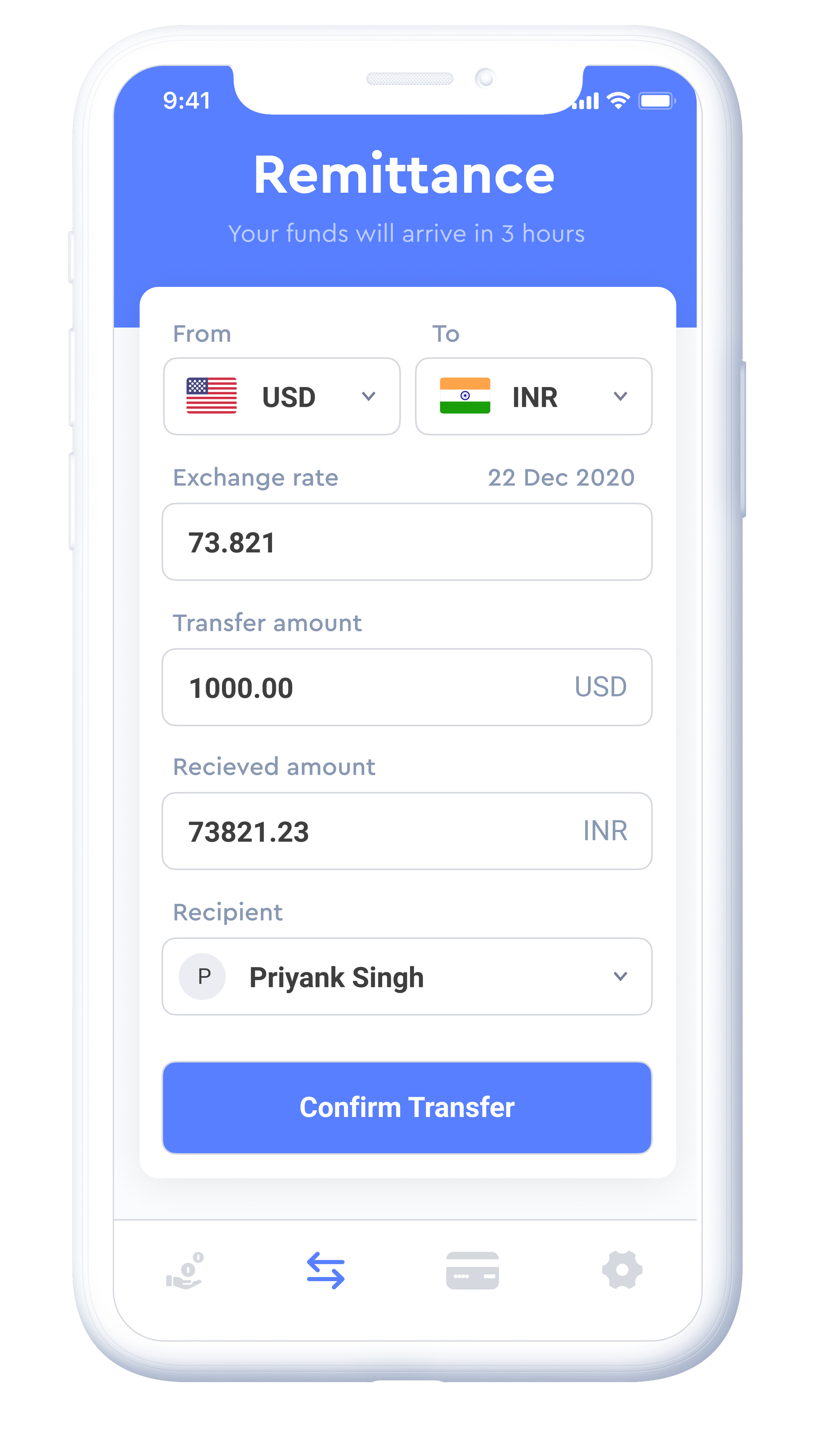
Stilt’s money transfer feature
Stilt’s new checking accounts, powered by Evolve Bank and Trust, are also designed for immigrants, with features like spot-rate remittance to about 50 countries. Users can also apply for credit lines and pre-approved loans through their accounts. Since opening to existing customers in September, the number of active checking accounts is growing 50% month over month, with many using it for direct deposits of their salaries.
The new debt facility from Silicon Valley Bank means Stilt will be able to provide larger loan volumes and better interest rates, said Mittal. Stilt’s average interest rate is about 12% to 14%, compared to the 30% to 100% charged by other programs, like payday loans, that people without Social Security numbers or credit reports often use.
Last year, we hit you with 44(!) episodes of Extra Crunch Live, a series that gives startups and founders direct insights from the experts who know best. We’re making Extra Crunch Live even better in 2021: we’ll take a look at funding deals through the eyes of the founders and investors who made them happen, and those same tech leaders will go through your pitch decks and give feedback and advice. Every single Wednesday at 12pm PT/3pm ET!
Today, I’m thrilled to announce the February slate for Extra Crunch Live.
Gaurav Gupta (Lightspeed Venture Partners) + Raj Dutt (Grafana Labs)
February 3, 12pm PT/3pm ET
Grafana Labs, the open-source platform for monitoring, visualization and metric analytics, has raised more than $75 million since its 2014 inception. Lightspeed’s Raj Dutt has partnered with the company throughout its journey, leading Grafana’s Series A and B. Hear from Gupta and Grafana cofounder Raj Dutt about how that Series A deal came together, and take a look at the startup’s original Series A pitch deck on the next episode of Extra Crunch Live. And don’t forget! Gupta and Dutt will be giving live feedback to Extra Crunch members who have submitted their own pitch decks.
Aydin Senkut (Felicis Ventures) + Kevin Busque (Guideline)
February 10, 12pm PT/3pm ET
In 2014, Guideline stepped into the ring with giants, launching an all-inclusive 401k platform for fast-growing businesses. Since, it’s raised nearly $140 million in funding, including a $15 million Series B round led by Felicis Ventures. Hear the behind-the-scenes story of how Guideline CEO Kevin Busque and Felicis partner Aydin Senkut came together for that deal, with a walk through the pitch deck that started it all, and get the founder/investor duo’s live feedback on your own pitch deck.
Steve Loughlin (Accel) + Jason Boehmig (Ironclad)
February 17, 12pm PT/3pm ET
Steve Loughlin views the techworld through a prismatic lens. He’s been a founder, he’s been through an acquisition, and now he invests as a partner at Accel. One such investment includes Ironclad, a contract management platform that recently raised a $100 million Series D and is valued at nearly $1 billion. Hear CEO Jason Boehmig and Loughlin talk through their original Series A deal and get live feedback on your own pitch deck from the founder/investor duo.
Matt Harris (Bain Capital) + Isaac Oates (Justworks)
February 24, 12pm PT/3pm ET
Justworks’ back-office software has garnered the attention of many investors. The company has raised $143 million from firms including FirstMark Capital, Union Square Ventures, Thrive, Redpoint, and Bain Capital. Hear from Justworks founder and CEO Isaac Oates and Bain Capital Partner Matt Harris as they describe how their partnership began and get their live feedback on your own pitch deck.
Extra Crunch Live is for EC members only. If you’re not already signed up, get on it right here. Registration info for each of these episodes is below. See you soon!
The current list of venture-backed private companies we expect to go public — and the number of companies that might say yes to a SPAC-led debut — underscore just how many large startups there are in the market.
After years of rising venture capital investment and a wave of huge rounds, many startups and unicorns could leave the private markets this year or the next.
Last year, The Exchange wrote about former startups that had scaled to around the $100 million annual recurring revenue (ARR) mark, or had revenues that were roughly equivalent if they didn’t sell software. But that wound up being a bit less interesting than we’d hoped, as companies that have reached that scale tend to be fully baked by the time we got them on the phone.
So, we’re shooting for the $50 million ARR range this year. Our goal is to see what we can ferret out from companies that are moving from the middle-late startup years and into the unicorn realm.
The Exchange explores startups, markets and money. Read it every morning on Extra Crunch, or get The Exchange newsletter every Saturday.
What broke during the last year? Which teams have they doubled down on? How has hiring gone? We have questions. And, happily, companies have raised their hand. Today, we’re talking about OwnBackup and Assembly. Next week, it’s SimpleNexus and Kaseya. And we have Picsart on deck as a company somewhat in between our two target revenue bands.
 But before we start, a final note. The following bits of journalism are more exploratory than hard-hitting. But as private companies tend to share nothing other than the occasional press release strained of personality and flavor, I’m working to bring more raw data points and observations to you even if they do not constitute the grittiest reporting you’ve ever read.
Let’s get into our first two $50 million (or around there) ARR companies.
OwnBackup
OwnBackup is a company you might have heard of as it raised a $50 million round last July, an event TechCrunch covered. The company reached out regarding our $50 million ARR series by noting that its growth had accelerated since that round, so we decided to find out more.
The Exchange spoke with CEO Sam Gutman and CMO Jamie Grenney about OwnBackup’s recent growth.
According to the execs, OwnBackup is around $50 million ARR today. The company, as its name hints, provides cloud backup services to other companies. And it’s built atop the Salesforce platform, a service had a good 2020 when nCino, another company that leverages the service, went public to great effect. (That debut led to TechCrunch reporting on the trend of building atop someone else’s software to IPO scale.)
And OwnBackup has lots of room to grow inside of its current platform home. It thinks it has around 2% penetration of the Salesforce ecosystem, meaning that its current 100% yearly growth pace can continue for quite some time without a material change in strategy.
Asked if OwnBackup was worried about platform risk, Gutman and Grenney said they weren’t. Not only is Salesforce Ventures an investor, the execs noted, but the Salesforce platform is a huge SaaS ecosystem; it’s not something that could be switched off like a Google web product and consigned to the ash heap of the Internet.
Source: https://techcrunch.com/2021/01/27/how-2-startups-scaled-to-50m-arr-and-beyond/


